Scientific Name
Nycticorax nycticorax
Status
Least Concern
Size
Length: 58 - 66 cm
Weight: 727 - 1104 g
Diet
Primarily fish, but also crustaceans, insects, amphibians (like frogs and snakes), small mammals, and even eggs and small birds.
Appearance
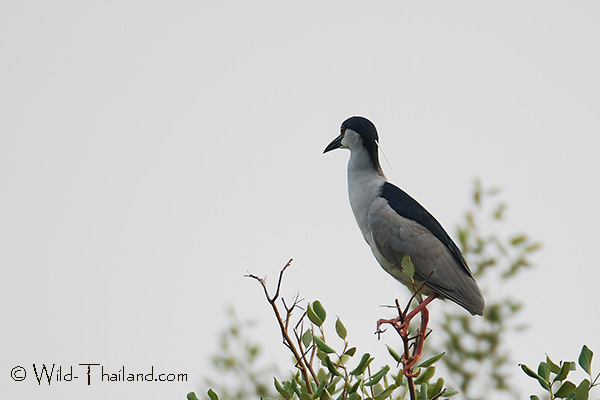
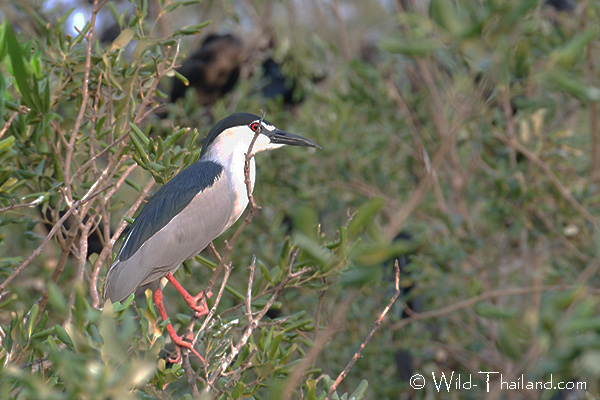
The Black-crowned Heron has a stocky build, a glossy black crown and back, pale gray wings, and a white belly. Adults have red eyes and pale yellow legs, with long white plumes on the back of the head during breeding season.
Distribution
The Black-crowned Heron is found throughout Thailand, particularly in the North, Central, and Northeast regions.
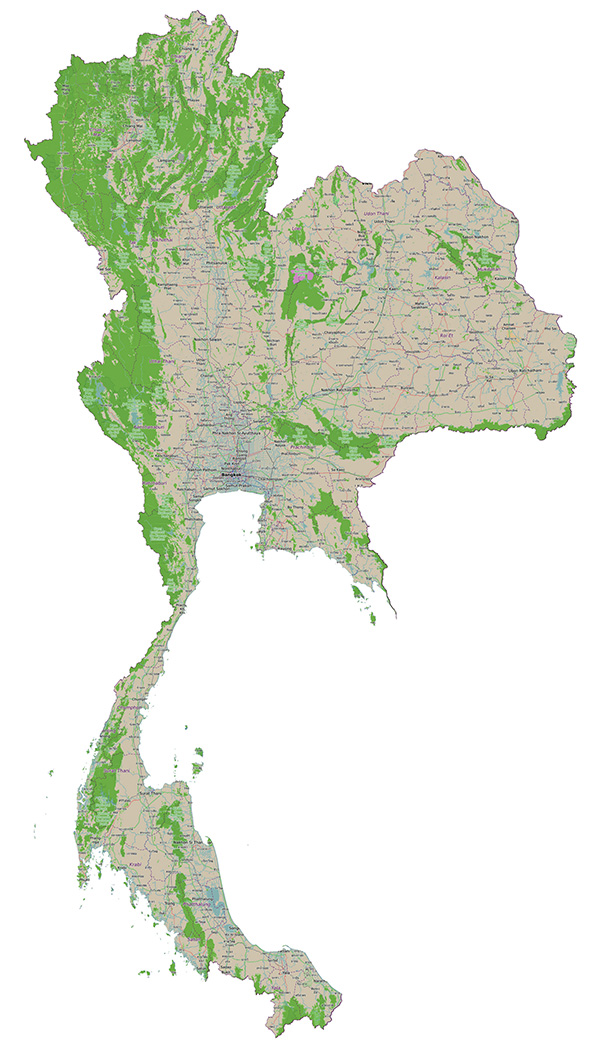
The Black-crowned Heron is primarily nocturnal, hunting at dusk and in the early morning by standing still and ambushing prey at the water's edge. They can be seen at Bang Pu Bird and Biodiversity Area, especially during the breeding season.
Black-crowned Herons breed during the rainy season to winter, in large mixed-species colonies in trees. They build nests from sticks.
Scientific Name
Ardeola bacchus
Status
Least Concern
Size
Length: 42 - 52 cm
Weight: 280 - 332 g
Diet
Insects, fish, and crustaceans. They also eat other small prey like amphibians, worms, and aquatic invertebrates.
Appearance
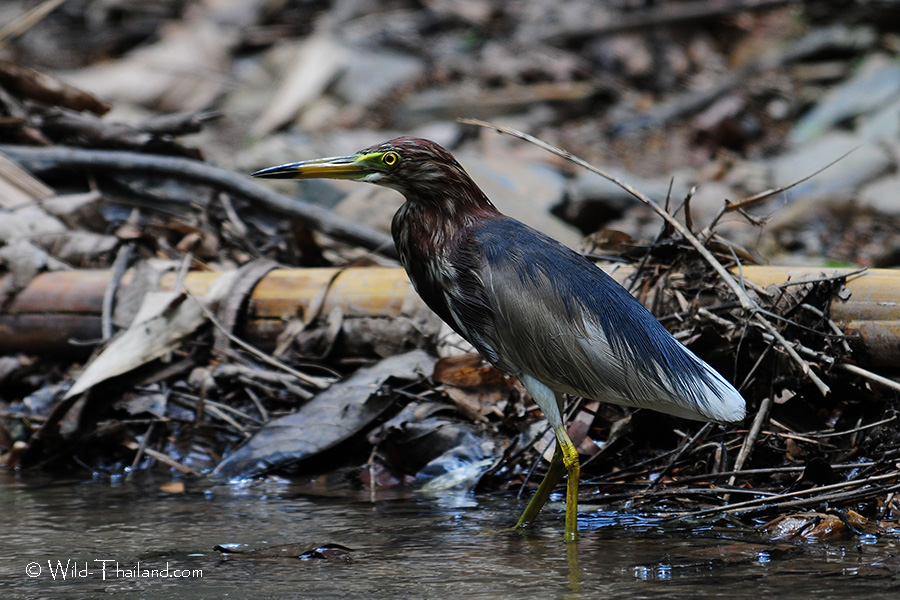
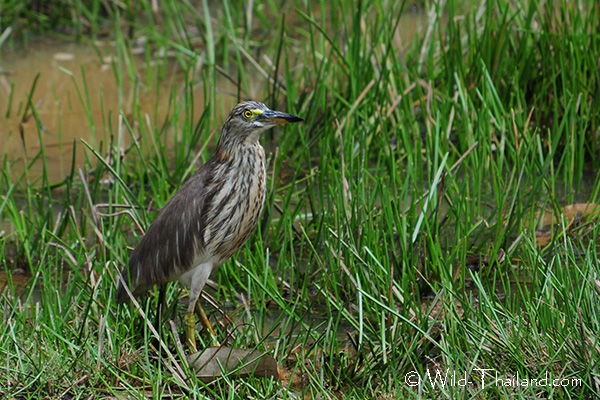
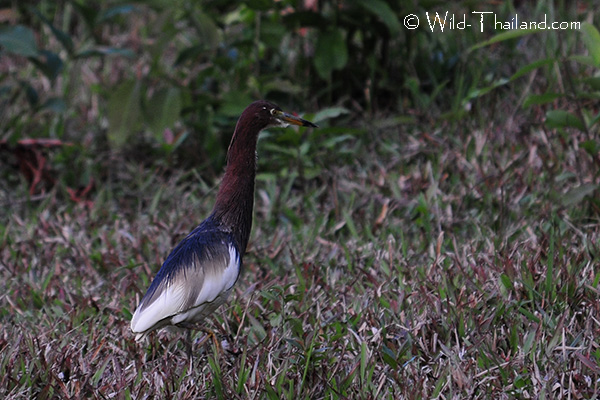
The Chinese Pond Heron's appearance varies by season, it is a stocky, medium-sized heron. During breeding season, males are a striking mixture of maroon, slate-grey, and white, with maroon head plumes and breast, a slate-grey back, and white wings and belly. Outside the breeding season, the bird is a more muted olive-brown streaked with white.
Distribution
Chinese Pond Herons are found throughout Thailand, in various aquatic habitats, including paddy fields, swamps, and ponds, especially in lowlands.
Chinese Pond Herons are known for being shy and wary birds that uses an ambush hunting strategy. Often seen standing in shallow water along the shores of rivers, streams, lakes and ponds. In Khao Yai, they are often seen feeding on prey in fresh cut grass.
Chinese Pond Herons are not known to breed in Thailand.
Scientific Name
Ardea sumatrana
Status
Critically Endangered
Size
Length: 115 cm
Weight: 1.3 - 2.6 Kg
Diet
Fish, amphibians, and crustaceans. They will also eat reptiles, small mammals, other birds, voles, shrews, and small rodents.
Appearance
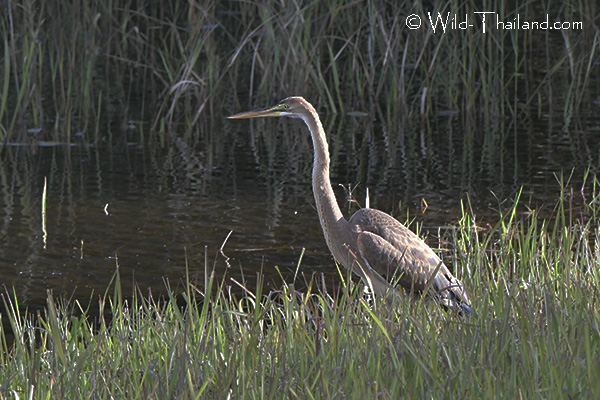
The Great-billed Heron is a large, dark grey wading bird with a paler, brownish neck and a massive bill.
Distribution
The Great-billed Heron is found in coastal areas of Thailand.
The Great-billed Heron prefers habitats like mangrove-lined estuaries, tidal channels, and islands. It is a nocturnal solitary hunter, that stalks prey in shallow water using its long legs, or waits motionless to strike with its powerful bill.
The Great-billed Heron, like other herons, build large nests over water in trees. Breeding information is limited due to its scarcity.
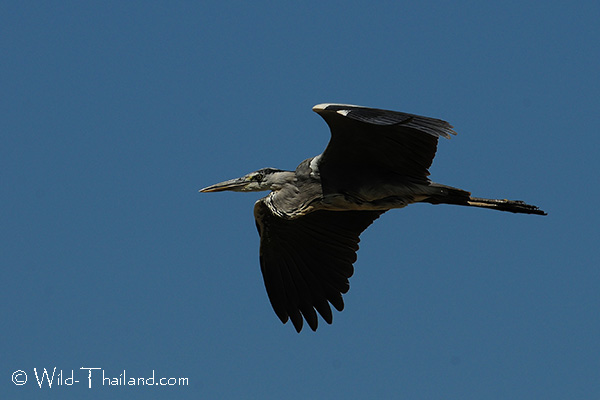
Scientific Name
Ardea cinerea
Status
Least Concern
Size
Length: 84 - 102 cm
Weight: 1 - 2 Kg
Diet
Primarily fish, also amphibians like frogs, small mammals such as voles, and even ducklings and other birds.
Appearance
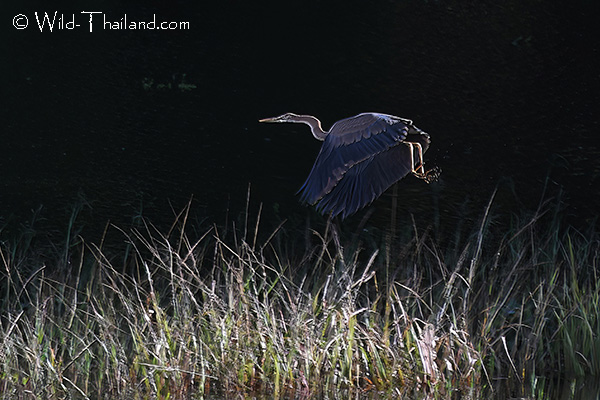
The Grey Heron is a large, tall wading bird with long legs and a long, S-shaped neck. It has grey back and wings, a white neck and underbody, a white head with a black eye-stripe that extends into a crest, and a long, pointed yellow bill. In flight, it retracts its neck and stretches its long legs behind.
Distribution
Grey Herons are found throughout Thailand in wetland habitats like rivers, lakes, marshes, and coastal areas.
The Grey heron is a solitary, patient hunter, standing still or slowly stalking in shallow water to strike at prey.
Grey Herons typically breed in spring, in colonies, called heronries, usually in large trees near water, where they build a large stick nest.
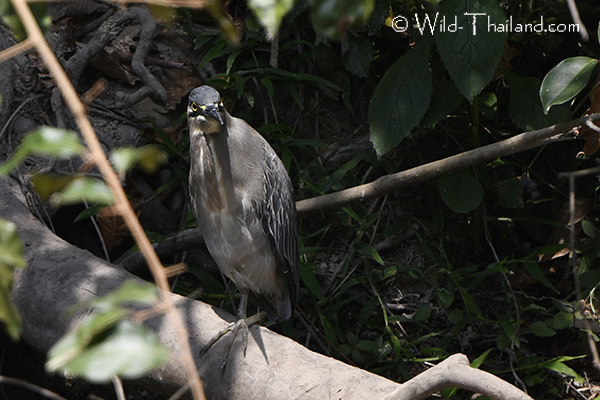
Scientific Name
Status
Least Concern
Size
Length: 35 - 48 cm
Weight: 130 - 250 g
Diet
Primarily small fish, they will also consume crustaceans, amphibians, and insects.
Appearance
The Little Heron is blue-grey with white underparts, a black cap, and a dark line from the bill to the eye.
Distribution
The Little Heron is found throughout Thailand.
Little herons are slow-moving, solitary hunters that use a "stand-and-wait" strategy, either standing still or walking slowly to find prey like fish and crustaceans in shallow water.
Little herons, breed prior to the start of the rainy season. They build stick nests in trees, shrubs, or reed beds, often in colonies with other water birds.
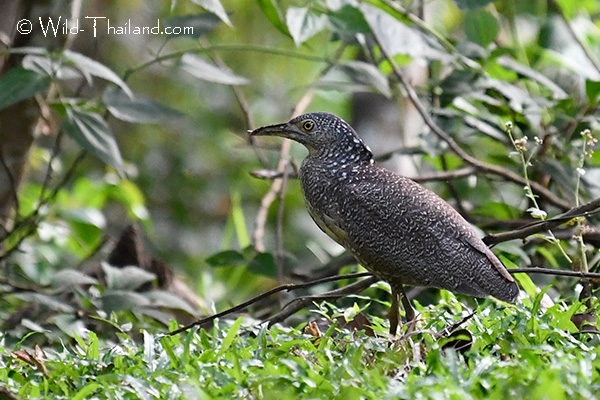
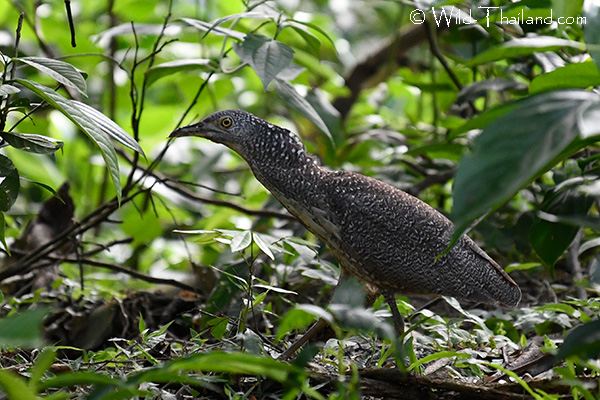
Scientific Name
Gorsachius melanolophus
Status
At Risk in Thailand
Size
Length: 46 - 51 cm
Weight: 377 - 451 g
Diet
Primarily earthworms and frogs, but also eats insects, molluscs, lizards, small fish, and crabs.
Appearance
The Malayan Night Heron is a stocky, medium-sized heron with a reddish-brown body, a black crown and long crest, streaked underparts, black flight feathers, a black bill, and yellow eyes.
Distribution
The Malayan Night Heron is found throughout Thailand.
The Malayan Night Heron is a solitary, nocturnal bird that forages slowly in wet forests, swamps and open fields. It hunts by walking and probing for earthworms. During the day, it roosts in dense vegetation like bamboo or trees.
The Malayan Night Heron breeds from May to September, building small nests made from sticks, typically 5 - 10 meters high, in a well concealed fork of a tree branch.