Other Names
Brown Boobook
Scientific Name
Ninox scutulata
Status
Least Concern
Size
Length: 25 - 35 cm
Weight: 100 - 220 g
Diet
Carnivore.
large insects, rodents, lizards, and frogs.
Appearance
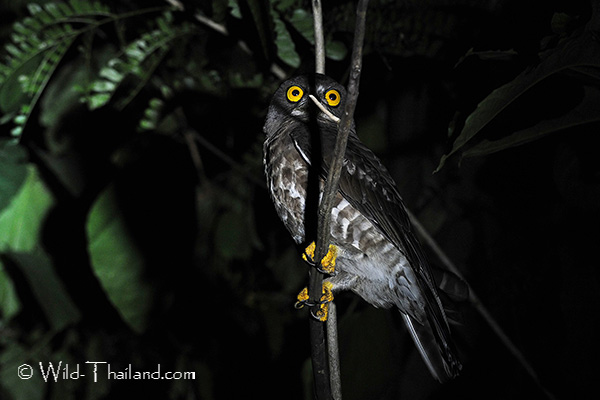
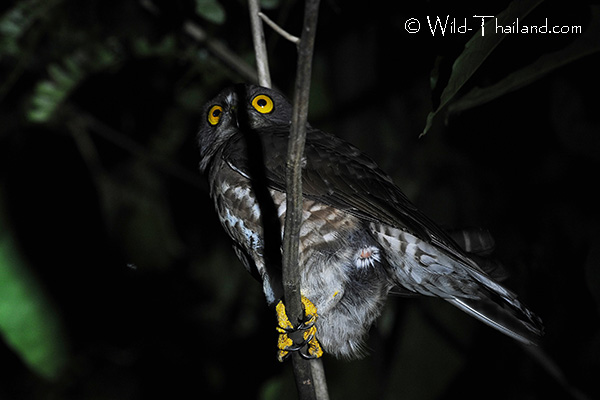
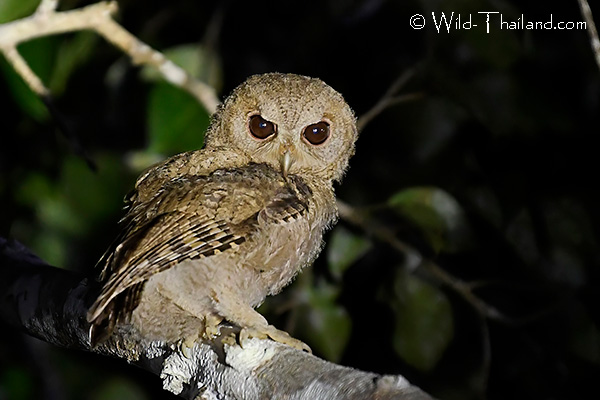
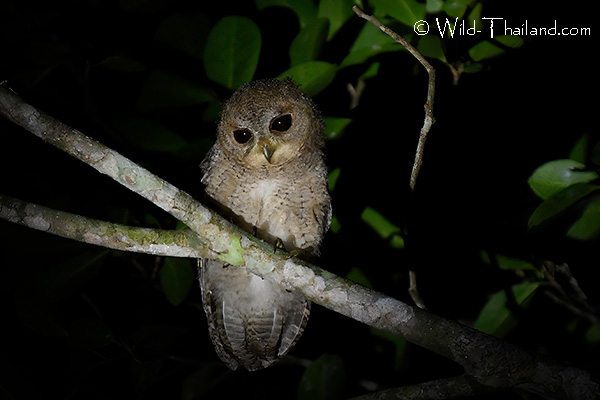
The Brown hawk-owl is a medium-sized owl, with a dark brown head and upper parts, a long, barred tail, and whitish underparts with reddish-brown streaks. It has a hawk-like appearance due to its flat head (without ear tufts) and lack of a distinct facial disc and bright yellow eyes.
Distribution
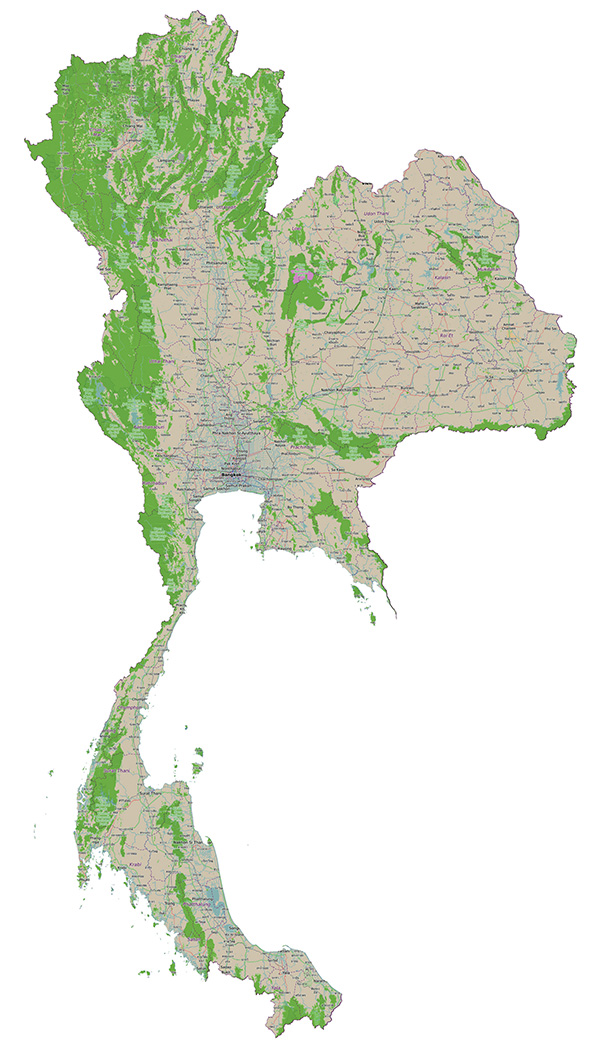
The brown hawk-owl is found throughout Thailand, in various forested habitats, from primary rainforests to cultivated areas and even urban and suburban parks and gardens.
Brown hawk-owls are primarily nocturnal birds that hunt at night. They roost alone or in pairs in shady, secluded branches during the day, often getting mobbed by smaller birds while roosting Their call is a soft, musical "oo-uk... ooo-uk" sound, and their flight is characterised by rapid wingbeats and glides.
Breeding in Thailand requires further research, they are known to make nests in tree cavities 15 - 20 meters above the ground.
Scientific Name
Strix leptogrammica
Status
Near Threatened in Thailand.
Size
Length: 45 - 57 cm
Weight: 800 - 1100 g
Diet
Carnivore.
Small mammals like rodents, birds, reptiles, and insects. They also consume fruit bats and have occasionally been seen eating fish.
Appearance
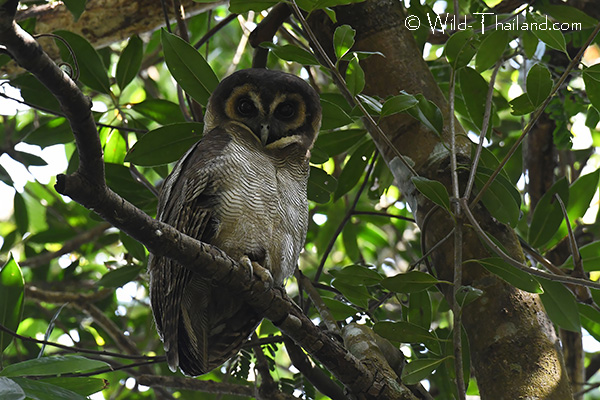
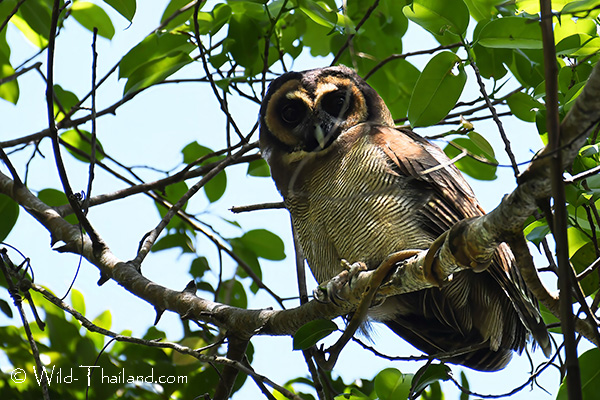
The Brown Wood Owl, is a large owl with a light chestnut-brown back and dark brown-barred wings and head. It has a rose-coloured facial disk edged in dark brown and a prominent white neckband. Its underparts are buff with dark brown streaks, and it has large, dark brown eyes.
Distribution
North, Northeast, West, and South. It inhabits various forest types, including mixed deciduous and evergreen forests, and can be found at altitudes up to 2,590 meters.
Brown wood owls are nocturnal, shy, and solitary predators that roost in dense foliage during the day.
Breeding is typically from January to April. They build nests in tree cavities, cliff crevices, or other open structures.
Scientific Name
Ketupa ketupu
Status
Near Threatened in Thailand
Size
Length: 38 - 48 cm
Weight: 1,028–2,100 g
Diet
Carnivore.
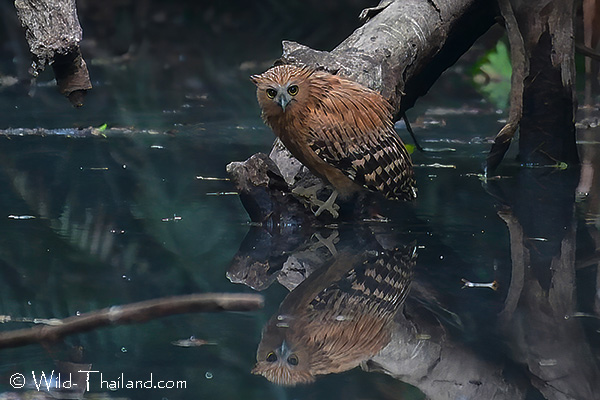
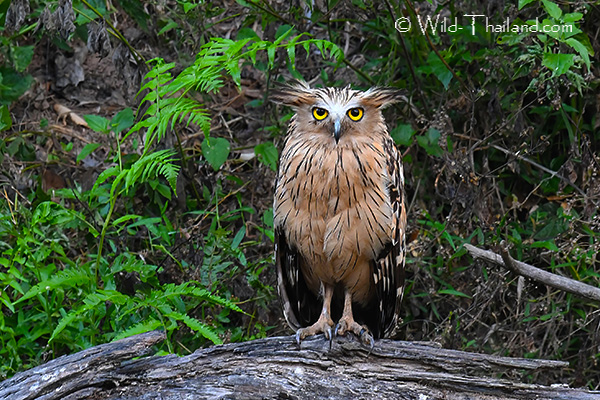
Primarily fish, crabs, and frogs, they are also known to eat small reptiles, birds, large insects, and small mammals like rats and mice.
Appearance
Distribution
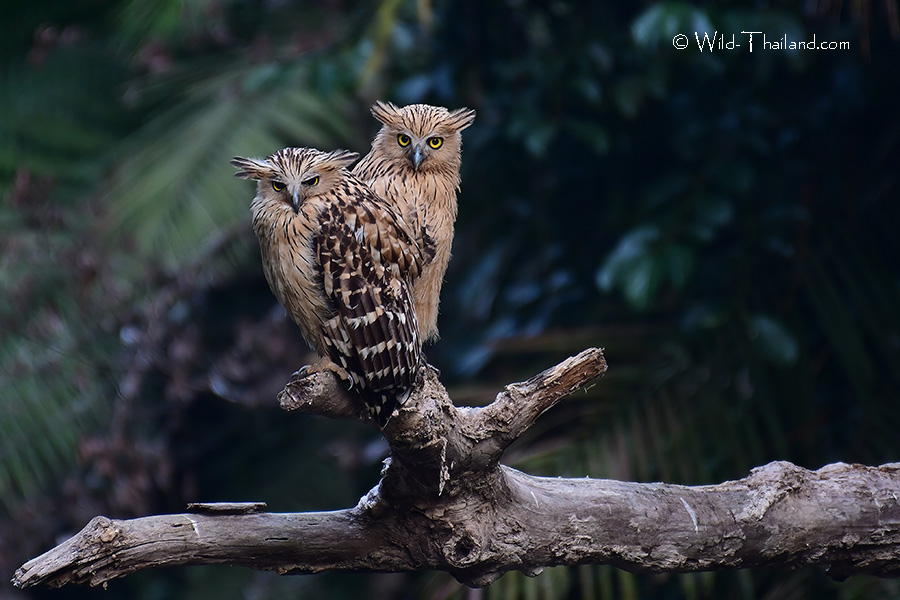
Buffy Fish Owls are nocturnal, territorial birds, that hunt by perching at the water's edge to snatch prey like fish and crabs, or by wading in shallow water
Breeding is typically from February to April. They build their nests on top of large bird's-nest ferns, in tree forks covered with vegetation, in tree hollows, or even in abandoned nests of other birds.
A pair of Buffy Fish Owls have, for several years, nested in a tree behind the food stalls.
Scientific Name
Ketupa nipalensis
Status
Near Threatened in Thailand.
Size
Length: 50 - 65 cm
Weight: 1.5 - 2.5 kg
Diet
Carnivore.
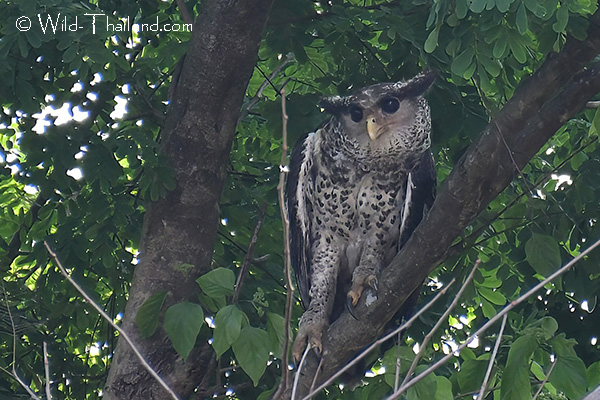
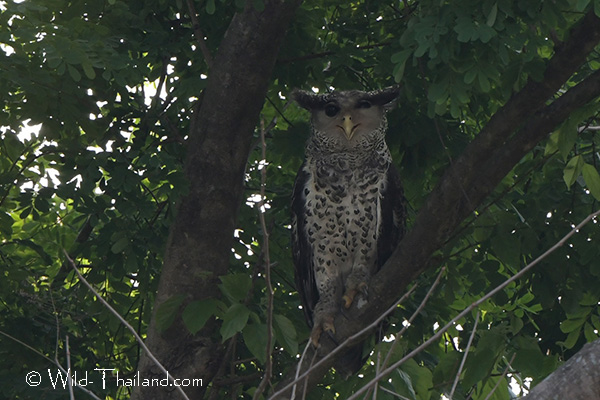
Large mammals like jackals, hares, and young deer, as well as arboreal prey such as squirrels and monkeys. It also preys on birds like pheasants and peafowl, and opportunistic foods like snakes, lizards, fish, and even carrion. Due to hunting diurnal prey like giant squirrels, the owl may forage during the day in addition to its nocturnal hunting habits.
Appearance
The Spot-bellied Eagle Owl is a large, dark brown owl with prominent, sideways-slanting ear tufts. Its upper parts are greyish-brown and mottled, while the underparts are a paler buff with dark brown streaks and spots on the belly that give it its name. Key features include a pale facial disk and distinct, orange-coloured eyes.
Distribution
Spot-bellied Eagle Owls are primarily nocturnal, solitary hunters that roost in dense foliage during the day, but are known to hunt during daylight, especially in undisturbed forests.
Breeding season is typically from November to March. They do not build their own nests but use abandoned stick nests of larger birds like eagles, vultures, or kites, typically located high in the fork of a large tree, often near water. They also utilise large tree hollows, caves, or sheltered rock crevices.
Scientific Name
Athene brama
Status
Near Threatened in Thailand.
Size
Length: 19 - 22 cm
Weight: 110 - 140 g
Diet
Carnivore.
Insects, small mammals, reptiles, amphibians and small birds.
Appearance
The Spotted Owlet is a small, stocky owl, with a grey-brown upper body covered in white spots. Its underparts are white with brown streaks or bars, and it has large yellow eyes, a white facial disc, and prominent white eyebrows and neckband.
Distribution