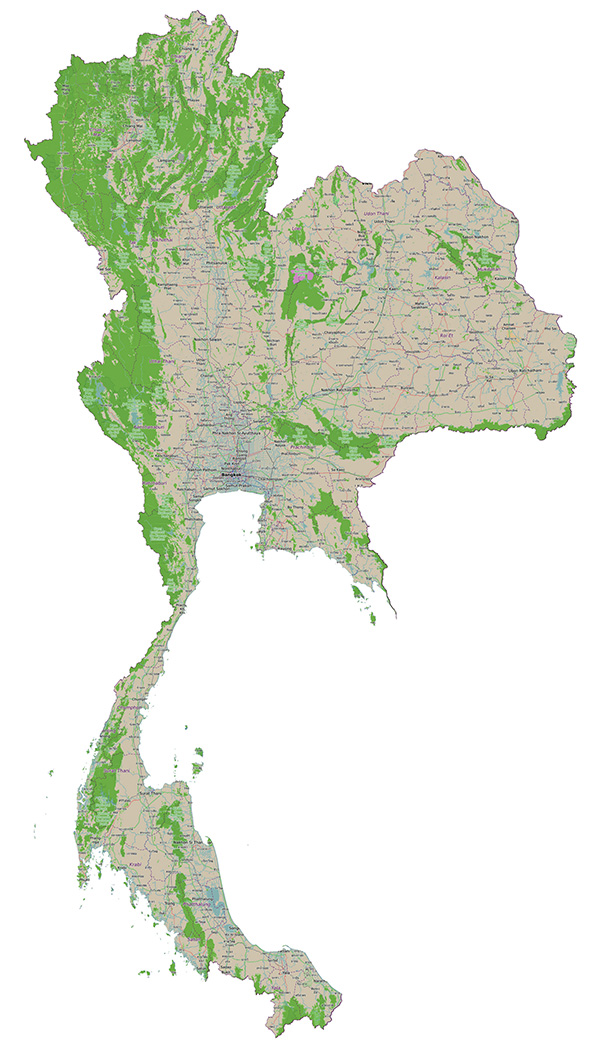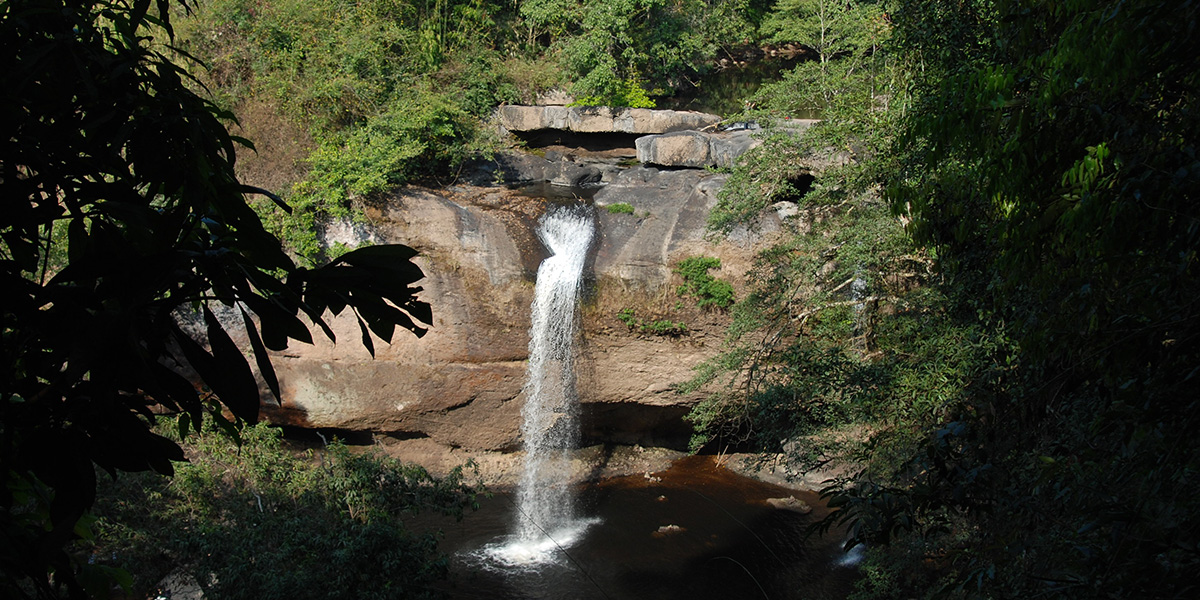
Khao Yai National Park is located in northeast Thailand, at the conjunction of Nakhon Ratchasima, Prachinburi, Saraburi and Nakhon Nayok provinces. It is approximately 150 - 160 km (straight line) from Bangkok. There are two entrances to the park, the north entrance, located in Nakhon Ratchasima province and, the south entrance in Nakhon Nayok province.
On the 18th September 1962, Khao Yai became the first national park to be established in Thailand. In 1984 it was designated an ASEAN Heritage site and, in 2005 it was designated a UNESCO World Heritage site.
Khao Yai National Park, is primarily moist evergreen forest between 500 - 1000 m, covering approximately 60 - 70 % of the park. The remaining lower elevations are mixed deciduous and dry evergreen forest and hill evergreen forest. Other vegetation types include grasslands and secondary growth in areas that were previously cultivated.
Khao Yai is home to over 70 species of mammals, 400 + species of birds, 200 + species of reptiles and amphibians and, an unknown number of insects.
Khao Yai is part of the Dong Phayayen–Khao Yai Forest Complex. It covers the areas of five protected areas in the Dong Phaya Yen Mountains and Sankamphaeng Range, namely Khao Yai, Thap Lan, Pang Sida and Ta Phraya National Parks, and Dong Yai Wildlife Sanctuary.
Khao Yai National Park covers an area of 2,166 km², making it the third largest National Park in Thailand.
Khao Yai is the most visited national park in Thailand, with over 1,000,000 visitors each year.