Scientific Name
Panthera pardus delacouri
Status
Endangered
Size.
Body length: 110 - 150 cm
Tail Length: 50 - 60 cm
Weight: 50 - 80 Kg.
Diet
Carnivorous.
Deer, Wild Pigs, Dogs, Primates, Porcupines and other small mammals.
Appearance
Typically yellow-orange fur with dark spots and rosettes. Melanistic variants are common, with some animals appearing completely black.
Habitat
Lowland tropical rainforests, evergreen mountain forests, dry evergreen and mixed deciduous forests.
Distribution
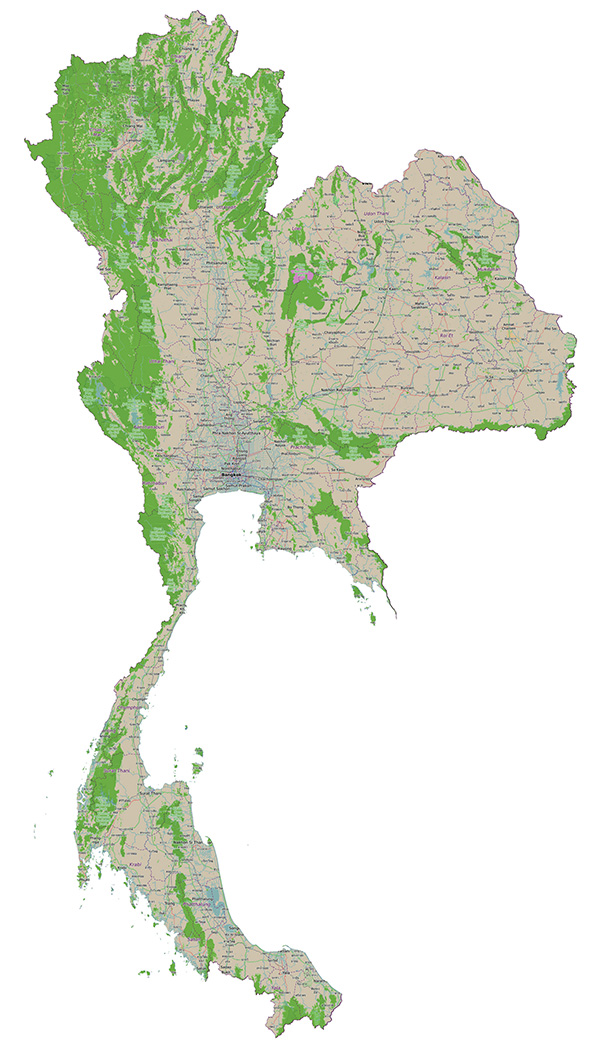
Indochinese Leopards are only found in the west of Thailand, from Malaysia to northern Thailand.
Indochinese Leopards are typically nocturnal, but may be seen at any time of day, especially in the early morning and evening. They are also seen resting in trees throughout the day.
Although primarily nocturnal, sightings at night are rare. Leopards will venture close to human activity if they feel safe, it is not uncommon to see evidence of Leopard activity close to the camps.
During the day, Leopards are sometimes seen walking along, and crossing the road before Ban Krang Campsite. They are also spotted walking along the track from Ban Krang Campsite to Phanoen Thung Campsite
If any Langurs are in the vicinity, they will become very alert and issue warnings to the troop. Also Muntjac will bark warnings that a predator is in the vicinity.
Although there are no reports of Leopards attacking people, they are more than capable of inflicting serious injuries if cornered, trapped or threatened.
Move away from the Leopard by walking backwards, DO NOT RUN.
Keep your distance, do not in any way attempt to block or restrict access to a Leopard that is in your immediate vicinity. Always give the Leopard plenty of space to escape.
Ignoring advice can be dangerous to you or others near to you.
Scientific Name
Prionailurus bengalensis
Status.
Least Concern
Size.
Body length: 40 - 65 cm
Tail Length: 18 - 30 cm
Weight: 4 - 7 Kg.
Diet.
Carnivorous.
Small mammals, birds, lizards, amphibians and insects.
Appearance.
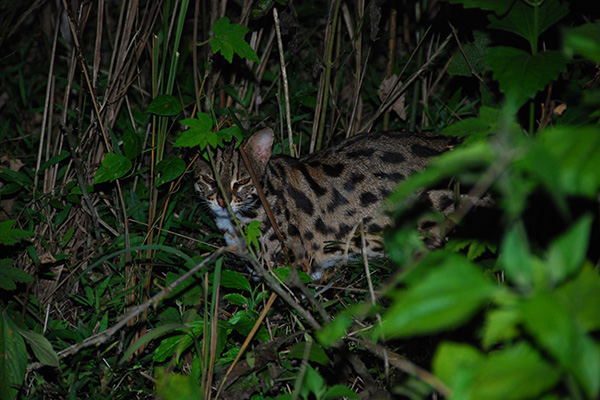
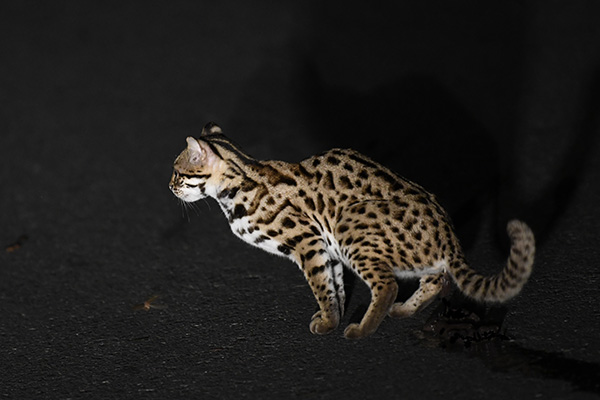
Small sized cat (size of a large domestic cat). rRgional colour variations from yellow to greyish fur, with black rosettes and spots.
Habitat
forests, jungles, scrub, secondary vegetation and agricultural areas. Lowland, hilly and mountainous regions.
Distribution.
Distributed throughout Thailand, but rarely seen outside of protected areas. They are particularly prevalent in protected areas like the Western Forest Complex and the Northern Tenasserim Forest Complex.
Leopard Cats are nocturnal, but are sometimes seen resting or moving during the day.
Because they are nocturnal, the best option for seeing a Leopard Cat is during one of the official Night Safari Tours.
They will sometimes be seen, in and around the campsites and other park accommodation after dark, but will typically move away if disturbed.
Keep your distance, do not in any way attempt to block or restrict access to a Leopard Cat that is in your immediate vicinity. Always give the Cat plenty of space to escape.
Please have respect, DO NOT FEED!
Ignoring advice can result in the Leopard Cat becoming unnecessarily distressed.
Scientific Name
Pardofelis marmorata
Status
Near threatened
Size
Body length: 45 - 62 cm
Tail Length: 35 - 55 cm
Weight: 2 - 5 Kg.
Diet.
Carnivorous.
Birds, small arboreal mammals like tree squirrels, tree shrews, rodents, small reptiles, amphibians and insects.
Appearance.
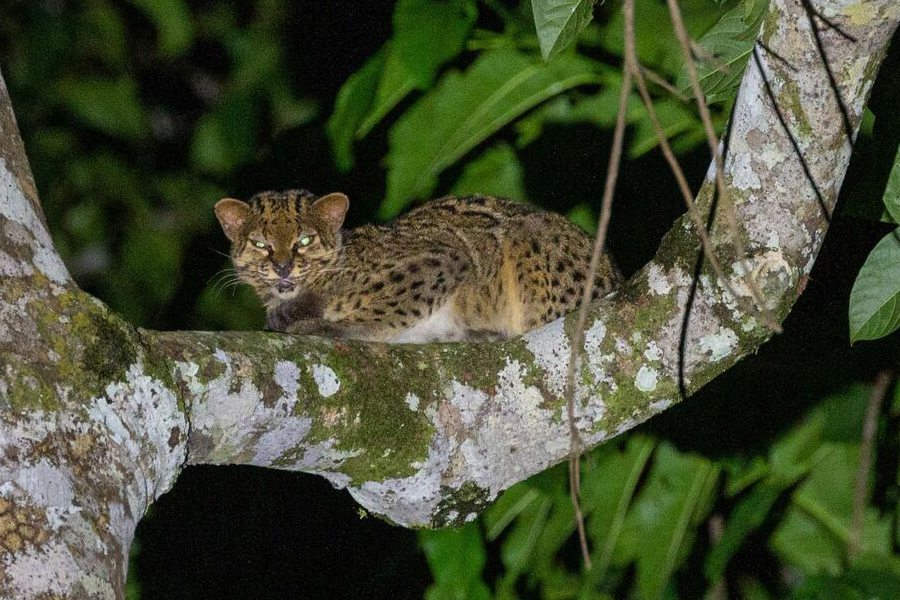
Small Cat (similar to domestic cat). It has thick, soft fur, varying from brownish gray through yellow to reddish brown, with large irregular blotches, which are paler in the centre.
Habitat
The Marbled Cat is arboreal preferring undisturbed, moist and mixed deciduous-evergreen tropical forests.
Distribution.
Typically in protected forested, hilly or mountainous areas.
Marbled Cats are nocturnal and arboreal, but are sometimes (very rarely) seen resting in trees, and crossing the road during the day.
Sightings are very rare, and typically limited to brief glimpses as they cross a road or trail. If you are lucky and find a Marbled Cat resting in a tree, remain silent and keep your distance.
The best option for possibly sighting a Marbled Cat, is by taking an official night safari tour from the headquarters.
Our personal sightings have been limited to a daylight road crossing and a night road crossing, both locations on or near the night safari route.
Nam Nao has restricted access to much of the park, they do however have a Night Safari Tour. It was on a night safari, that we were very lucky to see a Marbled Cat, at the lake next to the Helipad (situated to the east of the park entrance on the other side of the road).
Keep your distance, do not in any way attempt to block or restrict access to a Leopard Cat that is in your immediate vicinity. Always give the Cat plenty of space to escape.
Please have respect, DO NOT FEED!
Ignoring advice can result in the Leopard Cat becoming unnecessarily distressed.