Scientific Name
Elephas maximus
Status
Endangered
Size
Body length: 550 - 650 cm
Shoulder Height: 240 - 270 cm
Weight: 3600 - 6000 Kg
Diet
Herbivore.
Grass, fruit, tree bark, roots, leaves and stems.
Appearance
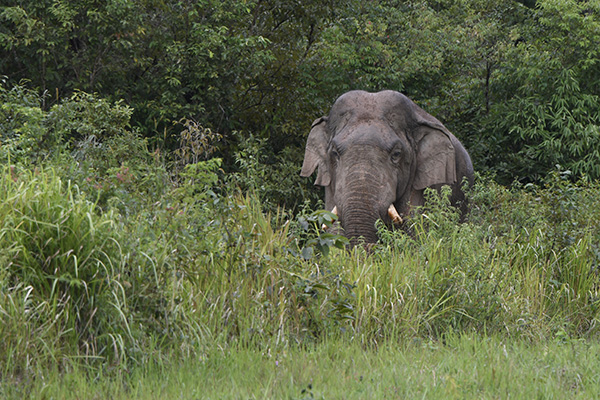
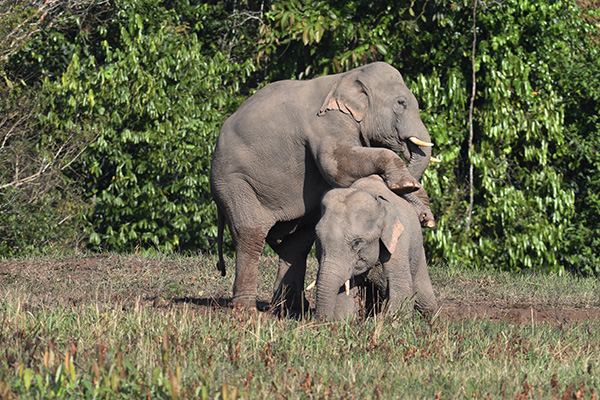
Dark grey to brown, twin domes on head and single finger at the end of the trunk.
Habitat
Grasslands, evergreen forests, semi-evergreen forests, deciduous forests and dry thorn forests.
Distribution.
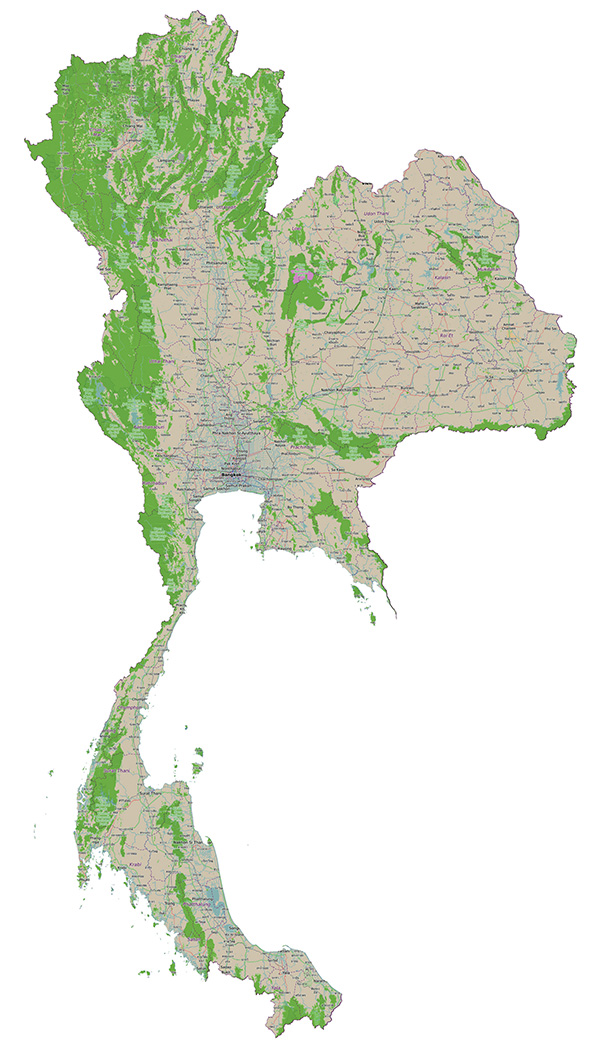
Throughout Thailand in protected forested areas often hilly or mountainous.
Although sightings of these cats have been reported, they are rarely seen due to their habitat and behaviour. Nearly all sightings today are with camera traps.
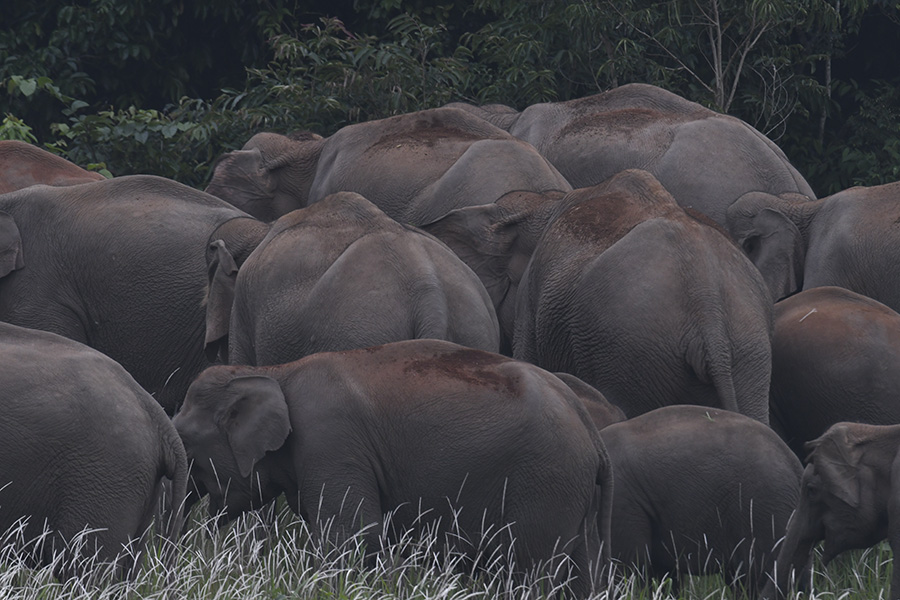
Elephants form herds consisting of females and young, male elephants are solitary.
Asian Elephants are resident in most larger national parks and wildlife sanctuaries. Although primarily diurnal, they will rest throughout day and night for up to four hours. They will often sleep standing up, but also lay down. Herds will lay down together and rest.
Elephants in Khao Yai are more tolerant of people, but each year the public interest in the elephants has been increasing, to the point that they are becoming frustrated with the number of people blocking the roads, whenever they venture out of the forest.
Elephants are often seen in the open grass areas, where there are mineral licks and / or water. Khao Khieo, the Grasslands, old golf course and the open grass land around the entrance to the trail to the Nong Pak Chi observation tower are areas where elephants frequently visit.
They will also use roads to travel along, particularly Pachinburi Road, Khao Khieo Road and Thanarat Road to Pak Chong.
Although there are elephant hot spots, they can be seen just about anywhere within in the park.
Some male elephants in Khao Yai are known to be inquisitive, and will passively investigate anything or any one who interests them.
Elephants in Kaeng Krachan are more active in the late evening and early morning. Elephant sightings are not common and you will often hear them without seeing them.
The elephants in Kaeng Krachan suffered years of poaching and persecution. They are typically intolerant of people and show obvious distress when encountered, often running into the nearest forest cover. It has been known for elephants in Kaeng Krachan to push trees over so they block vehicle access.
Elephants are most active along the road from the park entrance to Bang Krang campsite, after the s- bends. They are also common visitors along the road, between Bang Krang campsite and the small dam. They will occasionally come into the camp site.
Probably the best park in Thailand to see wild elephants with any certainty. Entrance is only allowed to official tour vehicles. The chances of seeing elephant is very high.
Look out for elephants as you drive through the reclaimed rubber tree and eucalyptus tree plantations. The open area before the ranger station and the track to the reservoir are good places to see elephants.
The most dangerous and intriguing mammal in Thailand, if asked whether they would prefer to meet a tiger or elephant in the forest, national park rangers will typically say "tiger".
These are not circus or zoo elephants, they are wild animals. More than twenty people are killed by wild elephants in Thailand each year.
Male elephants in musth are very dangerous. During musth, testosterone levels are up to 100 times greater. They exhibit very aggressive behaviour during this time. I have seen small male elephants in musth, attack much larger males and chase them away.
Male elephants in musth, have obvious secretions down their heads from their temporal glands, along with excessive secretion of urine containing the pheromone "frontalin" that often make the inside of the rear legs permanently wet.
Keep your distance, do not in any way attempt to block or restrict access to an elephant or elephants that are in your immediate vicinity. Always give the elephant plenty of space to move away. Too many times I have seen a herd of elephants attempting to cross the road in the grasslands, only to be prevented by a wall of tourists blocking their route. Sometimes the herd is attempting to stay ahead of a male elephant in musth, the distress is obvious.
Do not use camera flash. Elephants do not like camera flash.
Do not make loud sudden noises.
Always be aware that someone or something else may alarm an elephant or elephants, they are not selective and will attack the nearest car or person.
Elephants are not good at climbing up hills, if you need to get away from an elephant, look for any steep incline and keep going.
Elephants can run up to 25 km/h.
I have seen people giving fruit to wild elephants. The next time the elephant sees a similar car of the same colour, it will expect fruit.
Please have respect, DO NOT FEED!
Ignoring advice can result in the elephant being unnecessarily distressed and may result in the elephant attacking.
In a well known western forest complex national park, failure to heed the warnings from park rangers,resulted in the death of a young American lady, who ventured out of the campsite at night to photograph elephants.