Scientific Name
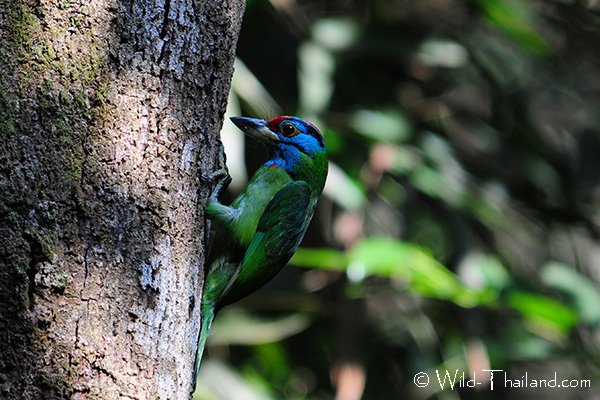
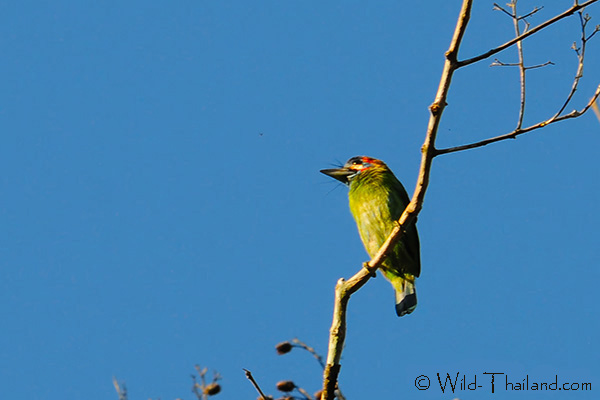
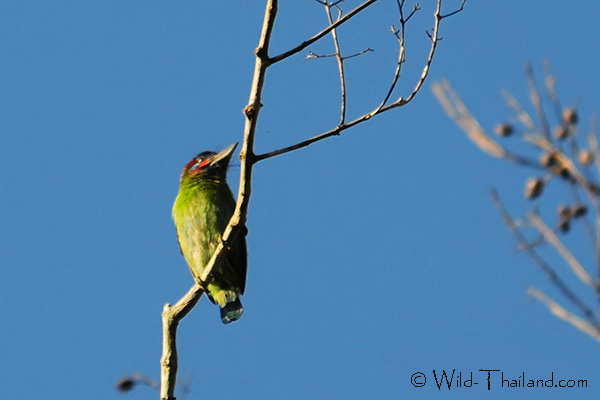
Psilopogon cyanotis
Status
Least Concern
Size
Length: 16 - 17 cm
Weight: 32 - 40 g
Diet
Fruits and insects.
Appearance
Distribution
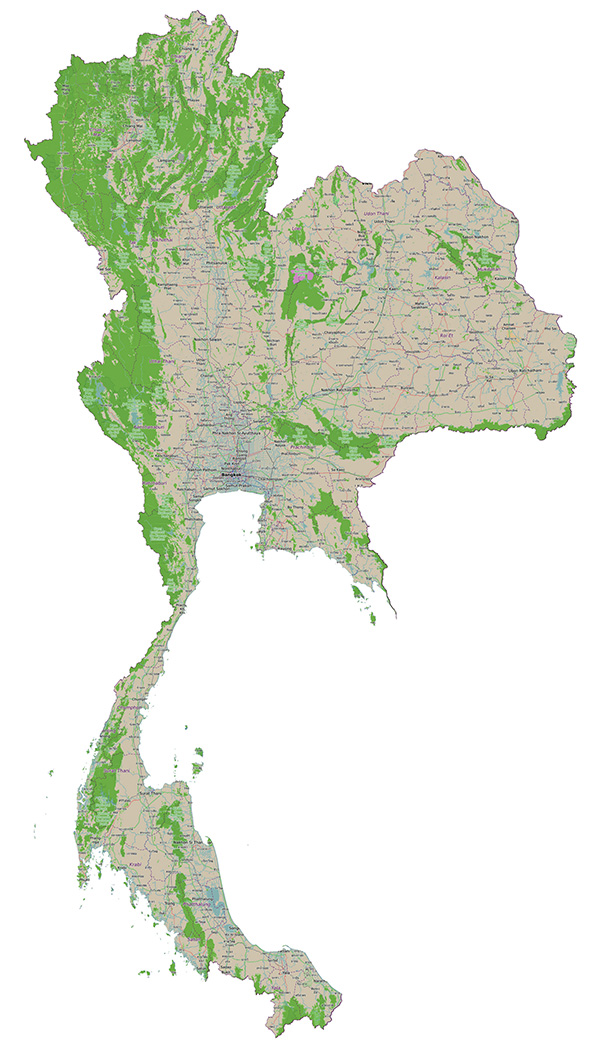
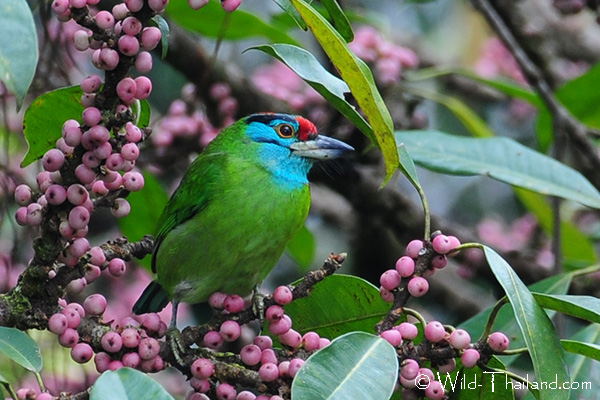
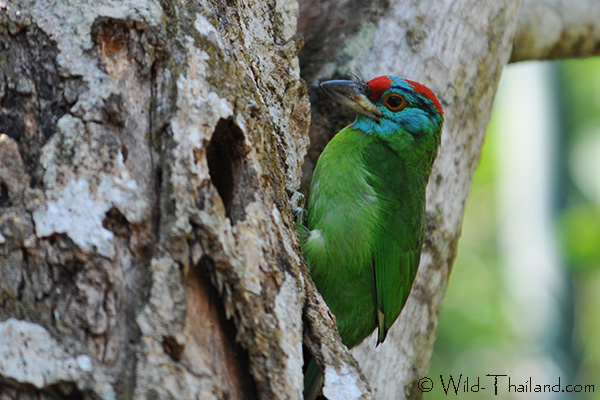
The blue-eared barbet is found throughout Thailand, inhabiting lowland and foothill forests up to 1600 meters.
Blue-eared Barbets are tree-dwelling birds, that live in dense forests and are most often heard before they are seen, due to their loud, ringing calls. They are often seen in fruit and berry trees.
As with other members of the Barbet family, they nest in holes in trees. During the breeding season January to March, but can extend to June., these birds can be seen and heard excavating nest holes. During nesting they will visit the hole to feed it's mate or chicks.
Scientific Name
Psilopogon asiaticus
Status
Least Concern
Size
Length: 22 - 24 cm
Weight: 61 - 103 g
Diet
Fruits and insects.
Appearance
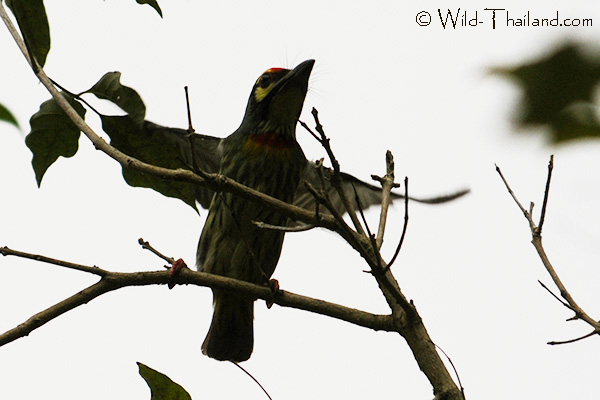
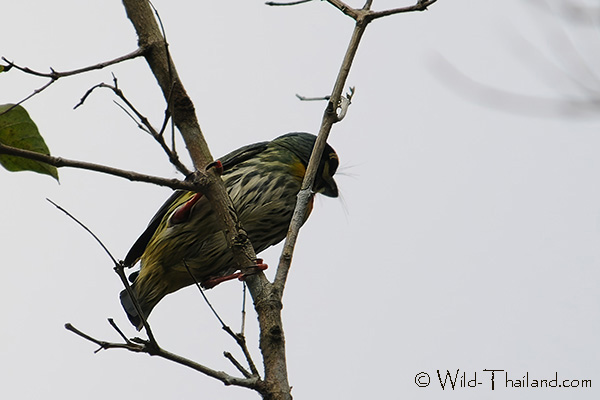
The Blue-throated Barbet is bright green with a distinctive blue throat and a red-and-yellow crown. It has a heavy, pale-based bill, and its body is primarily green, often with a pale bluish patch on the forehead and a red patch on the forehead.
Distribution
found in the hilly regions of northern and western Thailand, from lowlands up to 2,000 meters.
These birds are often seen in fruit or berry trees.
Breeding is from March to July, nesting in holes in trees.
Scientific Name
Pomatorhinus schisticeps
Status
Least Concern
Size
Length: 15 - 17 cm
Weight: 30 - 53 g
Diet
Fruits, particularly figs, as well as berries, flower petals, and occasionally insects.
Appearance
The Coppersmith Barbet is a small, stout bird with a bright green body, yellow cheeks and throat, and a distinctive crimson forehead and breast patch. It also has a black eye-stripe and pale yellow underparts with green streaks.
Distribution
Throughout Thailand, including both forests and cultivated land.
These birds are often seen in fruit or berry trees.
As with other members of the Barbet family, they nest in holes in trees. During the breeding season January to March, these birds can be seen and heard excavating nest holes. During nesting they will visit the hole to feed it's mate or chicks.
Scientific Name
Psilopogon virens
Status
Least Concern
Size
Length: 32 - 35 cm
Weight: 192 - 295 g
Diet
Fruits, seeds, and berries, along with insects and other small invertebrates.
Appearance
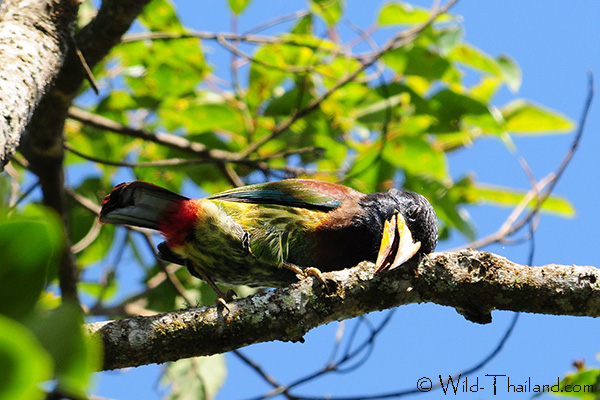
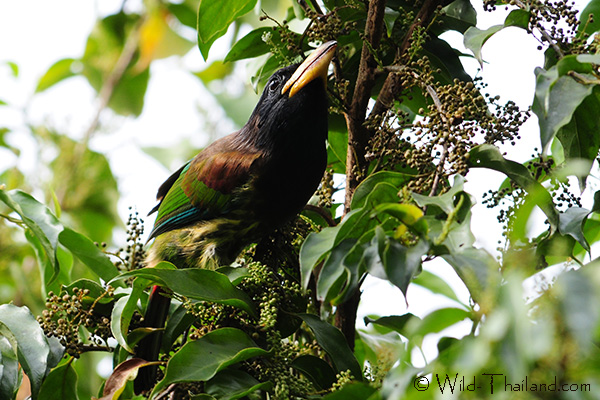
The great barbet is the largest of the Barbet family, it is a colourful bird with a distinctive appearance: a deep blue head, a large yellow bill, a brown and green-streaked body, and a crimson vent.
Distribution
Found in the northern regions of Thailand, specifically in forests at lower to middle elevations.
These birds are often seen in fruit or berry trees.
As with other members of the Barbet family, they nest in holes in trees. During the breeding season April to July, these birds can be seen and heard excavating nest holes. During nesting they will visit the hole to feed it's mate or chicks.
Scientific Name
Psilopogon faiostrictus
Status
Least Concern
Size
Length: 24 - 27 cm
Weight: 40 - 60 g
Diet
Fruits and berries, such as figs, but it also supplements its diet with insects and other arthropods,
Appearance
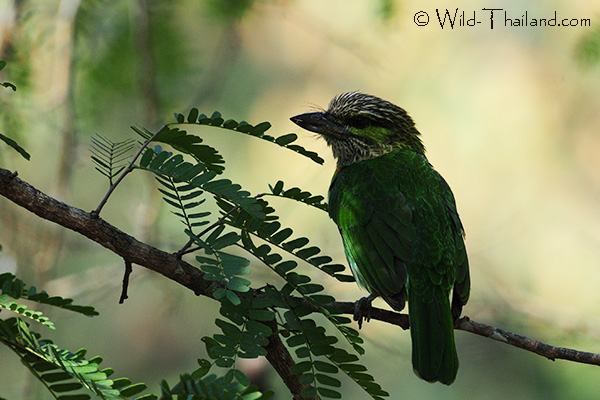
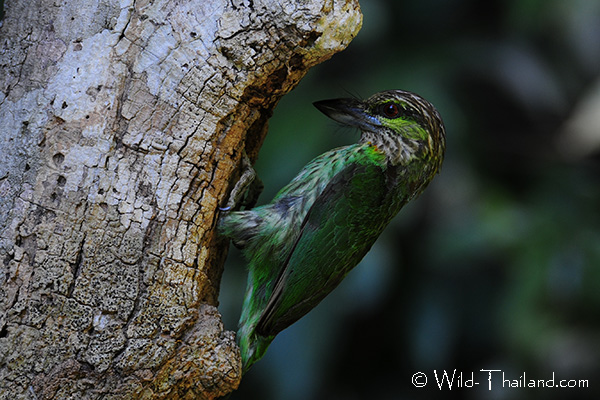
The Green-eared Barbet is a plump, greenish bird with a distinctive pale yellow-green ear patch and a streaked brown head and breast. It has a heavy, gunmetal-gray bill, a short tail. The belly is a green-streaked yellow.
Distribution
Found in forested areas across northern, eastern, central, and southern Thailand. It prefers the canopy of evergreen, mixed, and open woodlands, typically at elevations up to 900 meters.
These birds are often seen in fruit or berry trees.
As with other members of the Barbet family, they nest in holes in trees. During the breeding season February to July, these birds can be seen and heard excavating nest holes. During nesting they will visit the hole to feed it's mate or chicks.
Scientific Name
Psilopogon incognitus
Status
Least Concern
Size
Length: 22 - 23 cm
Weight: 26 - 41 g
Diet
Primarily eats fruits, especially figs, and also consumes a wide range of insects such as beetles, ants, and cicadas, with insects forming a larger part of their diet during the breeding season.
Appearance
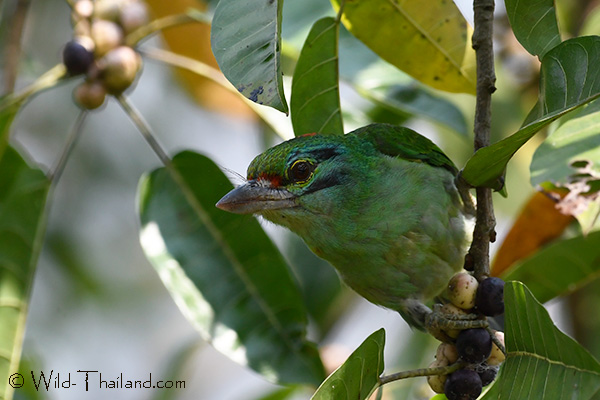
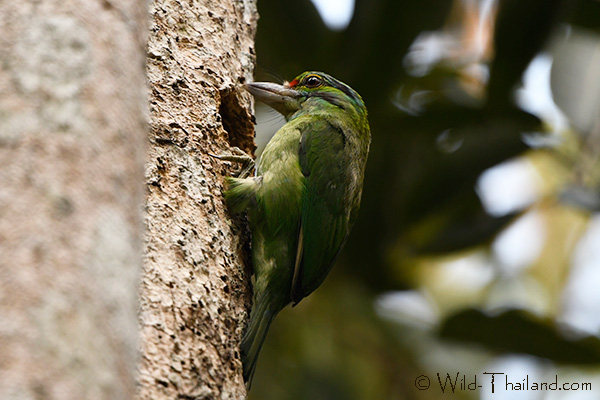
The Moustached Barbet is a medium-sized, green bird with a brightly coloured face, characterised by a blue throat and cheeks, a black eyestripe, and a distinctive black "moustache" line on its cheek. It has a red patch on its forehead and nape and a small red spot on each side of its upper breast.
Distribution
Found in the hills of northern, central, and eastern Thailand, between 600–700 meters.
National Park
These birds are often seen in fruit or berry trees.
As with other members of the Barbet family, they nest in holes in trees. During the breeding season December to June, these birds can be seen and heard excavating nest holes. During nesting they will visit the hole to feed it's mate or chicks.