Scientific Name
Psilopogon cyanotis
Status
Least Concern
Size
Length: 31 - 35 cm
Weight: 70 - 90 g
Diet
Insects, especially bees, wasps, and hornets.
Appearance
Distribution
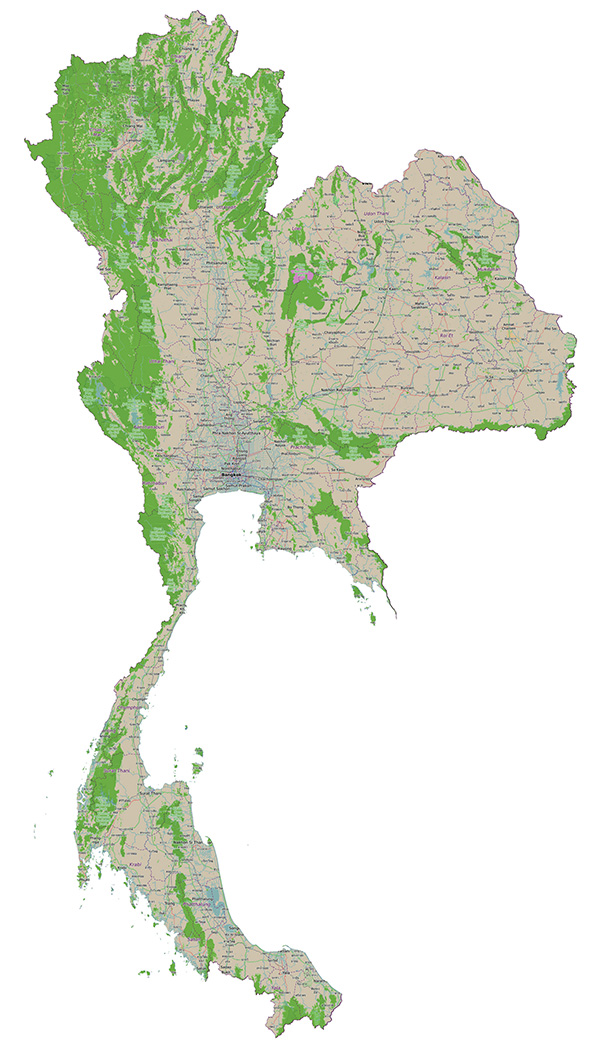
Found in central and northern hill regions of Thailand. It is considered uncommon or local in Thailand and prefers deciduous or evergreen forests, forest clearings, and areas with scattered trees up to about 2,200 meters elevation.
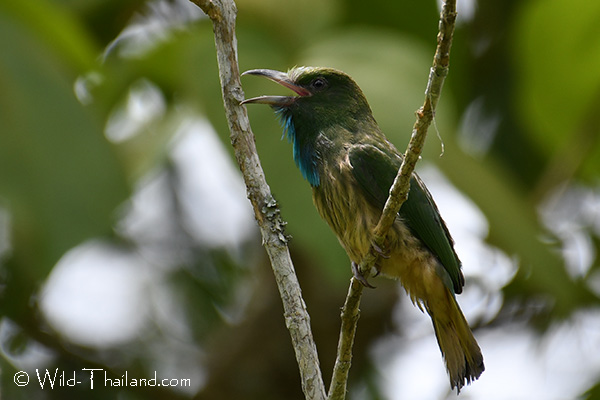
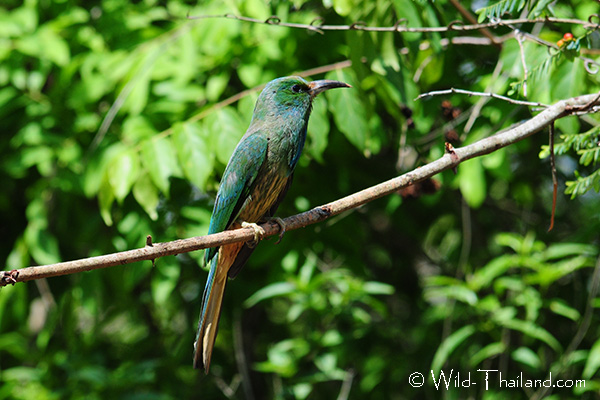
The Blue-bearded Bee-eater has a unique method of hunting bees, by provoking giant honeybees to launch a mass exodus, at which point it swoops in to capture the guard bees. It is a solitary or pair-dwelling hunter, often perching motionless before making an aerial sally or gleaning insects from bark.
Blue-bearded bee-eaters breed between February and August. They excavate a deep, long tunnel in a mud bank for their nest.
Scientific Name
Merops leschenaulti
Status
Least Concern
Size
Length: 18 - 20 cm
Weight: 26 - 33 g
Diet
Flying insects, especially bees, wasps, and hornets, which it catches in mid-air. It also eats other insects like ants, termites, dragonflies, butterflies, and grasshoppers.
Appearance
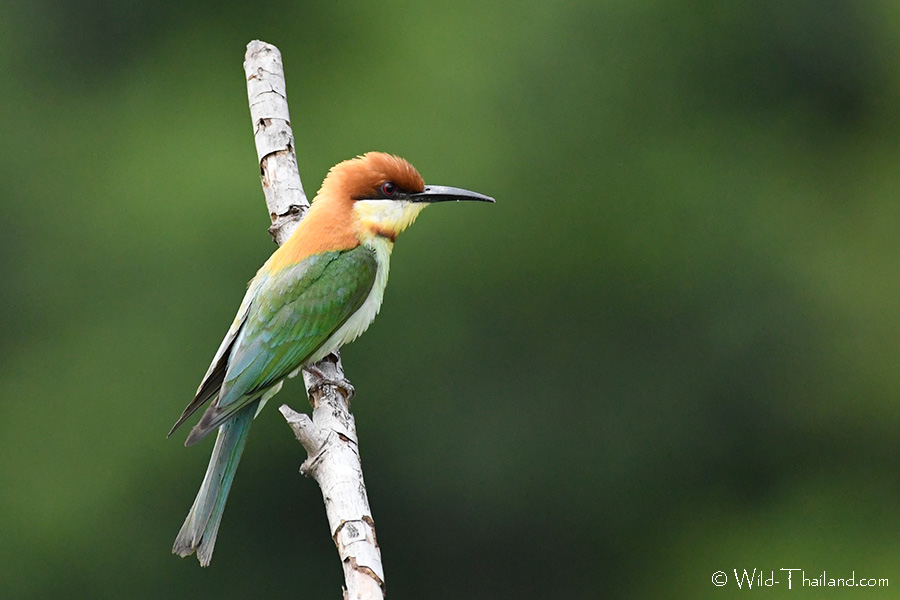
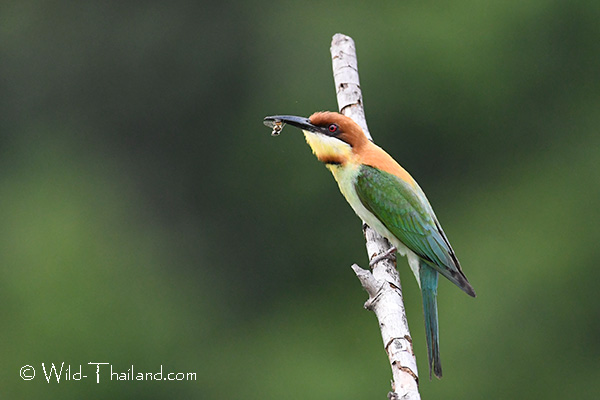
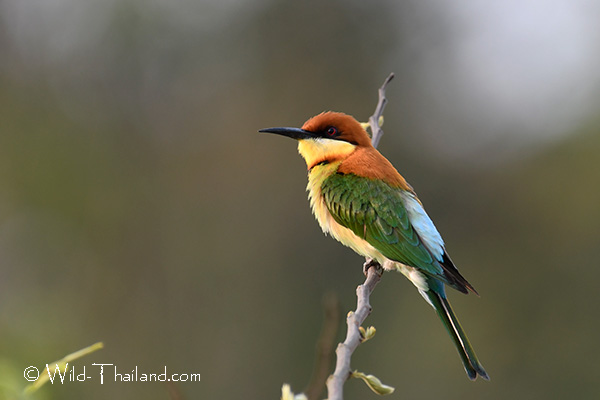
The Chestnut-headed Bee-eater is a colourful bird with a distinct chestnut-brown head, a bright green back, and a blue rump.It has a black mask, a yellow throat and cheeks, and a black, pointed, slightly curved bill.
Distribution
The Chestnut-headed Bee-eater is found throughout much of Thailand.
Chestnut-headed Bee-eaters are often seen sitting on low small branches, where they will swoop down an capture insects on the wing. It is common to see a number of Chestnut-headed Bee-eaters in the same area and even sharing perches.
Chestnut-headed Bee-eaters typically breed from March to June. They build colonies of nests by excavating long tunnels in sandy or earthen banks.
Scientific Name
Merops orientalis
Status
Least Concern
Size
Length: 16 - 18 cm
Weight: 15 - 25 g
Diet
Insects, particularly bees and wasps, though it also eats flies, butterflies, beetles, and dragonflies.
Appearance
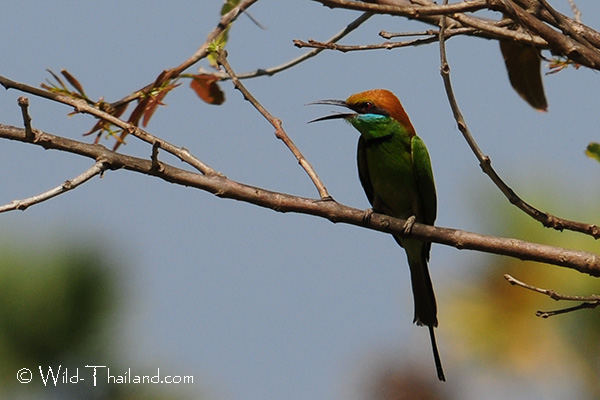
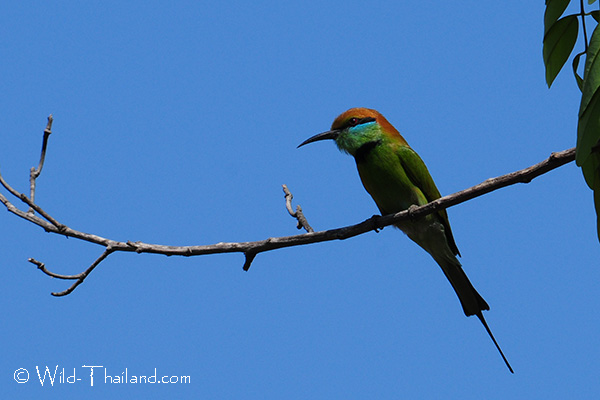
The Green Bee-eater is a colourful bird with bright green plumage, a greenish-blue throat, and a thin black throat band. It is easily distinguished by its long, pointed black bill and long, central tail feathers.
Distribution
The Green Bee-eater is a common resident bird found in almost all of Thailand, preferring open habitats like fields, parks, and agricultural land.
Green Bee-eaters catch their prey in mid-air, and before eating, they repeatedly strike the insect against a hard surface to remove the sting and break the exoskeleton.
Green Bee-eaters breed between March to June. They excavate tunnels in sandy soil to build their nests.