Scientific Name
Arachnothera modesta
Status
Least Concern
Size
Length: 17 - 18 cm
Weight: 20 - 25 g
Diet
Omnivore.
Nectar and insects, primarily spiders.
Appearance
Distribution
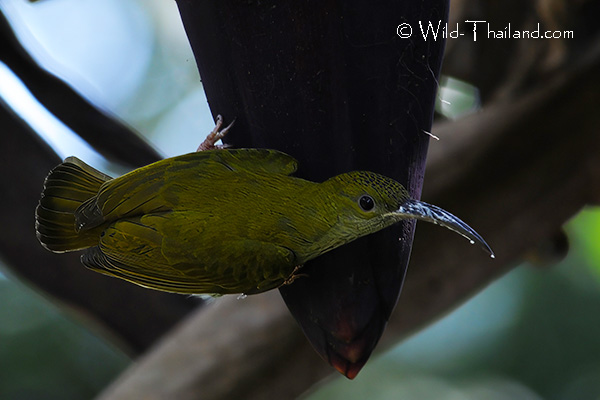
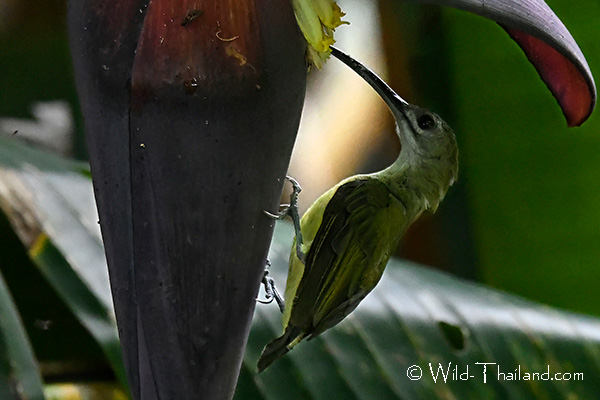
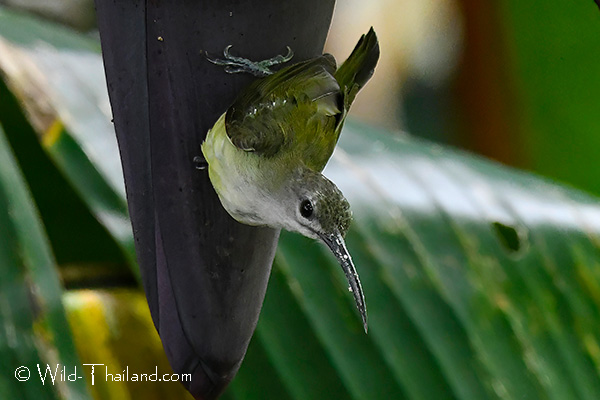
Grey-breasted Spiderhunters are active birds, that do not perch for long, and can be found alone or in pairs. Often seen on banana plant flowers.
Breeding is from April to August. They build well-camouflaged, hanging nests from leaves and spiderwebs, suspended from trees or shrubs.
Scientific Name
Status
Least Concern
Size
Length: 13 - 16 cm
Weight: 9 - 16 g
Diet
Omnivore.
Nectar, insects and spiders.
Appearance
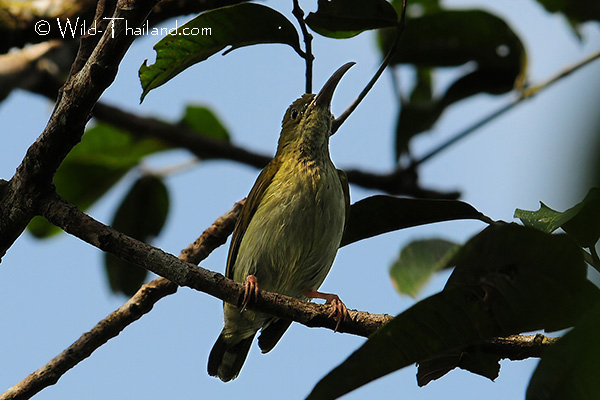
The Little Spiderhunter is a small bird with an olive-green back, bright yellow underside, and a long, slightly curved beak. It has a faint grey-and-white facial pattern, and its plumage is primarily olive-green above and bright yellow below, with bold black streaks on the underside.
Distribution
Little Spiderhunter are found throughout Thailand. They prefer subtropical and tropical forests, including lowland, mangrove, and moist montane forests.
Little Spiderhunters are energetic birds, active during the day, typically seen in pairs or small groups in forests and gardens. Often seen on and around banana plant flowers.
Breeding is from March to September. The nest, is a compact cup or a hanging pouch that is uniquely suspended from the underside of a large leaf, such as a banana leaf, palm frond.
Scientific Name
Arachnothera magna
Status
Least Concern
Size
Length: 17 - 22 cm
Weight: 24 - 35 g
Diet
Omnivore.
Nectar, spiders, small insects and their larvae.
Appearance
Distribution
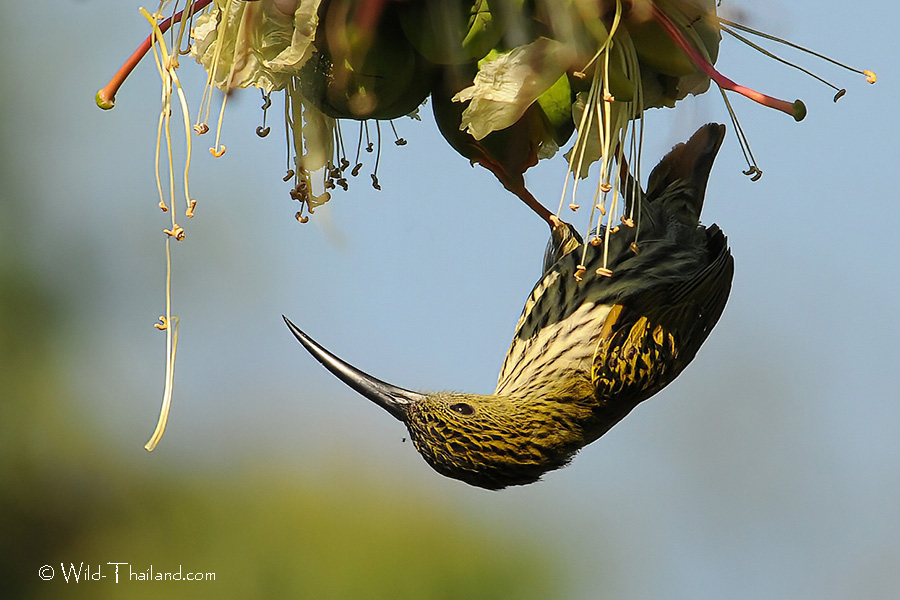
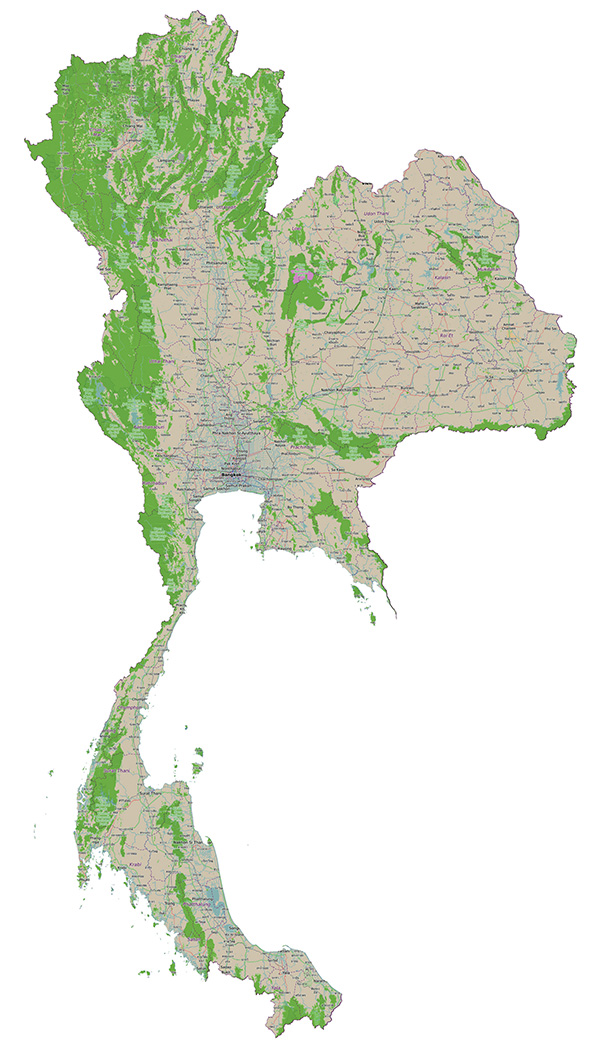
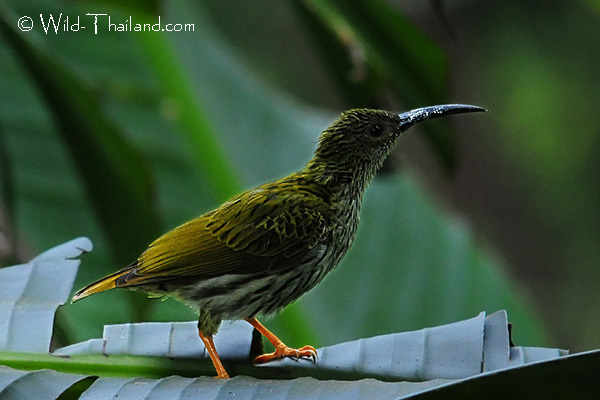
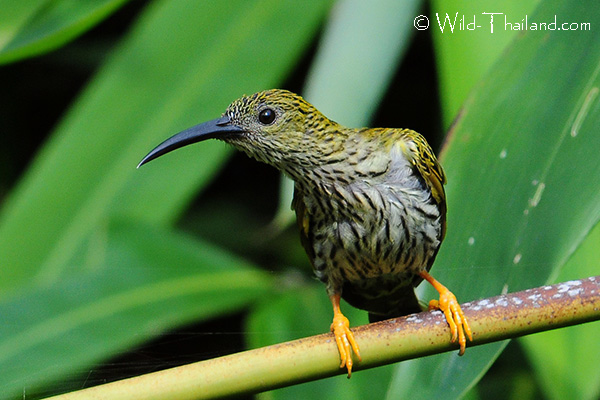
Streaked Spiderhunters are found throughout Thailand, inhabiting subtropical or tropical moist lowland and montane forests.
Breeding is from March to July. They construct a simple cup shape made of leaves, twigs, moss, and grass. It is distinctively attached to the underside of a large leaf, such as a banana leaf or palm frond, using spider webs and plant fibres.