Number of species: 2
Scientific Name
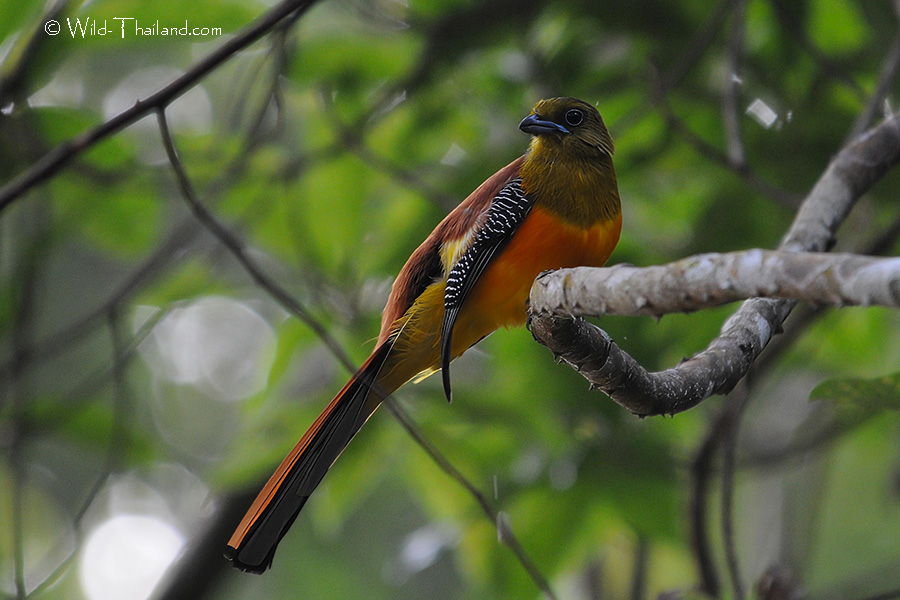
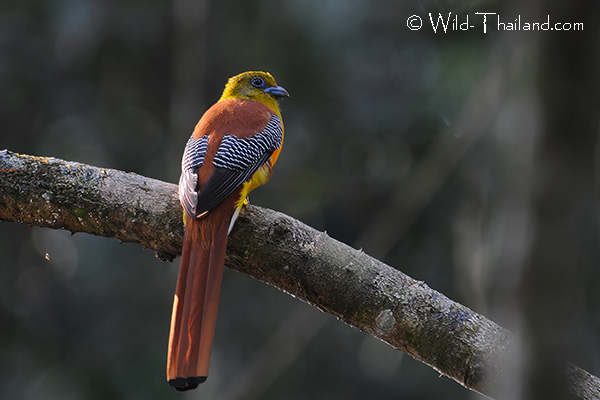
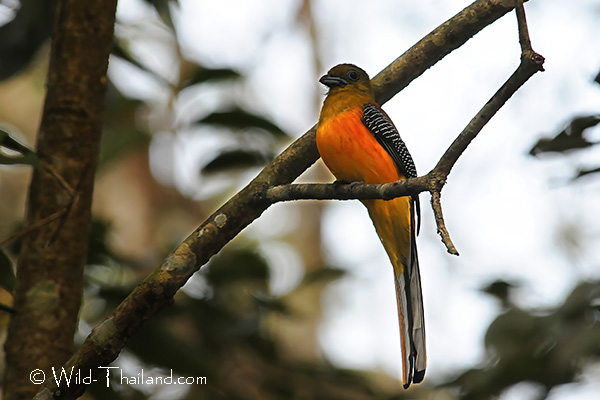
Harpactes oreskios
Status
Least Concern
Size
Length: 25 - 31 cm
Weight: 49 - 57 g
Diet
Insectivore.
Insects and caterpillars.
Appearance
Distribution
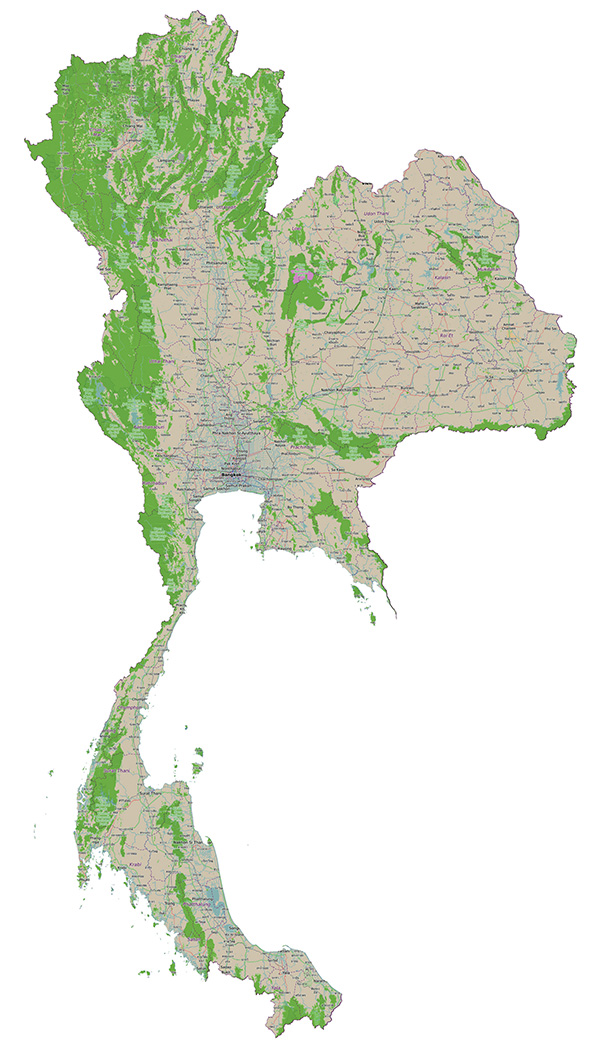
Orange-breasted Trogons are found in southern Thailand, particularly in lowland evergreen and swamp-forest habitats up to 1100 meters.
The Orange-breasted Trogon hunts using the sally-stall technique, where it will wait on a forest perch for flying insects, it will take its prey in mid air by hovering.
Breeding is from January to March, nesting in cavities excavated in rotting stumps or dead branches, often less than two meters from the ground.
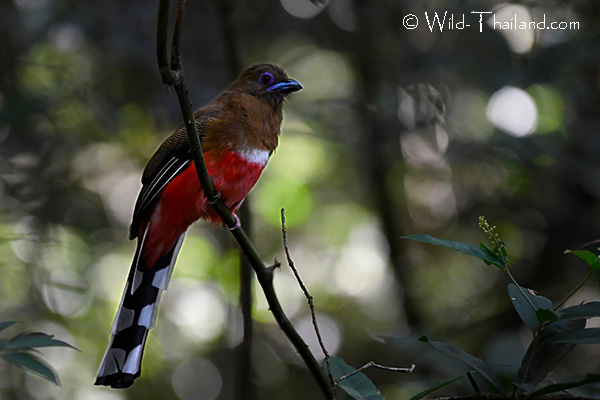
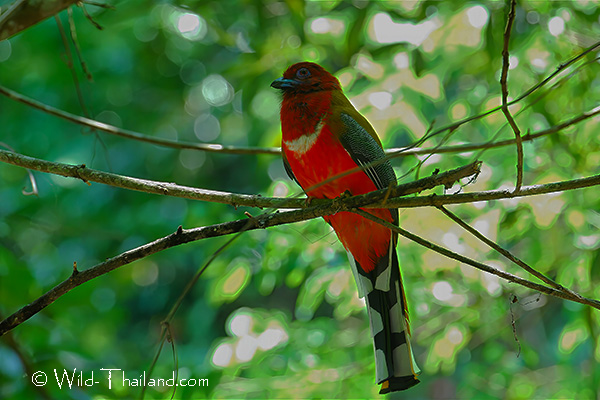
Scientific Name
arpactes erythrocephalus
Status
Least Concern
Size
Length: 31 - 35 cm
Weight: 75 - 110 g
Diet
Omnivore.
Insects, caterpillars, beetles, stick-insects, cicadas, and millipedes. It also eats fruits and leaves, particularly bamboo leaves.
Appearance
Distribution
Red-headed Trogon's are found in the northern, western, and southern parts of Thailand, where it prefers broadleaved evergreen forests between 400 and 2,000 meters elevation.
Red-headed Trogons perch quietly in shaded branches to wait for prey and only engaging in sluggish, low flights between trees. In the early morning and at night, they often follow other foraging birds to catch the insects they flush out.
Breeding is from March to July, excavating cavities in decaying wood 1.5 to 5 meters above the ground.