Scientific Name
Eurylaimus javanicus
Status
Least Concern
Size
Length: 21 - 23 cm
Weight: 65 - 95 g
Diet
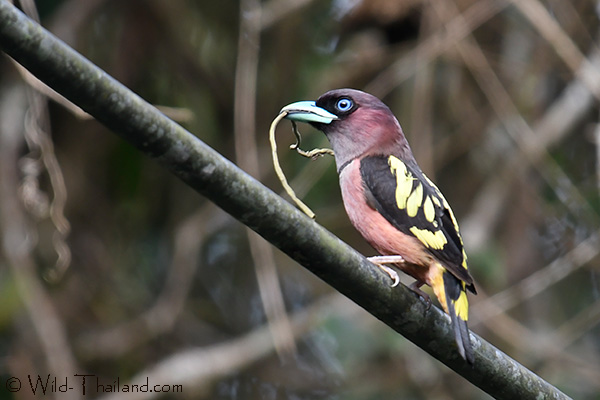
Insects, such as grasshoppers, crickets, and beetles, along with other arthropods like caterpillars and spiders. It also eats small vertebrates, including snails, lizards, and frogs, and occasionally supplements its diet with small fruits like figs.
Appearance
Distribution
The banded broadbill is found in southern and central parts of Thailand. Its distribution includes much of western and southern Thailand, as well as the Tenasserim Hills region, which borders Myanmar.
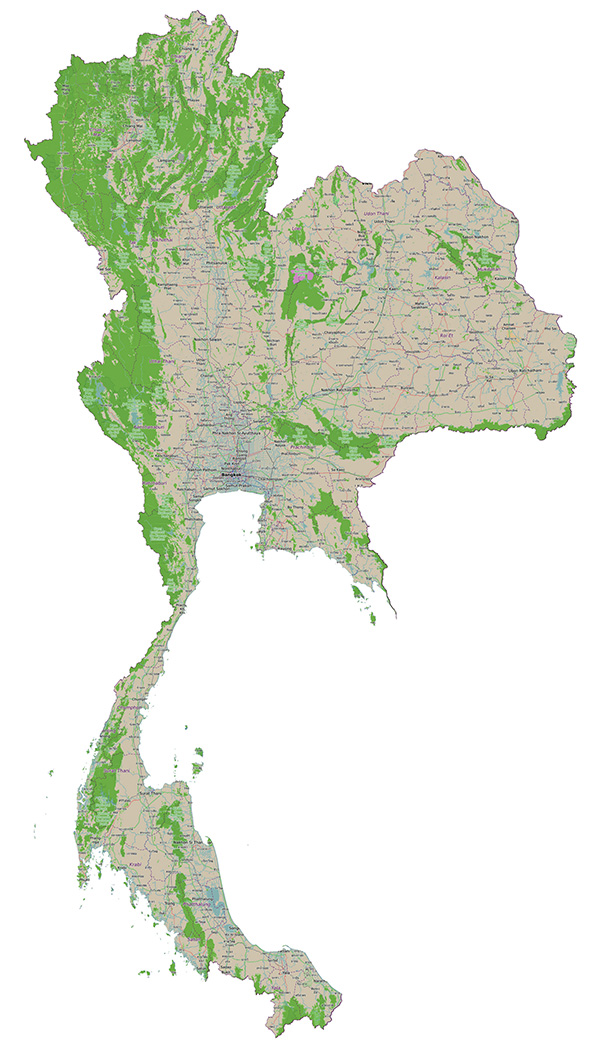
subtropical or tropical moist lowland forests, including primary, secondary, and swamp forests.
Breeding is from March to July. They build large, untidy, pear-shaped nests, often suspended over clearings or water sources
Scientific Name
Cymbirhynchus macrorhynchos
Status
Least Concern
Size
Length: 21 - 24 cm
Weight: 51 - 65 g
Diet
mainly insects, supplementing its diet with aquatic creatures such as molluscs, snails, fish, and crustaceans. It also takes leaves and seeds incidentally.
Appearance
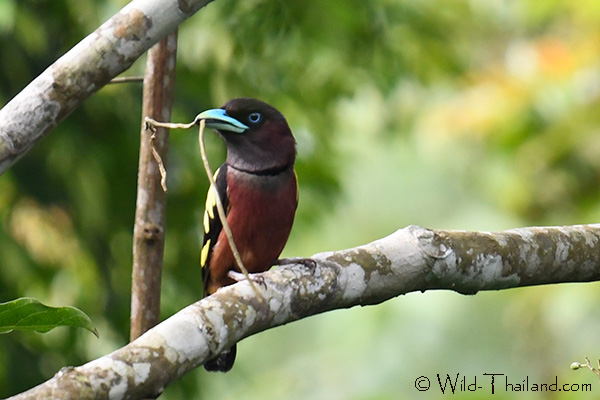
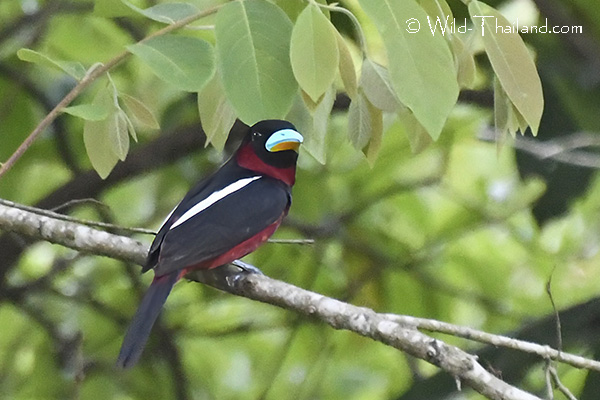
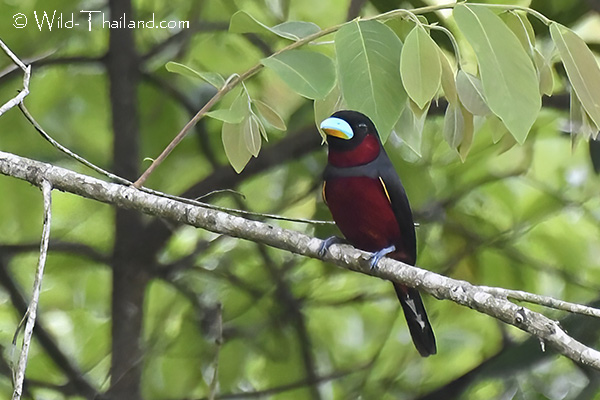
The Black-and-red Broadbill is a striking black head and upper parts, contrasted by maroon-red underparts, a maroon neck-band, and white bars on its wings. It also has a large, two-coloured bill that is blue and yellow. Adults have a black breast band.
Distribution
Inhabits southern Thailand, particularly in the peninsular region, and its distribution extends east into Cambodia, Laos, and Vietnam. It inhabits riparian forest edges, screw-palm swamps and mangroves.
Dense tropical and subtropical rainforests, lowland evergreen forests and riverine forests near bodies of water.
Breeding is typically in May and June. They build a large, conspicuous, pendulous nest, often hanging over water like a river or forest pool.
Scientific Name
Pomatorhinus schisticeps
Status
Least Concern
Size
Length: 24 - 29 cm
Weight: 140 g
Diet
Feeds on a variety of insects like grasshoppers, beetles, and ants, as well as small lizards.
Appearance
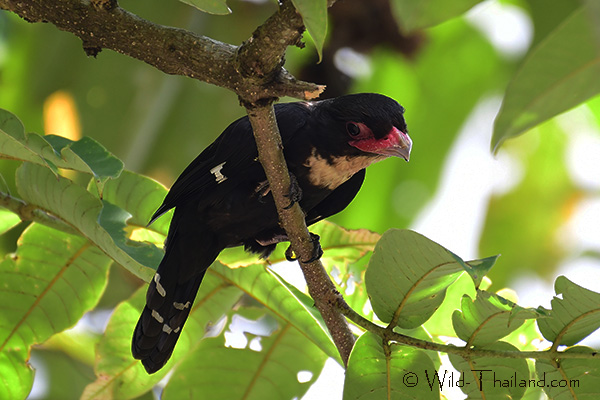
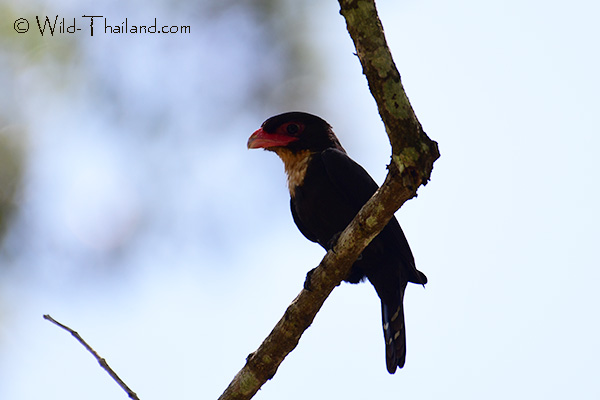
The Dusky Broadbill is a large, thickset bird with a mostly blackish-brown body and a prominent, massive pinkish bill. It has a pale throat or "bib" and can have subtle olive-tinged and orange or scarlet-coloured feathers on its mantle.
Distribution
Found in various forested areas of Thailand, particularly in the southern and western parts. It prefers moist and dry broadleaf forests from lowlands up to an elevation of 2000 meter.
Dusky Broadbills Forage in the forest canopy, using a combination of gleaning prey from surfaces and snatching insects in mid-leap or flight.
Breeding is from April to December. They are cooperative breeders that build large, pear-shaped nests in trees, often camouflaged with moss, lichens, and cobwebs. Nest building involves up to 10 or even 20 birds helping to construct a single nest.
Scientific Name
PPsarisomus dalhousiae
Status
Least Concern
Size
Length: 25 - 30 cm
Weight: 50 - 60 g
Diet
Insects like grasshoppers, beetles, and moths, as well as spiders. They also occasionally supplement their diet with small vertebrates such as frogs and lizards.
Appearance
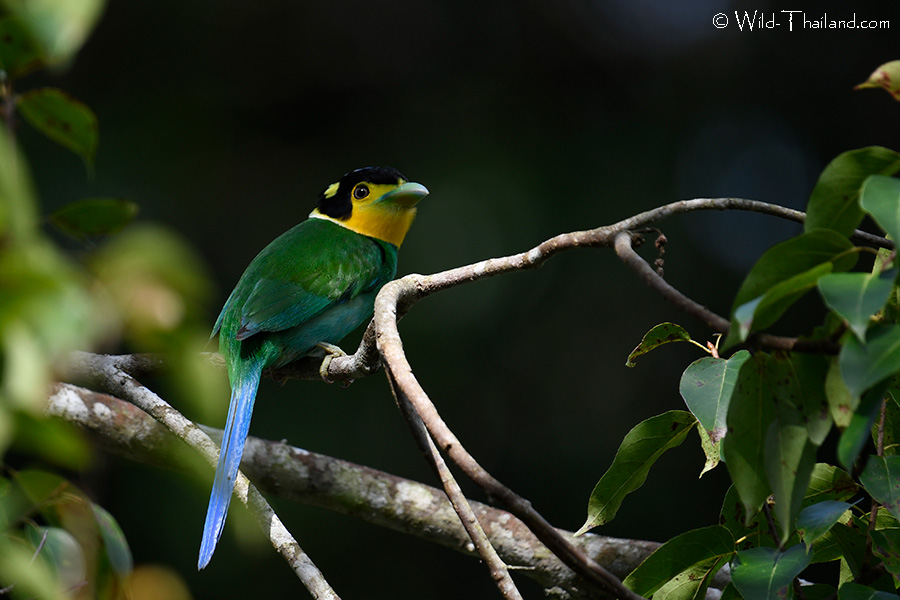
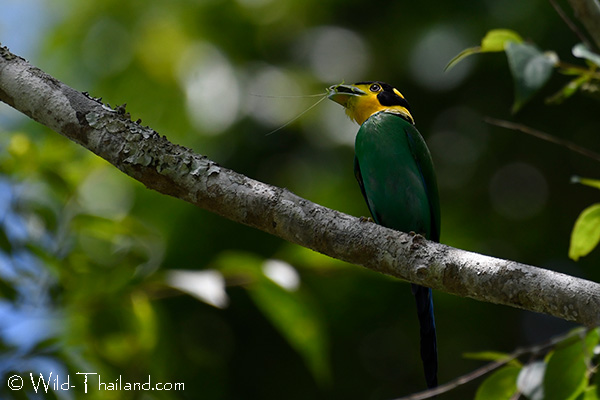
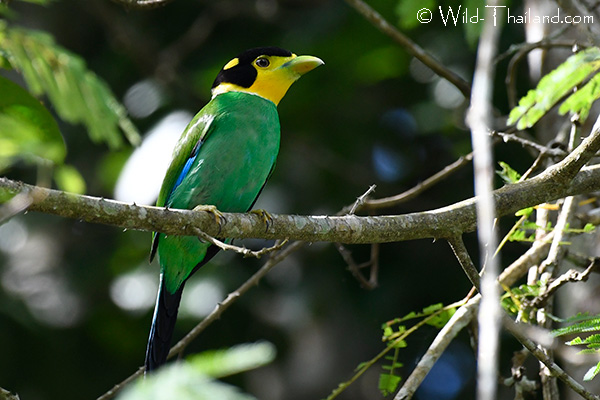
The Long-tailed Broadbill is a striking green bird with a distinctive black and yellow head and a long, bright blue tail. It has a bright yellow face and throat, a black "helmet-like" cap with a blue patch on the crown, and a green body with green or blueish-green underparts. Its most notable features are its slender body, long graduated tail, and broad, yellowish-green bill.
Distribution
A resident, non migratory species, inhabiting broad-leaved evergreen forests. It is found at altitudes from 150 to 2500 meters and prefers areas near streams and wetlands within its tropical and subtropical montane and lowland forest habitats.
Long-tailed Broadbills are typically seen during the breeding season, either building nests or supporting the nest.
Breeds is from February to September. They build a large, pear-shaped nest with a long tail, often with the help of other individuals, constructed from a variety of plant materials and is often built over open areas near water bodies.
Scientific Name
Serilophus lunatus
Status
Least Concern
Size
Length: 16 - 17 cm
Weight: 25 - 35 g
Diet
Insects like grasshoppers, mantises, and caterpillars, which it catches by flycatching from a perch or gleaning from branches. It also eats larvae and small land snails, and may occasionally supplement its diet with fruit.
Appearance
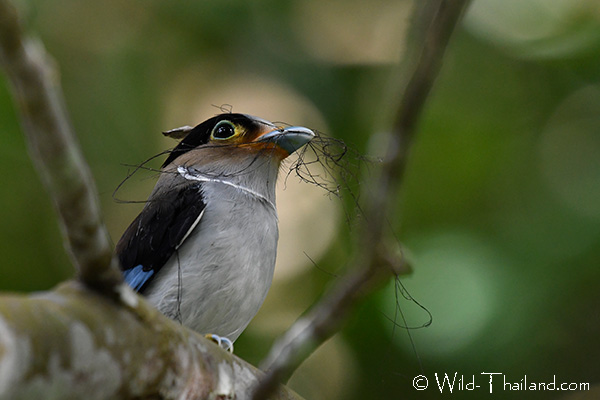
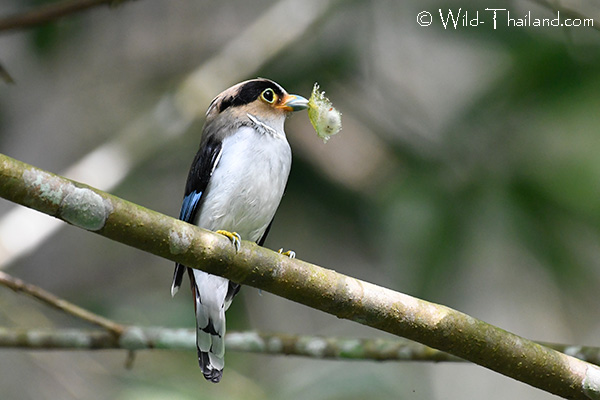
The Silver-breasted Broadbill is known for its unique colouring, especially the narrow silver band across the breast of the female. The male has a white breast and belly, but the species name comes from this defining feature. The bird also features a rusty-coloured head, a grey forehead, a black stripe over the eye, and a bright rufous rump.
Distribution
Throughout northern and central Thailand, from the north down to the Isthmus of Kra.
Silver-breasted Broadbills are found in tropical and subtropical evergreen, semi-evergreen, and mixed deciduous forests, including areas with pine, oak, and bamboo. Its preferred habitats include lowland and montane forests.
These birds forage in pairs or in small groups and are often found in the mid-story and under storey of tropical and subtropical forests.
Breeding is from August to December in the north and March to May in the south. They build pendant-shaped nests suspended from branches, which are then lined with green leaves.