Scientific Name
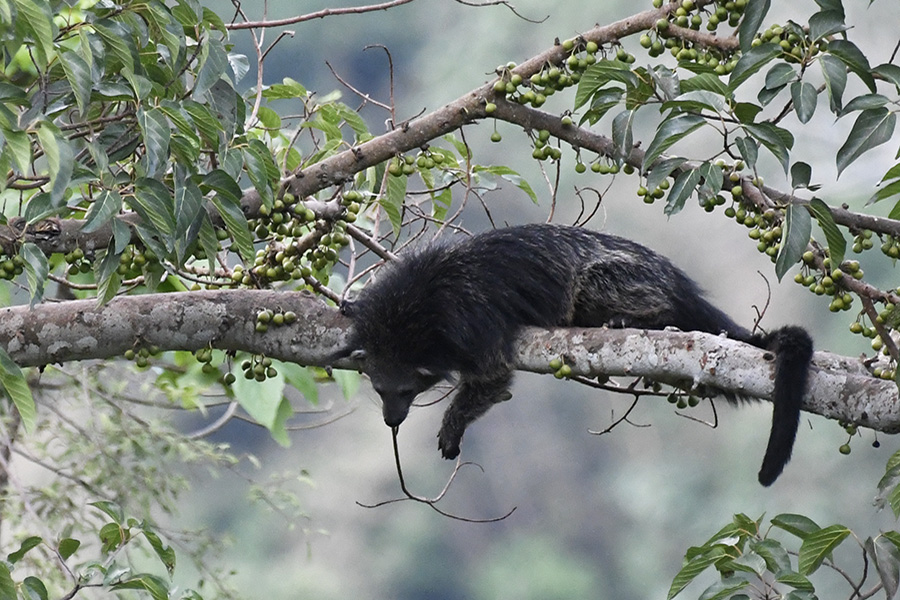
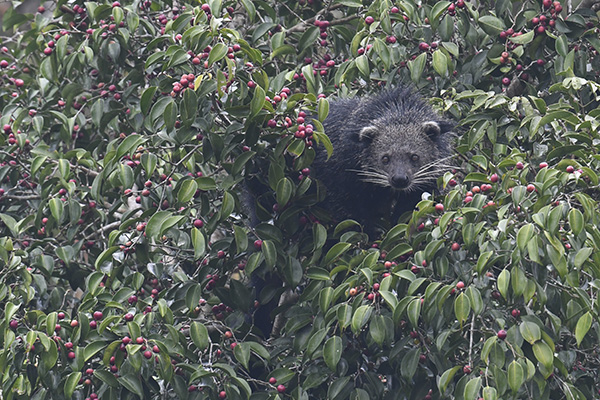
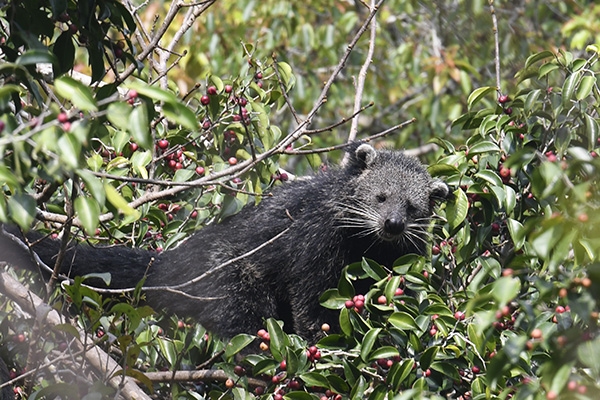
Arctictis binturong
Status
Vulnerable
Size
Body length: 71 - 84 cm
Tail Length: 66 - 69 cm
Weight: 10 - 14 Kg
Diet
Omnivorous.
Fruits, berries small mammals, birds, lizards and insects.
Appearance
It has a thick coat of coarse black and greyish hair, with a bushy, prehensile tail.
Habitat
Because they are arboreal, they are found in primary forest and rain forests.
Distribution
Found in protected primary forest throughout Thailand.
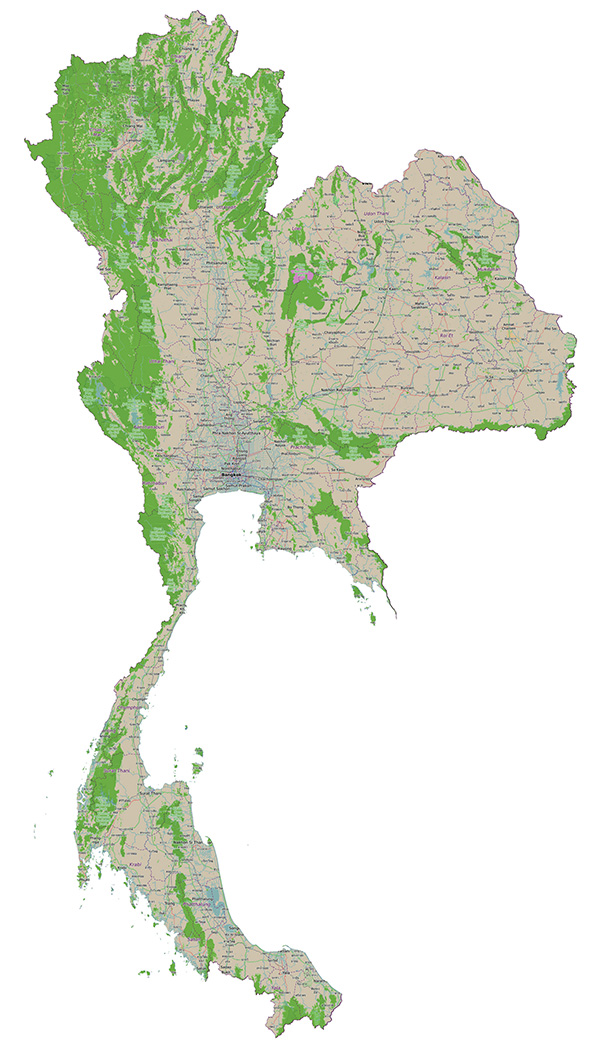
Although sightings of these cats have been reported, they are rarely seen due to their habitat and behaviour. Nearly all sightings today are with camera traps.
Binturong are primarily nocturnal, but may be seen at any time of day when feeding in a tree. They will often rest in the tree and occasionally wakeup and continue feeding or move to another tree for resting, returning occasionally to feed.
Although primarily nocturnal, sightings at night are uncommon.During the day, they are sometimes seen feeding on fruit in trees.
On trees that have an abundance of fruit, it is common for Binturong to return to the tree throughout the day, to feed. They will also typically return to the same tree every day, until the fruit has gone.
We have observed Binturong all over Khao Yai.
Although primarily nocturnal, sightings at night are uncommon. Sightings during the day are also rare, We were lucky enough to spot one resting at the top of a tree, opposite Phanoen Thung Campsite.
Although they may appear oblivious to you, they are very aware you are there. It is not an invitation to get close.
Keep your distance, do not in any way attempt to block or restrict access to a Civet that is in your immediate vicinity. Always give the Civet plenty of space to escape.
Please have respect, DO NOT FEED!
Ignoring advice can result in the Civet becoming unnecessarily distressed.
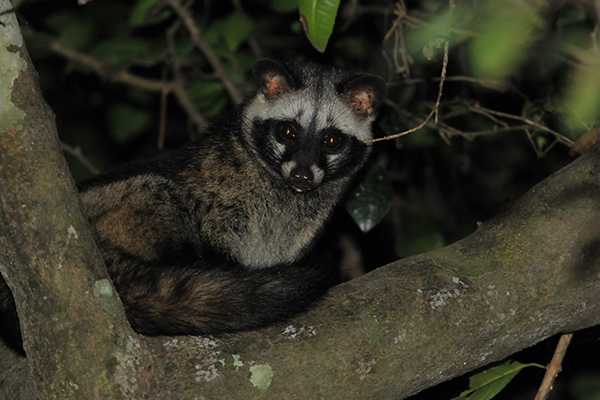
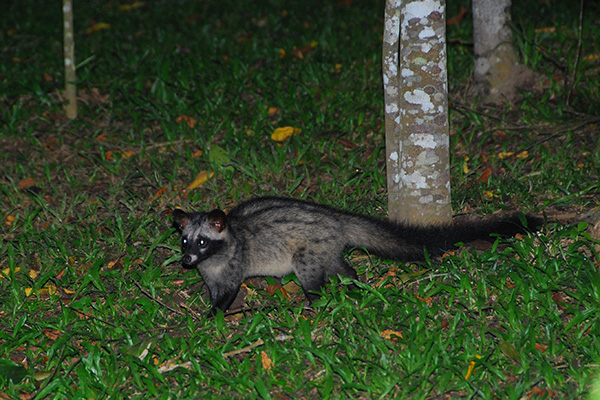
Scientific Name
Paradoxurus hermaphroditus
Status
Least Concern
Size
Body length: 50 - 55 cm
Tail Length: 45 - 50 cm
Weight: 2 - 5 Kg
Diet
Omnivorous.
Fruits, berries, insects, lizards and small mammals.
Appearance
The body is covered with coarse, shaggy greyish hair. It has a white mask on it's forehead, a white patch under each eye, a white spot either side of the nose, and a dark line between the eyes. The muzzle, ears, lower legs and half of the tail are black.
Habitat
Forested areas.
Distribution
Found throughout Thailand in protected primary forest.
Although sightings of these cats have been reported, they are rarely seen due to their habitat and behaviour. Nearly all sightings today are with camera traps.
Common Palm Civets are nocturnal, it is unusual to see them in the daytime. When resting, they will either climb a tree or use a suitable hollow on the ground.
They are often seen after dark foraging on the side of the road or around buildings or structures.
A regular visitor to camp sites and park accommodation, where they can be seen foraging for food. Often for discarded food from guests.
They are often seen along the side of the road during the night safari tours.
A regular visitor to the camp sites, where they can be seen foraging for food. Often for discarded food from guests.
At Ban Krang campsite, they can also be seen in the trees after dark.
There are resident Civets around the ranger station and guest accommodation. In fact during our last visit, we had a common Palm Civet living in one of the rooms, where there was a hole in the roof.
Although they may appear oblivious to you, they are very aware you are there. It is not an invitation to get close.
Keep your distance, do not in any way attempt to block or restrict access to a Civet that is in your immediate vicinity. Always give the Civet plenty of space to escape.
Please have respect, DO NOT FEED!
Ignoring advice can result in the Civet becoming unnecessarily distressed.
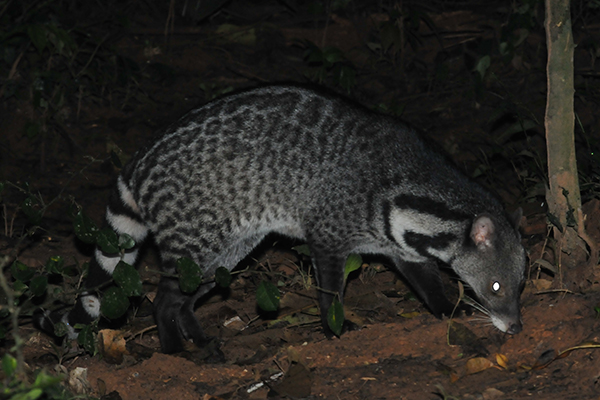
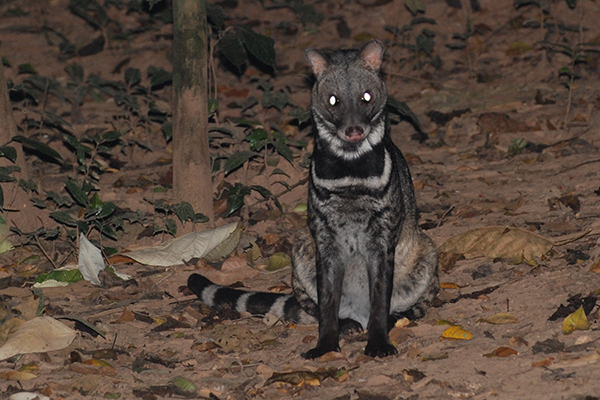
Scientific Name
Viverra zibetha
Status
Least Concern
Size
Body length: 50 - 195 cm
Tail Length: 38 - 59 cm
Weight: 4 - 10 Kg.
Diet
Omnivorous.
small mammals, birds, reptiles, amphibians, insects, fish, eggs, fruits, and roots.
Appearance
The largest Civet in Asia. Its colour is greyish brown, with black spots or broken black lines on its body. The neck is white with black bands.
Habitat
Densely forested protected areas.
Distribution
Found throughout Thailand.
Although sightings of these cats have been reported, they are rarely seen due to their habitat and behaviour. Nearly all sightings today are with camera traps.
Large Indian Civets are primarily nocturnal, they are rarely seen in the daytime.
Large Indian Civets are seen at both Ban Krang and Phanoen Thung Campsites, after dark. They will forage for discarded food at the rear of the restaurants.
Although they may appear oblivious to you, they are very aware you are there. It is not an invitation to get close.
Keep your distance, do not in any way attempt to block or restrict access to a Civet that is in your immediate vicinity. Always give the Civet plenty of space to escape.
Please have respect, DO NOT FEED!
Ignoring advice can result in the Civet becoming unnecessarily distressed.
Scientific Name
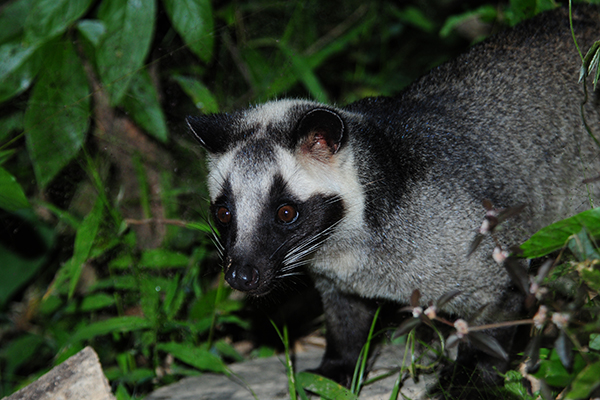
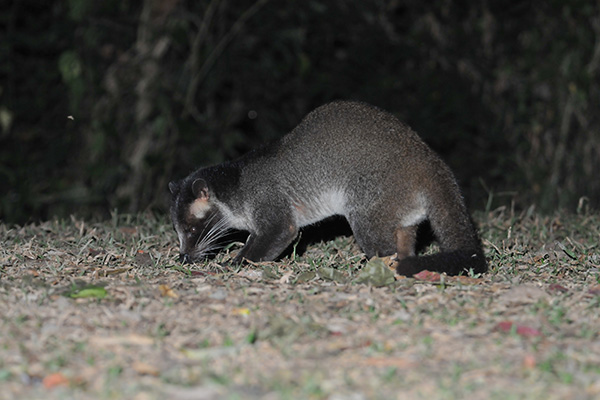
Paguma larvata
Status
Least Concern
Size
Body length: 50 - 60 cm
Tail Length: 40 - 50 cm
Weight: 3 - 5 Kg
Diet
Omnivorous.
Fruit, small mammals, birds, small reptiles and insects.
Appearance
Body is covered in greyish fur, the head is white with black patches either side of the muzzle to above the eye and extending in line with the ears.
Habitat
Inhabits evergreen and deciduous forests.
Distribution.
Throughout Thailand.
Although sightings of these cats have been reported, they are rarely seen due to their habitat and behaviour. Nearly all sightings today are with camera traps.
Masked Palm Civets are primarily nocturnal, but may be seen at any time of day, especially in the evening.
Regular visitor to Ban Krang and Phanoen Thung Campsites after dark, where they are seen wandering around the campsite looking for food.
Although they may appear oblivious to you, they are very aware you are there. It is not an invitation to get close.
Keep your distance, do not in any way attempt to block or restrict access to a Civet that is in your immediate vicinity. Always give the Civet plenty of space to escape.
Please have respect, DO NOT FEED!
Ignoring advice can result in the Civet becoming unnecessarily distressed.
Scientific Name
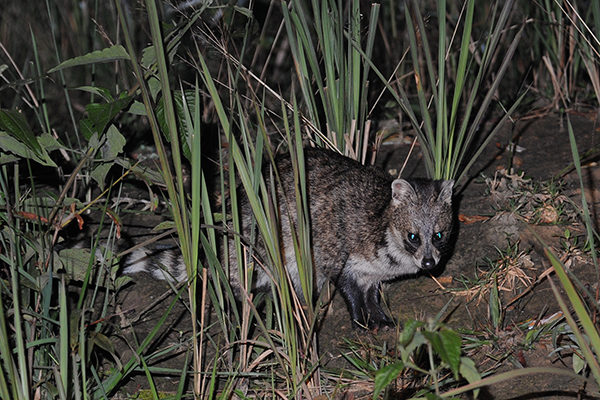
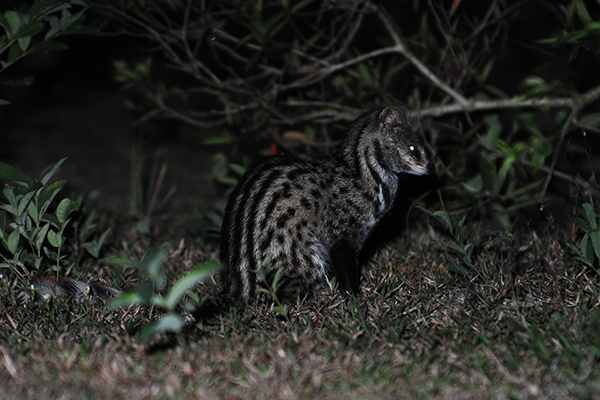
Viverricula indica
Status
Least Concern
Size
Body length: 53 - 58 cm
Tail Length: 38 - 43 cm
Weight: 2 - 4 Kg
Diet
Omnivorous.
Fruit, roots, small mammals, Birds, small reptiles, insects and carrion.
Appearance.
Yellowish brown to greyish brown coarse fur, with several black stripes along the back and remainder of body covered in black spots.
Habitat
Deciduous and semi-evergreen forests, scrubland, grasslands and riverine areas.
Distribution.
Throughout Thailand.
Although sightings of these cats have been reported, they are rarely seen due to their habitat and behaviour. Nearly all sightings today are with camera traps.
Small Indian Civet are nocturnal, but may be seen in the early evening. Although they can climb trees, they are typically terrestrial.
Often seen along the side of the road during night safari tours, in the campsites and around park accommodation.
Although they may appear oblivious to you, they are very aware you are there. It is not an invitation to get close.
Keep your distance, do not in any way attempt to block or restrict access to a Civet that is in your immediate vicinity. Always give the Civet plenty of space to escape.
Please have respect, DO NOT FEED!
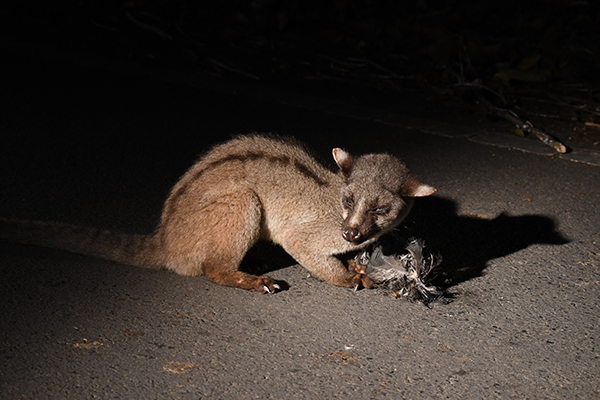
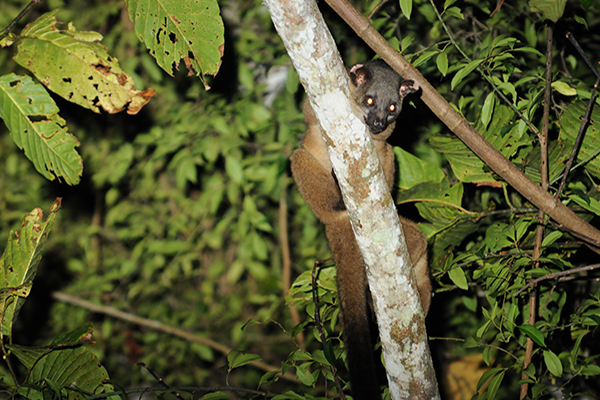
Scientific Name
Arctogalidia trivirgata
Status
Least Concern
Size
Body length: 44 - 60 cm
Tail Length: 48 - 66 cm
Weight: 2 - 2.5 Kg
Diet
Omnivorous.
fruits, small mammals, birds, frogs, lizards, insects and carrion.
Appearance
Yellowish light brown, with greyish head.
Habitat
Dense primary and secondary forest.
Distribution.
Found throughout Thailand.
Although sightings of these cats have been reported, they are rarely seen due to their habitat and behaviour. Nearly all sightings today are with camera traps.
Small-toothed Civets are nocturnal and can be seen in smaller fruit trees, either alone or in small groups.
Although nocturnal, sightings at night are uncommon, occasionally they might be seen in smaller fruit trees. The best option for seeing the Small- toothed Civet, is the night safari tour, or looking in smaller trees around your accommodation or campsite.
Although they may appear oblivious to you, they are very aware you are there. It is not an invitation to get close.
Keep your distance, do not in any way attempt to block or restrict access to a Civet that is in your immediate vicinity. Always give the Civet plenty of space to escape.
Please have respect, DO NOT FEED!