Scientific Name
Hierococcyx sparverioides
Status
Least Concern
Size
Length: 38 - 40 cm
Weight: 116 - 163 g
Diet
Primarily insects, especially caterpillars, and it also eats other invertebrates like spiders, beetles, grasshoppers, and ants. It will also eat fruits, berries, and small birds' eggs.
Appearance
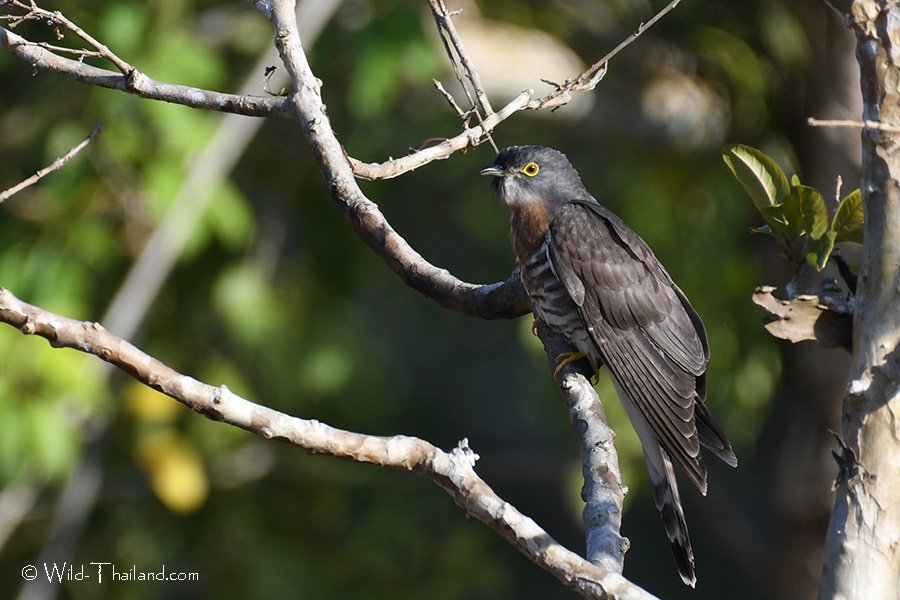
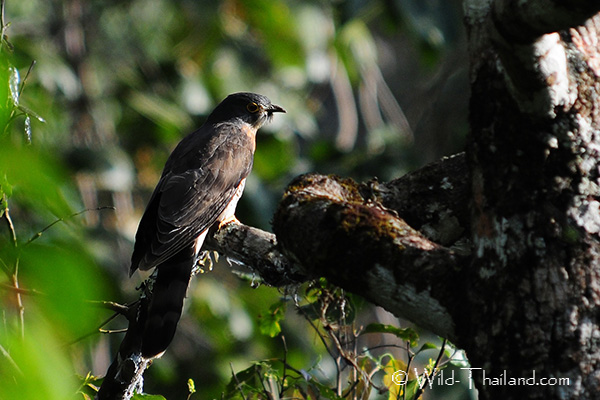
The Large hawk-cuckoo has a hawk-like appearance with a long, barred tail and brown or grey upper parts. Adults typically have a grey crown and sides of the head, with white underparts streaked with dark rufous on the breast and barred on the belly and flanks. Key features include a bright yellow eye-ring, a reddish-brown flush on the chest in some adults, and a long, graduated tail.
Distribution
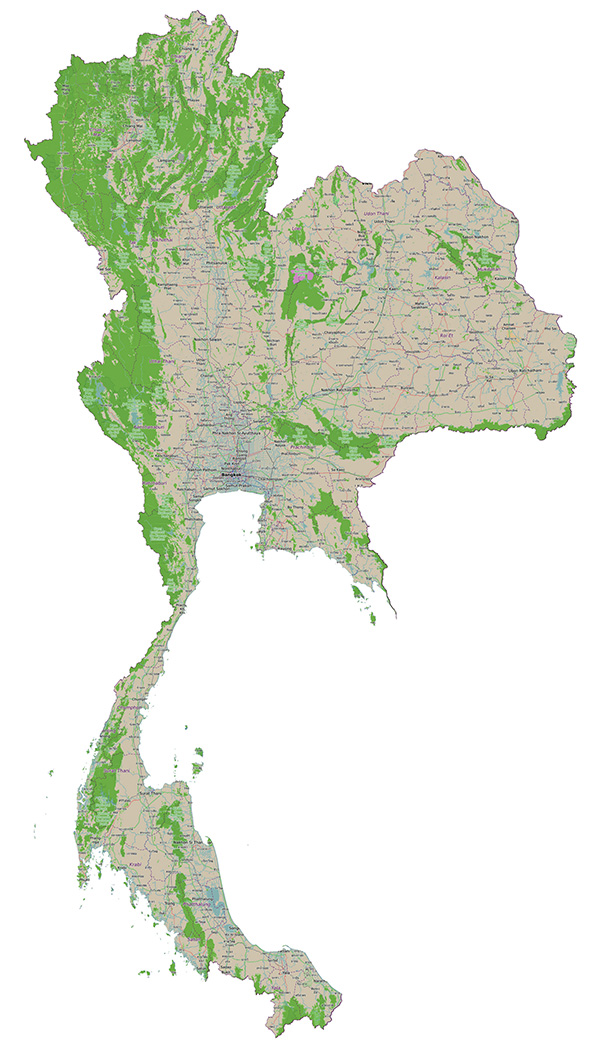
The large hawk-cuckoo has a widespread throughout Thailand, with both breeding and wintering populations. It is found across the country in various habitats, including temperate and tropical forests.
The large hawk-cuckoo is a solitary and secretive bird, known for its loud, repetitive, rising call. The adult cuckoo primarily forages for insects and berries in the forest canopy, while its distinctive flight can resemble a hawk.
The large hawk-cuckoo is a brood parasite, it does not build its own nest, and relies on other bird species to incubate its eggs and raise its young. Once mating occurs, the female cuckoo lays a single, camouflaged egg in a host bird's nest, typically one belonging to a Babbler or Laughing Thrush, after removing one of the host's eggs.