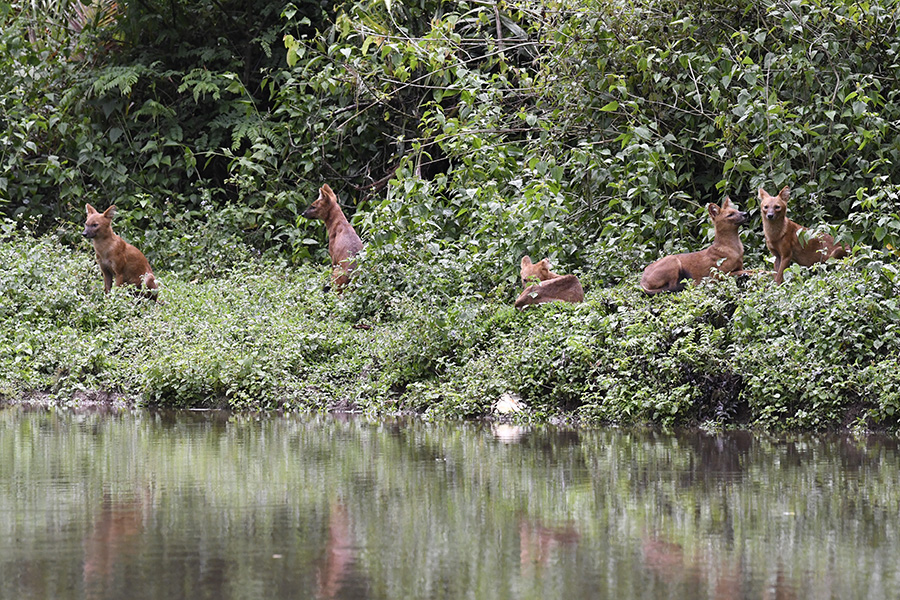
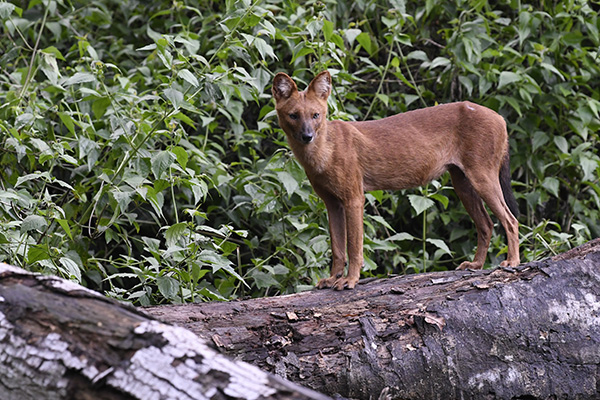
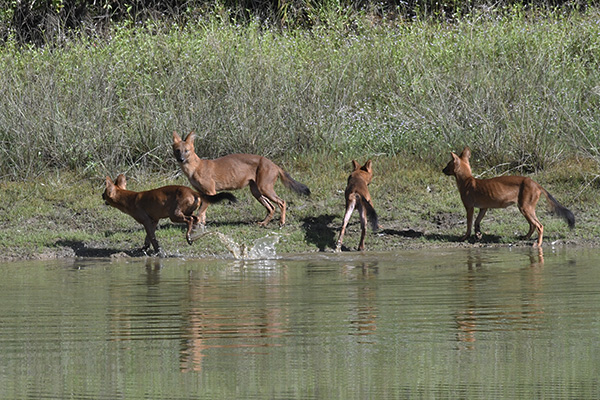
Scientific Name
Cuon alpinus
Status
Endangered
Size
Body length: 88 - 113 cm
Shoulder Height: 42 - 50 cm
Weight: 10 - 21 Kg
Diet
Carnivorous.
Mammals up to the size of Sambar Deer.
Appearance
Reddish brown fur with yellowish white throat, chest and belly.
Habitat
Tropical and temperate deciduous forests, rainforests, and scrublands in hilly and mountainous areas.
Distribution
Protected forest areas throughout Thailand north of Khao Sok National Park.
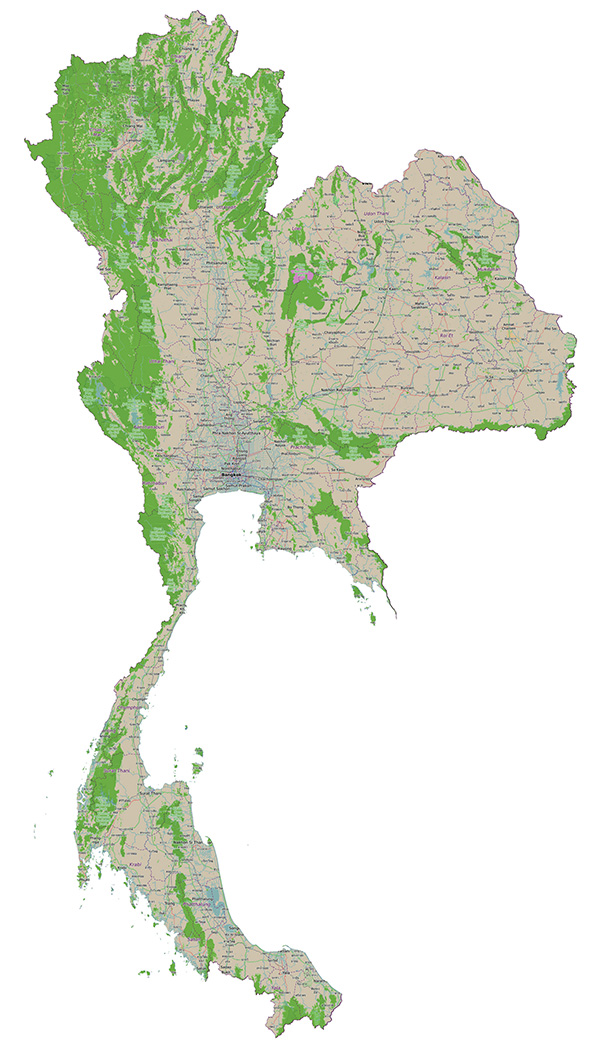
Although sightings of these cats have been reported, they are rarely seen due to their habitat and behaviour. Nearly all sightings today are with camera traps.
Dohles are highly social animals. forming packs of up to forty. They are Diurnal, but do most of their hunting in the early morning.
Dohles are rarely seen, however, during the day Dohles are sometimes seen crossing roads, moving along the tree line or feeding on their most recent kill.
Most kills occur in or near rivers, lakes and large ponds, there main prey being female Sambar Deer.
Locations vary and is dictated by prey and disturbances:
In the river, directly opposite the food hall , at the headquarters was a popular location for Sambar Deer, and in turn became a hunting hotspot for Dohles. Because of its close vicinity to the food hall, human disturbance was high and getting higher. Sightings in this area have diminished significantly.
Along the opposite shore of the Sai Sorn Resevoir is another popular hunting ground for Dohles, again human disturbance is high and increasing and, again sightings in this area have diminished significantly.
Finding Dohle kills is getting increasingly difficult in the park.
Sightings are rare, occasionally they are seen on a kill near to, or in the ponds, alongside the road to Ban Kran campsite.
Dohles will sometimes bolt across the road, sometimes more than one and always staggered. Please drive carefully.
Keep your distance, do not in any way attempt to block or restrict access to a Dohle that is in your immediate vicinity. Always give the Dohle plenty of space to escape.
Please have respect, DO NOT FEED!
Ignoring advice can result in the Dohle being unnecessarily distressed.
Scientific Name
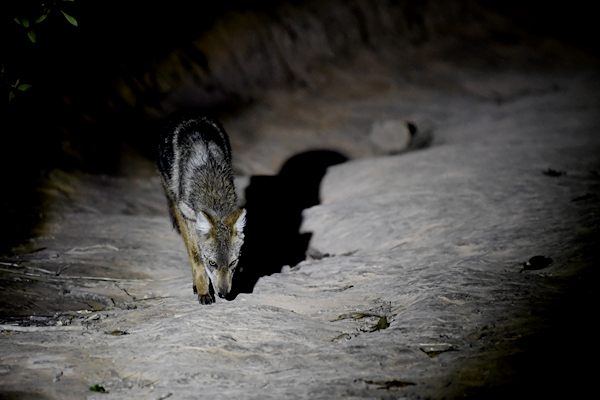
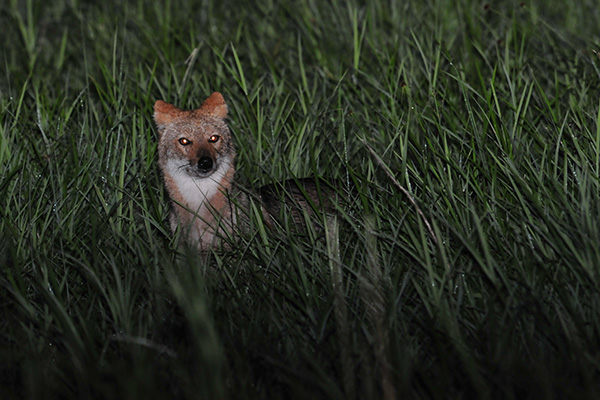
Canis aureus
Status
Least Concern
Size
Body length: 69 - 85 cm
Shoulder Height: 45 - 50 cm
Weight: 6 - 14 Kg
Diet
Omnivorous.
Small mammals, birds, small reptiles, insects, fruit and carrion.
Appearance
Coarse, relatively short fur, that is golden in colour but varies from creamy yellow to dark brownish orange. The back is a mixture of black, brown and white. The belly and chest are pale orange to cream.
Habitat
Protected forested and open grassland areas.
Distribution.
Throughout Thailand, north of Namtok Huai Yang National Park.
Although sightings of these cats have been reported, they are rarely seen due to their habitat and behaviour. Nearly all sightings today are with camera traps.
Golden Jackals are typically in mating pairs or small family groups, however they are commonly seen alone. They are typically nocturnal.
Mostly seen in open grassy areas, particularly in the early evening. They will also dig dens in these areas and raise their young.
Areas where Jackals are regularly spotted include: Grasslands on both sides of the road, Khao Kheow open grass areas and the open grass areas along the trail to Nong Pak Chi Observation Tower.
Jackals are regularly seen during night safari tours.
Occasional visitor the area at the rear of the restaurant at Ban Kran Campsite.
Maybe the best place to see Jackals in Thailand. They are seen daily in the early and late evening in the grasslands near to the headquarters and will walk down the road to the accommodation to forage for food amongst the buildings.
Keep your distance, do not in any way attempt to block or restrict access to a Jackal that is in your immediate vicinity. Always give the Jackal Deer plenty of space to escape.
Do not shine bright lights directly at the Jackal, you will cause unnecessary distress and temporarily reduce their ability to see.
Please have respect, DO NOT FEED!
Ignoring advice can result in the Jackal becoming unnecessarily stressed.