Scientific Name
Ardea alba
Status
Least Concern
Size
Length: 94 - 104 cm
Weigt: 700 - 1500 g
Diet
Primarily fish, also amphibians, insects, aquatic invertebrates (like crustaceans), small mammals, and even small birds.
Appearance
Distribution
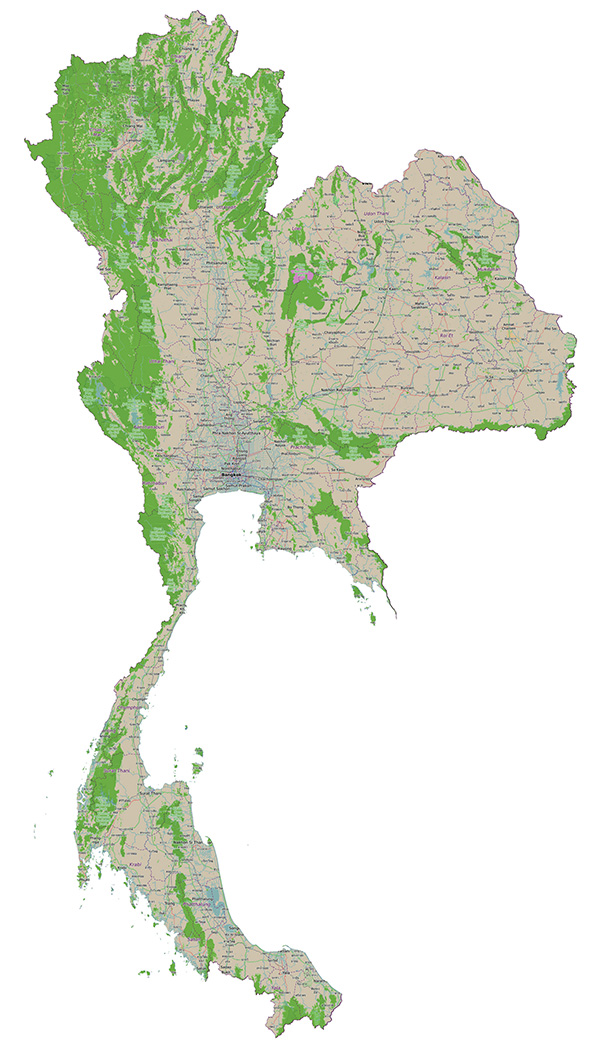
Great Egrets are found throughout Thailand, residing in wetlands and water-adjacent habitats across all regions.
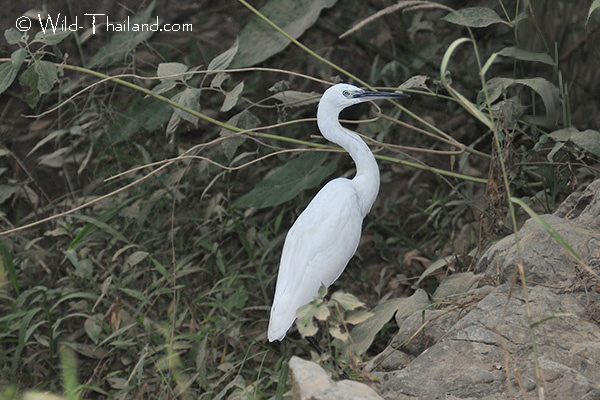
Great Egrets are often seen patrolling the edges of rivers, lakes and wetlands. They are opportunistic hunters that stalk prey in shallow water and are known for their aggression when feeding, even to the point of robbing other birds.
Breeding is from May to October. Great Egret nest in colonies in wetlands, such as mangroves, swamps, or near water with tall trees. The nest is a flat, wide platform made of dry branches and sticks, with a shallow basin for the eggs.
Scientific Name
Ardea intermedia
Status
Least Concern
Size
Length: 56 - 72 cm
Weight: 400 g
Diet
Small fish, amphibians, and insects, supplemented by crustaceans, reptiles, and sometimes small mammals or birds.
Appearance
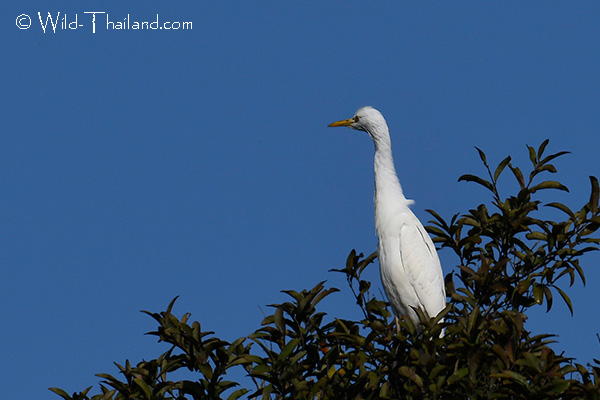
The Intermediate Egret is a medium-sized, all-white heron with yellow irises, yellow to blackish legs, and a yellow bill that can turn reddish or black during breeding season.Breeding plumage includes long, delicate plumes on its back and breast, and the bill and face can change colour.
Distribution
The Intermediate Egret is found throughout Thailand, especially the central plains around Bangkok. It can be found in various wetland habitats, including rice paddies, marshes, and along coasts.
Intermediate Egrets are typically solitary, that move methodically through shallow water, stalking fish, crustaceans, and insects.
Intermediate Egrets are not known to breed in Thailand.
Scientific Name
Egretta garzetta
Status
Least Concern
Size
Length: 55 - 65 cm
Weight: 350 - 550 g
Diet
Small fish, crustaceans, amphibians, insects, reptiles, molluscs, and small birds.
Appearance
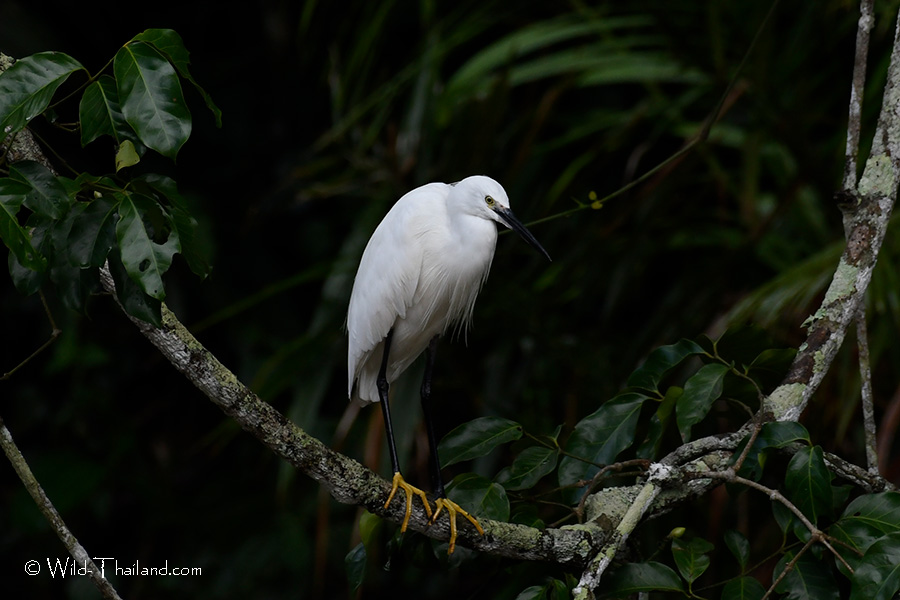
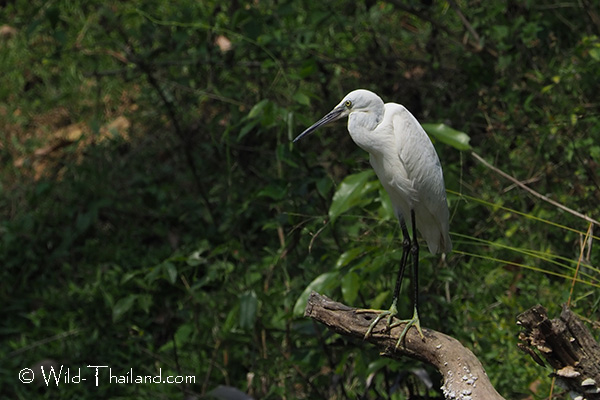
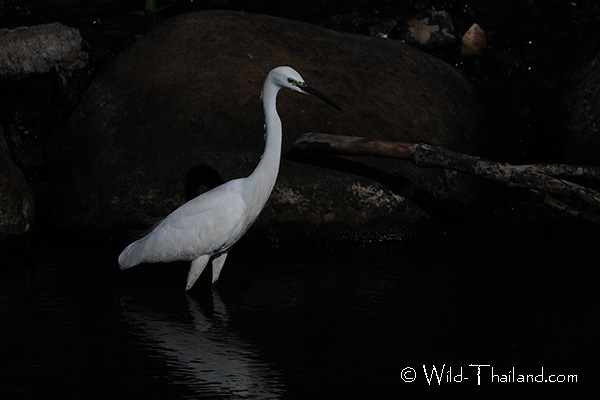
The Little Egret is a small, white heron with a black bill, black legs, and bright yellow feet. During the breeding season, it develops long, decorative white plumes on its head, back, and chest.
Distribution
The Little Egret is found throughout Thailand, inhabiting a variety of wetlands, including shallow lakes, rivers, rice paddies, aquaculture ponds, and coastal areas like mangroves, estuaries, and mudflats.
Little Egrets hunt in shallow water and on land, stalking prey or standing motionless. They are known to stir up the bottom to disturb prey.
Breeding is between December and March. Nesting in colonies with other water birds, building a platform-style nest out of sticks.