Scientific Name
Lacedo pulchella
Status
Least Concern
Size
Length: 7 - 20 cm
Weight: Male: 40.8 - 48.5 g Female: 46.5 - 54.3 g
Diet
Large insects like grasshoppers and beetles, along with occasional small lizards and small snakes.
Appearance
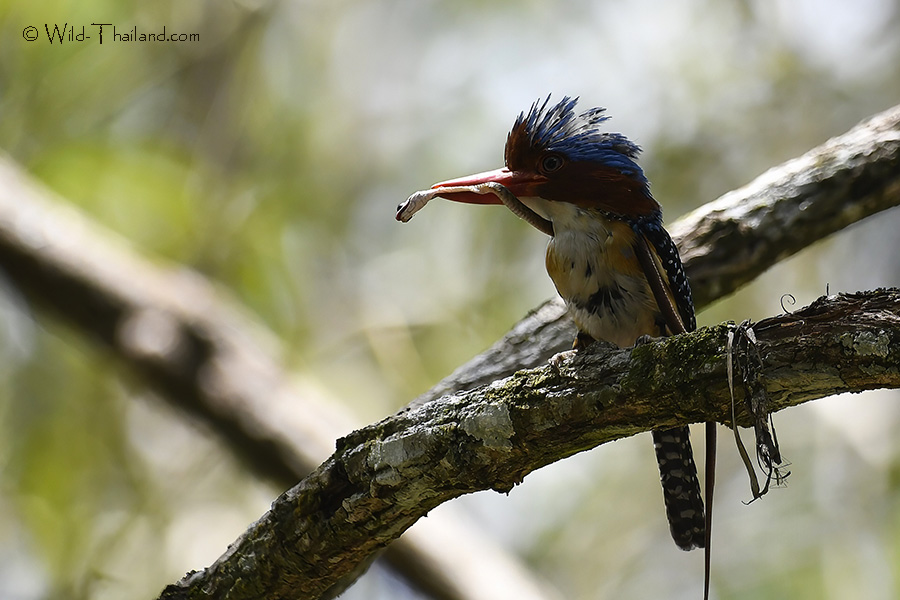
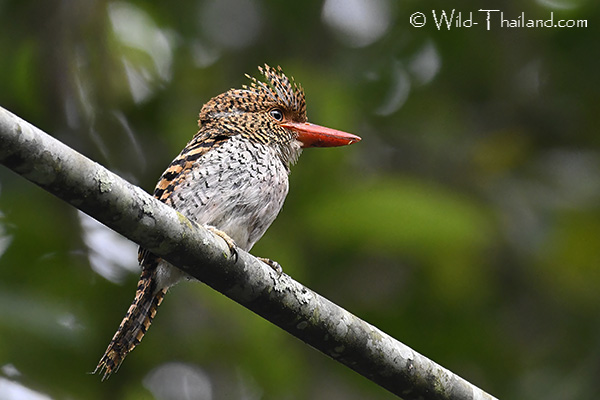
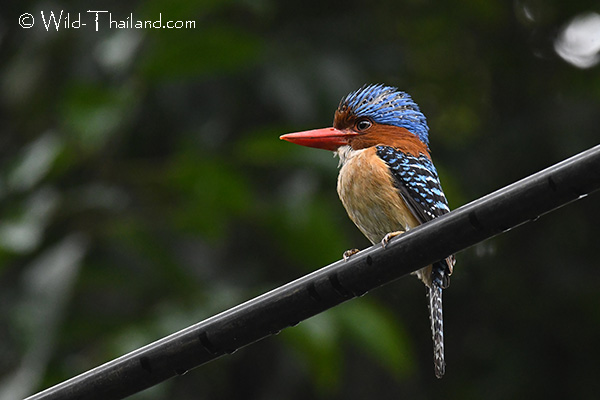
The Banded Kingfisher is a small, striking bird that shows significant sexual dimorphism. The male has a bright blue crown, rufous forehead and cheeks, a white throat, and black and blue-banded upper parts and wings. The female has a head and body with black and rufous banding, making her look distinctively striped, and has a white belly with black barring. Both sexes have a sturdy red bill.
Distribution
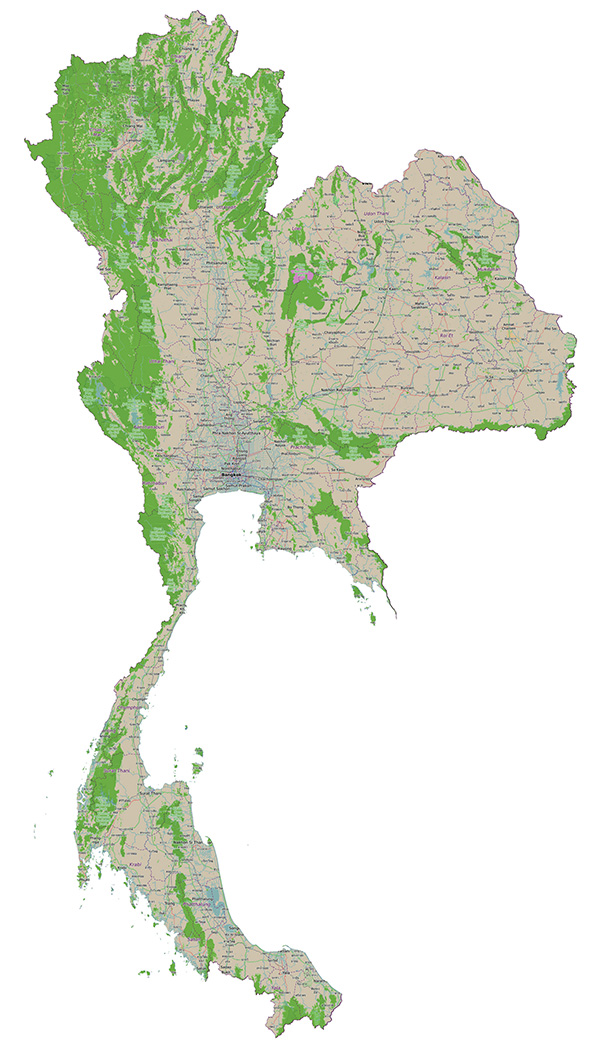
The Banded Kingfisher is a resident bird found throughout most of Thailand, primarily in inland tropical forests from the south, up the western side, and into the northern regions.
Unlike most Kingfishers which are piscivorous, the Banded Kingfisher lives in the forest, perching on branches waiting for insects, lizards and small snakes. They are often heard before they are seen with their unique haunting whistle that ascends as it is repeated
The Banded Kingfisher breeds between February and May, nesting in holes in rotting trees or termite nests.
Scientific Name
Halcyon pileata
Status
Least Concern
Size
Length: 26 - 31.5 cm
Weight: 67 - 91 g
Diet
Mainly crabs and fish along the coast, and a variety of insects inland, including dragonflies, beetles, and water bugs. They will also occasionally eat frogs and other small vertebrates.
Appearance
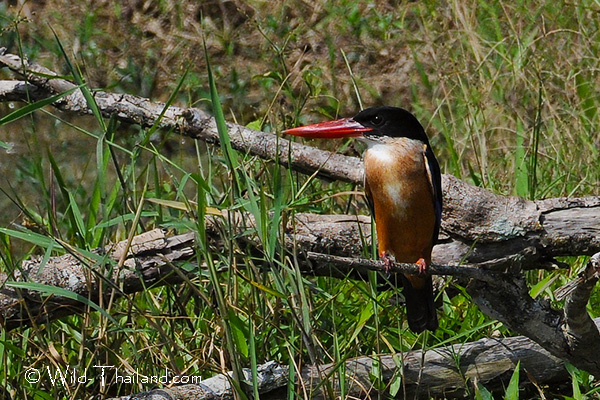
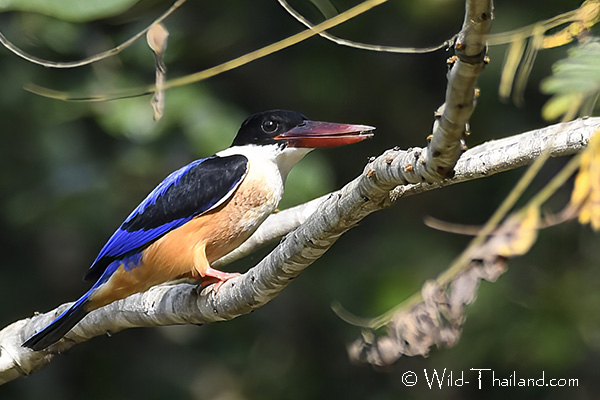
The Black-capped Kingfisher has a black head and shoulders, a white throat and collar, and vibrant purple-blue upperparts. It has pale orange-rufous underparts and a striking, bright red bill and legs.
Distribution
The Black-capped Kingfisher is found throughout Thailand, particularly in coastal and mangrove habitats, estuaries, and along rivers.
The Black-capped Kingfisher is a winter visitor that is known for being easily disturbed. It typically hunts from a perch, waiting to dive for fish, crabs, and insects, though it also feeds on frogs inland.
The Black-capped Kingfisher is typically a non breeding visitor, but has been observed breeding in North Thailand.
Scientific Name
Alcedo meninting
Status
Least Concern
Size
Length: 16 - 17 cm
Weight: 16 - 18 g
Diet
Fish, crustaceans, and insects.
Appearance
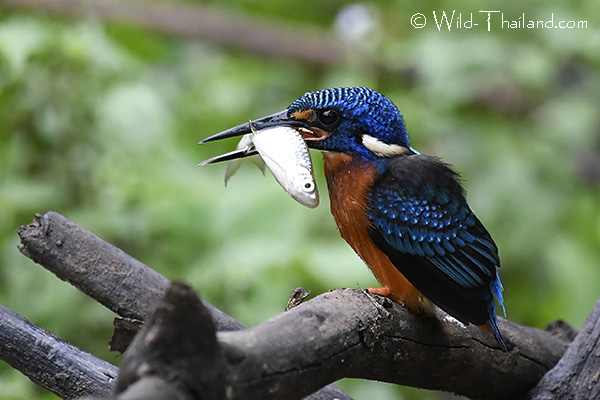
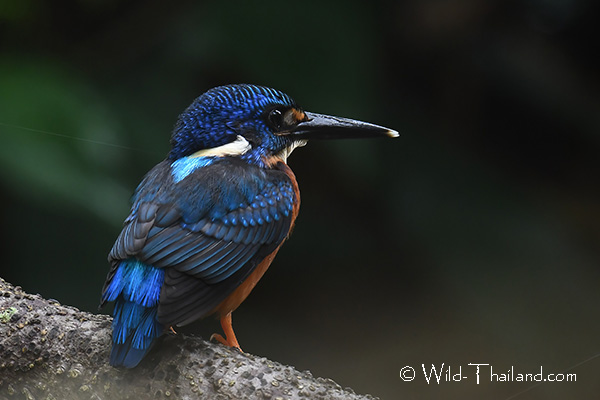
The Blue-eared Kingfisher is a small, dark blue kingfisher distinguished by its vibrant, deep blue upper parts, rich orange underparts, white chin and ear patches, and an orange spot in front of the eye. Males have a black bill with a brownish-red base, while females have an almost entirely red bill.
Distribution
The Blue-eared Kingfisher is found throughout Thailand, particularly in dense evergreen forests, near streams, or in mangrove areas.
The Blue-eared Kingfisher is a shy, forest-dwelling bird that perches on branches overhanging shaded streams and dives to catch fish and other prey.
Blue-eared Kingfisher's breeding season is generally from around April to the end of the year. The nest is at the end of a tunnel, which both parents dig in a muddy bank.
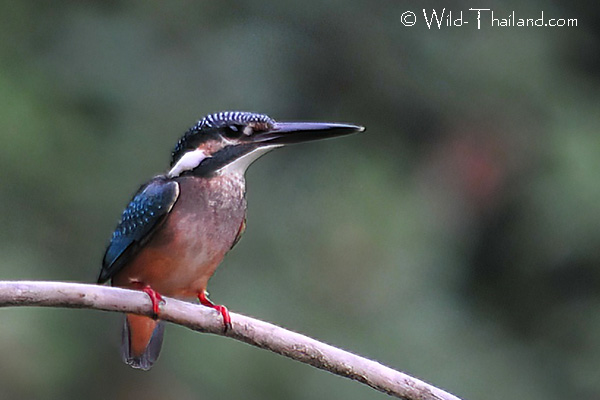
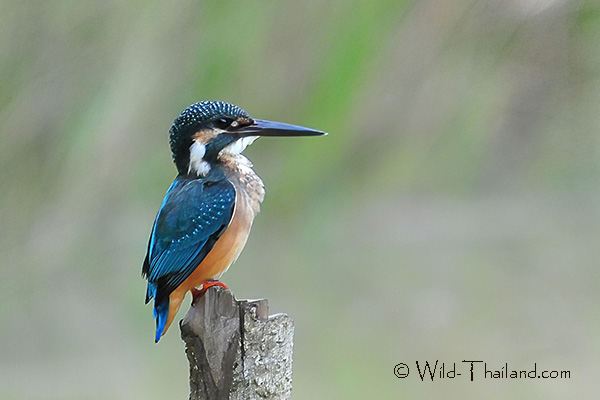
Scientific Name
Alcedo atthis
Status
Least Concern
Size
Length: 16 - 17 cm
Weight: 35 - 46 g
Diet
Small fish, a variety of aquatic invertebrates, such as shrimp, insects, and dragonfly nymphs, along with amphibians like newts and tadpoles.
Appearance
The Common Kingfisher is a small, striking bird with a bright metallic blue back and wings that contrast sharply with its fiery orange-brown underparts. It has a large head, a long, pointed black bill, and short, bright orange legs and feet. Males have an all-black bill, while females have an orange-red patch on the lower mandible.
Distribution
The Common Kingfisher is found throughout Thailand, along rivers, streams, ponds, lakes, and both fresh and brackish water bodies.
Common Kingfishers are highly territorial, when hunting and roosting. They are often seen perching motionless on branches whilst hunting for fish.
The Common Kingfisher breeding season is generally from August to March. They build nests by digging burrows in riverbanks, though they may also use tree hollows or termite mounds. Both parents dig the nest.
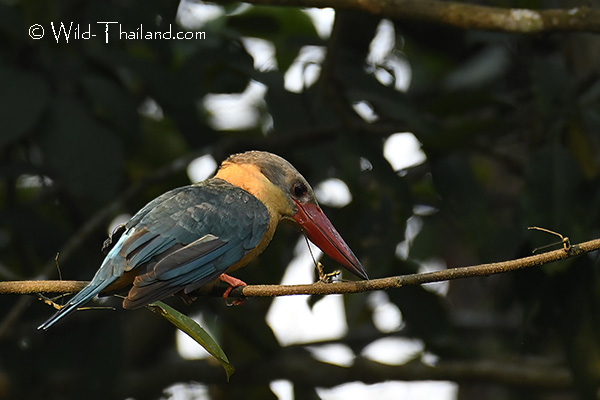
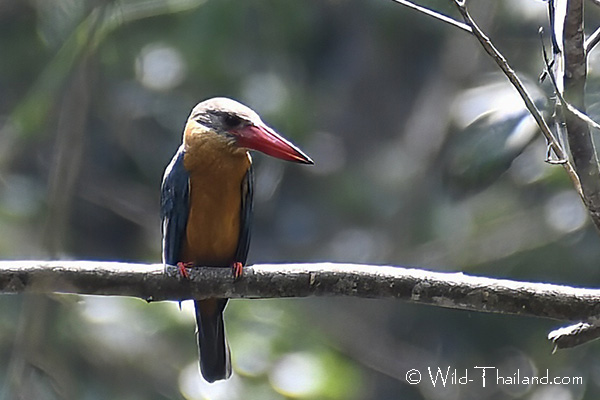
Scientific Name
Pelargopsis capensis
Status
Least Concern
Size
Length: 35 - 38 cm
Weight: Male: 143 - 180 g Female: 182 - 225 g
Diet
Fish, crabs, and other crustaceans from both freshwater and marine environments. It also preys on amphibians like frogs, lizards, and rodents, and even young birds when other food sources are scarce.
Appearance
The Stork-billed Kingfisher is a large bird, with a distinctive large, coral-red bill. It has a green back and blue wings and tail, an olive-brown head, and buff or creamy underparts. The legs and feet are bright red.
Distribution
Stork-billed Kingfishers are found throughout Thailand, particularly in lowland forests near water sources like rivers, streams, canals, and large lakes.
The Stork-billed Kingfisher is a highly territorial, solitary bird that perches quietly near water sources like rivers, coasts, and mangroves to hunt. It is known to aggressively defend its territory, even chasing away larger predators like eagles.
Stork-billed Kingfisher breed from January to May. Pairs build nests by digging tunnels in river banks, decaying trees, or termite nests.
Scientific Name
Halcyon smyrnensis
Status
Least Concern
Size
Length: 23 - 28 cm
Weight: 66 - 81 g
Diet
Fish, crustaceans, insects, lizards, small rodents, and even small birds.
Appearance
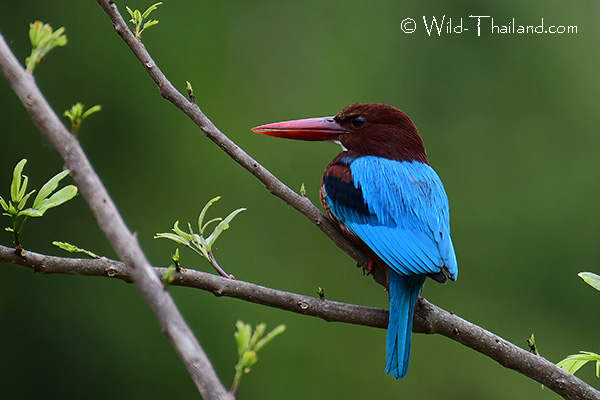
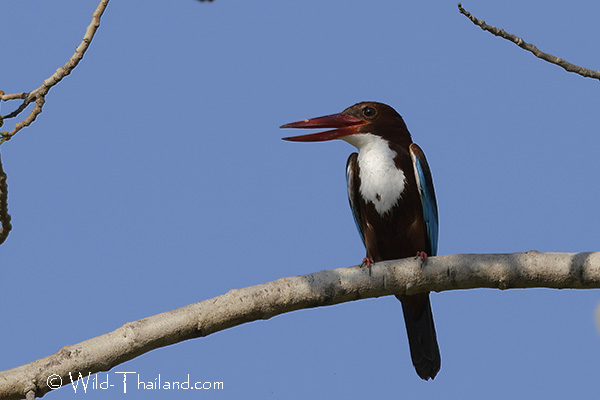
The White-throated Kingfisher is a large, brightly coloured bird with a chocolate-brown head and body, a white throat and breast, and a vibrant blue back and wings. It has a large, bright red bill and red legs.
Distribution
The White-throated Kingfisher is widespread throughout Thailand, they are found in open country, agricultural fields, and urban areas.
The White-throated Kingfisher, is probably the most commonly seen Kingfisher. It is often seen perched on trees, cables and structures in open country, whilst hunting.
White-throated Kingfishers breed from January to August. Both parents dig a tunnel in earth banks to create a nest.