Scientific Name
Urocissa erythroryncha
Status
Least Concern
Size
Length: 65 - 68 cm
Weight: 196 - 232 g
Diet
Omnivore.
Insects, land-leeches, small mammals, small reptiles, tree frogs, eggs and chicks of other birds, fruits and seeds.
Appearance
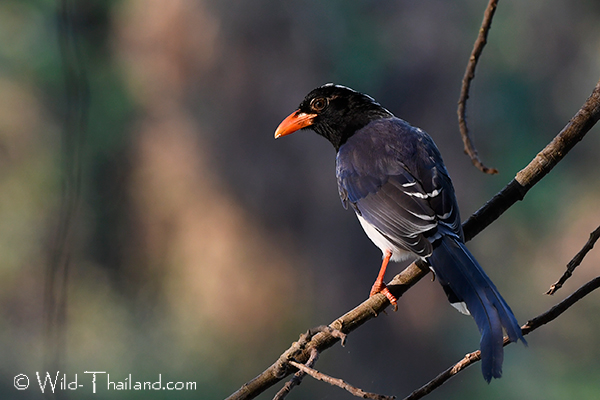
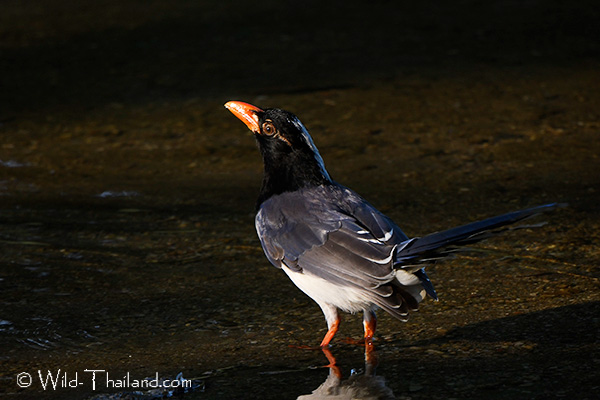
The Red-billed Blue Magpie, has a black head, neck, and breast, with blue-violet plumage on its body, wings, and long tail. It is distinguished by its bright red-orange bill, legs, feet, and a ring around its eye. The long tail has white tips and the wing feathers also have white markings.
Distribution
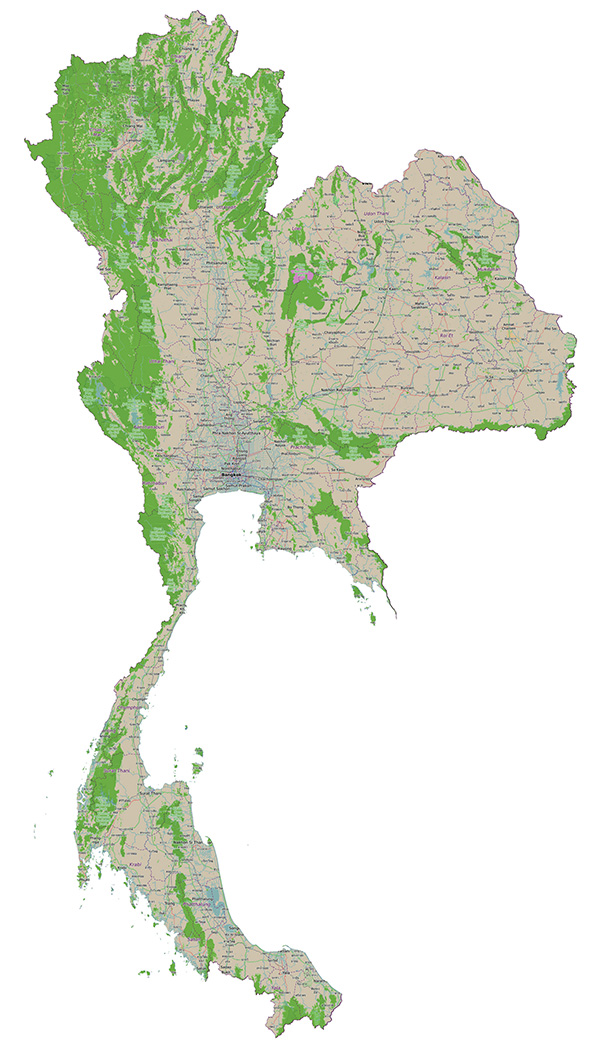
The Red-billed Blue Magpie is found in evergreen forests and scrub in hilly or mountainous areas across much of Thailand, with the exception of the southern region.
Red-billed Blue Magpies are social, intelligent, and diurnal birds that forage and roost in flocks. They are known for cooperative hunting and mimicking other animals.
Breeding between March and May, they build cup-shaped nests in trees and large shrubs, typically 3 to 6 meters off the ground.
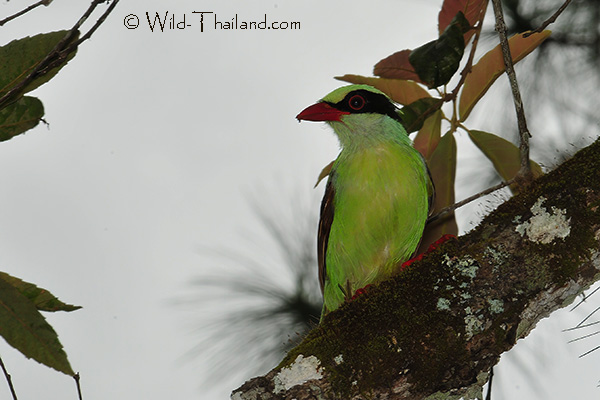
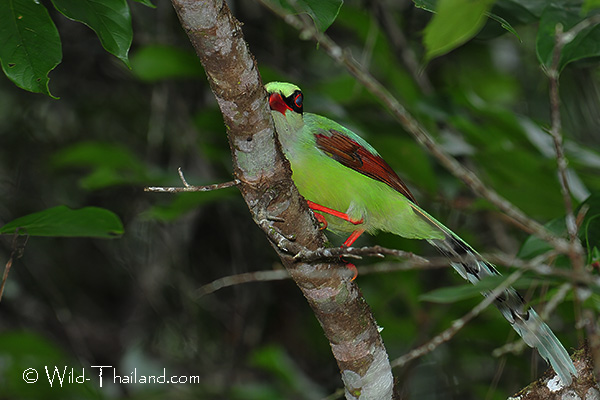
Scientific Name
Cissa chinensis
Status
Least Concern
Size
Length: 37 - 39 cm
Weight: Male: 130 - 133 g
Diet
Omnivore.
Insects, small reptiles, frogs and snakes. It also eats other birds' eggs and chicks, carrion, and occasionally fruits and berries.
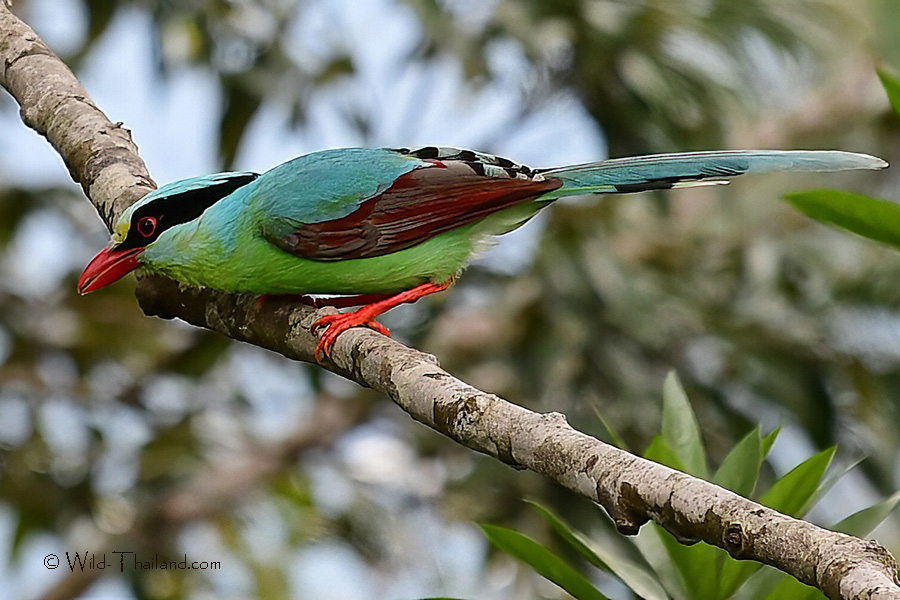
Appearance
Distribution
Central Thailand, preferring evergreen forests, clearings, and scrub jungles.
Common Green Magpies are known for being noisy, intelligent, and social birds. They will forage for food on both the ground and in the trees. Their distinctive, often loud calls include a variety of whistles and chatters, and they will aggressively mob predators, including humans, to protect their territory.