Scientific Name
Ursus tibetanus
Status
Vulnerable.
Size
Length: 120 - 190 cm
Height: 70 - 100cm
Weight: 90 - 200 Kg
Diet
Asiatic Black Bears are typically nocturnal, but may be seen at any time of day, especially in the early morning and evening
Although primarily nocturnal, sightings at night are uncommon, occasionally they might be seen crossing the road or near to roads in open areas
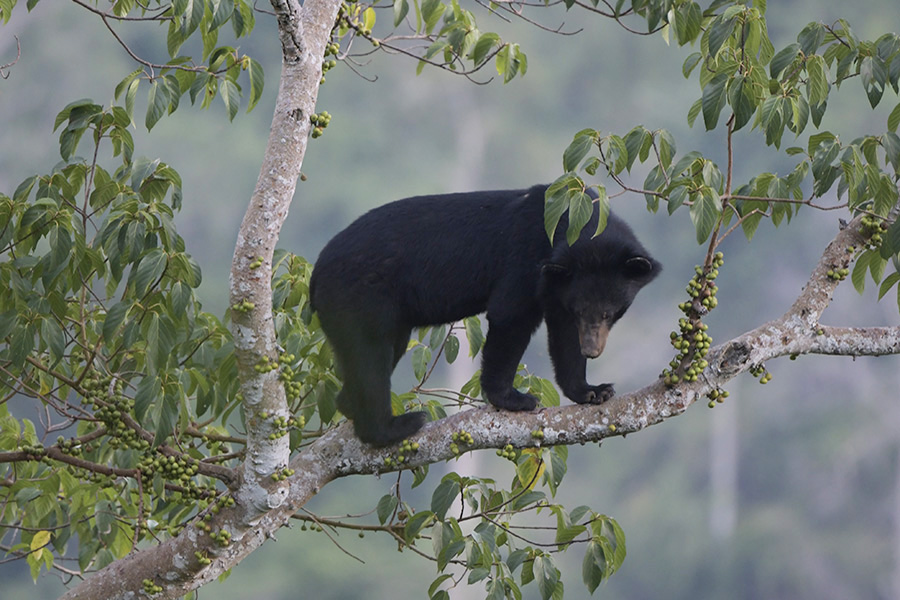
During the day, they are sometimes seen feeding on fruit in trees or traversing open grassy areas such as the "Grasslands", "Golf Course" and "Khao Kheow".
The best time to see bears feeding in trees, is at dawn (first light), on these occasions, the bear(s) will typically climb down rapidly and run away.
On trees that have an abundance of fruit, it is common for Asiatic Black Bears to return to the tree throughout the day to feed.
Asiatic Black Bears are large animals and have been known to attack people when surprised, with cubs or if they feel threatened.
Make a lot of noise (make sure the bear has an escape path), move away from the bear by walking backwards, DO NOT RUN.
Keep your distance, do not in any way attempt to block or restrict access to a bear that is in your immediate vicinity. Always give the bear plenty of space to escape.
They may turn aggressive and worse, they may be aggressive towards people who do not feed them. If any of the bears start to show aggressive behaviour towards people, then the park will have no option but to remove them.
Ignoring advice can be dangerous to you or others near to you.
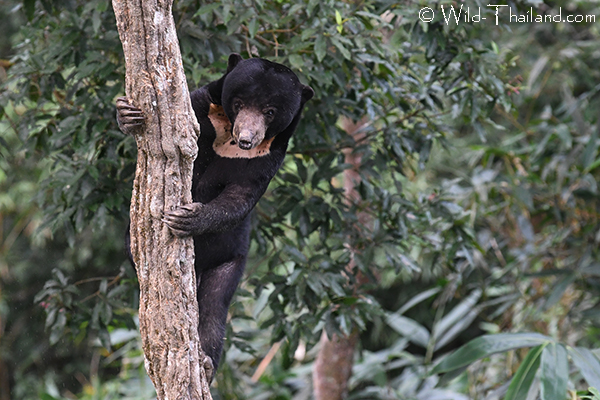
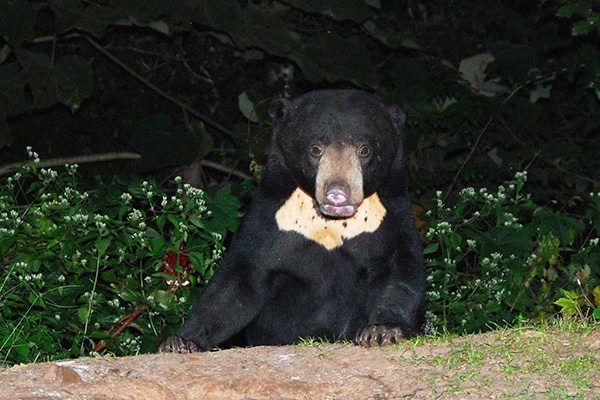
Scientific Name
Helarctos malayanus
Status
Vulnerable
Size
Length: 100 - 140cm
Height: 60 - 70cm
Weight: 25 - 65 Kg
Diet
Omnivorous.
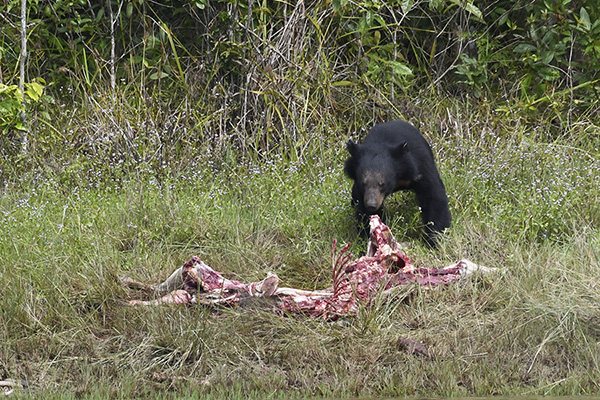
Fruit, berries, leaves, insects, termites, honey, lizards, birds and small mammals.
Appearance
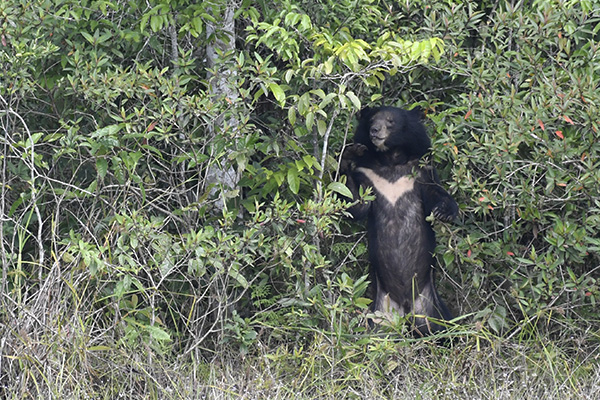
These are the smallest bears in the world. They are covered in short black fur with a distinctive whitish "U" shaped pattern on its chest.
Distribution
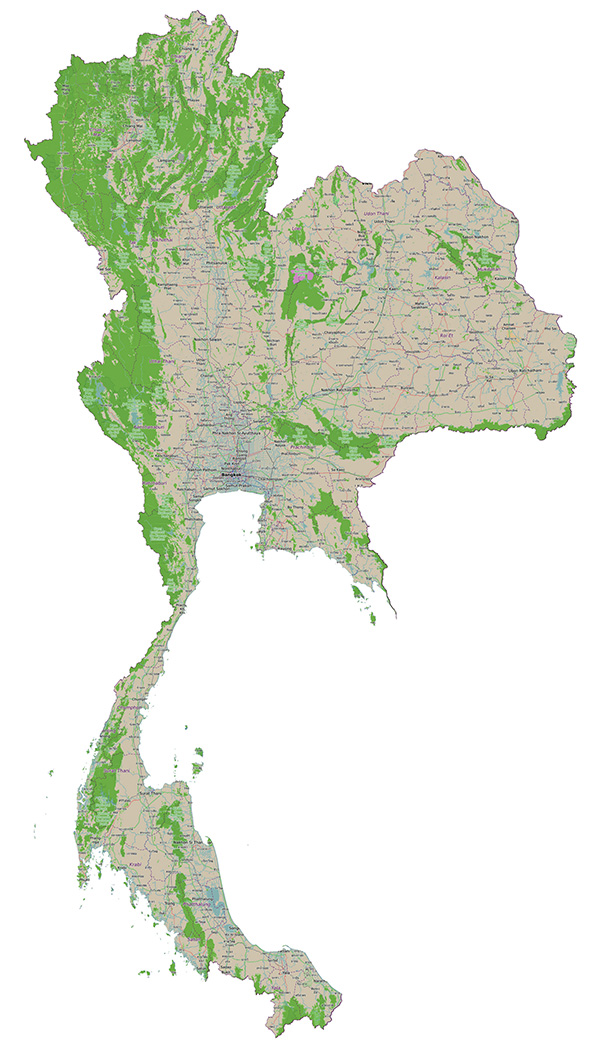
Found in forested areas throughout Thailand.
Sun Bears are typically nocturnal, but may be seen at any time of day, especially in the afternoon and early evening.
The best possible way to see a Sun Bear in Khao Yai, is to take a "night safari" from the headquarters. Sun Bears have been seen feeding at Termite mounds and walking in open grassy areas. Unfortunately, sightings are not common.
During the day, they are sometimes seen traversing open grassy areas such as the "Grasslands", "Golf Course" and "Khao Kheow".
Kaeng Krachan is without doubt, the best place to see Sun Bears in Thailand. Sun Bears are regularly seen at Ban Kran campsite and less regularly at Phanoen Thung campsite.
Ban Kran Campsite - just over a decade ago, a young male Sun Bear started visiting the area at the rear of the restaurant. It came to scavenge on the leftover food discarded at the edge of a gulley. Over the years, other Sun Bears have started visiting and now there are three individuals that regularly visit the camp site.
Afternoon through to early evening are the best times, especially after lunch and dinner.
These bears also visit the area where camping is allowed, in the late evening (when people are cooking). It can be quite alarming to have a Sun Bear walk out of the forest just 1 - 2m away. Shouting will typically deter them, however, these are wild animals and will protect themselves aggressively if they feel threatened.
Phanoen Thung Campsite - Sun Bears are attracted to the area at the rear of the restaurant for the discarded food scraps. Again the times are typically dictated by meal times.
Sun Bears, despite being one of the smallest bears, can be very aggressive and have been known to attack people when surprised, with cubs or if they feel threatened.
Make a lot of noise (make sure the bear has an escape path), move away from the bear by walking backwards, DO NOT RUN.
Keep your distance, do not in any way attempt to block or restrict access to a bear that is in your immediate vicinity. Always give the bear plenty of space to escape.
They may turn aggressive and worse, they may be aggressive towards people who do not feed them. If any of the bears start to show aggressive behaviour towards people, then the park will have no option but to remove them.
Ignoring advice can be dangerous to you or others near to you.