Scientific Name
Rucervus eldii thamin
Status
Endangered
Size
Body length: 150 - 180 cm
Shoulder height: 110 - 130 cm
Weight: 95 - 150 Kg
Diet
Herbivour.
Grasses, herbaceous plants, shoots, and wetland plants.
Appearance
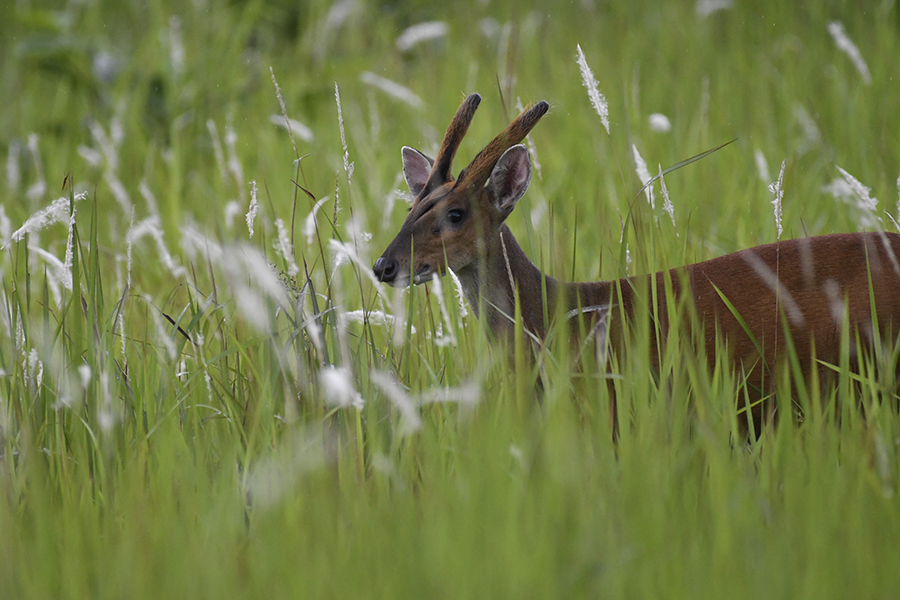
Eld's deer are graceful, medium-sized deer with long legs, a slender body, and a large head.Males have lyre-shaped antlers , that grow backwards with a smaller forward facing tine.
Habitat
Dry, deciduous forests, along with mixed deciduous and dry scrub/thorn forests.
Distribution
Declared extinct in Thailand in the early 1990's.
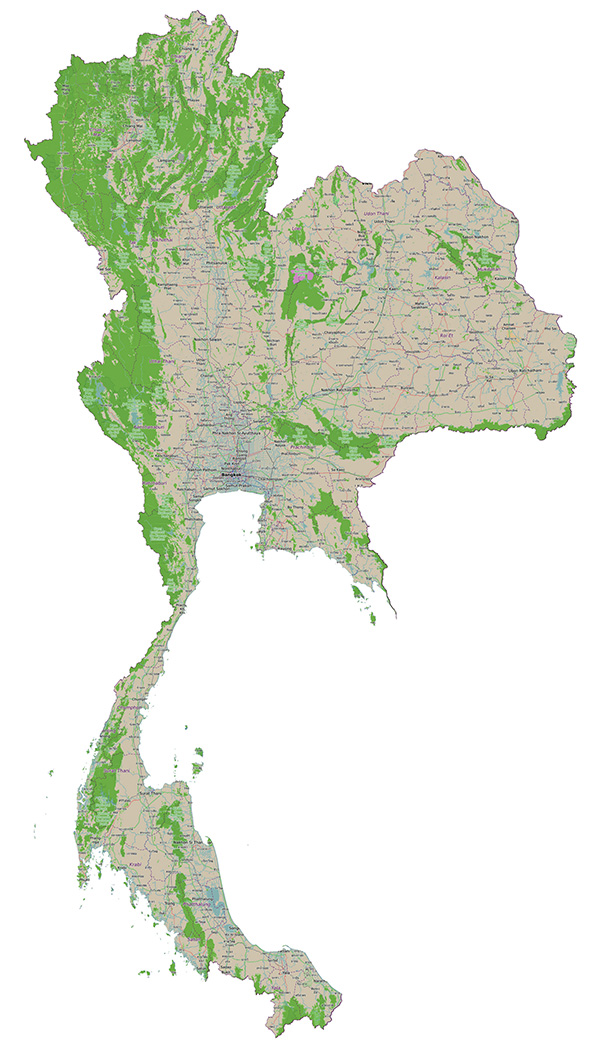
Reintroduced into protected areas from 1999 onward, including: Wiang Lor Wildlife Sanctuary, Khao Aung Rue Nai Wildlife Sanctuary, Salakphra Wildlife Sanctuary and Huai Kha Khaeng Wildlife Sanctuary.
Although sightings of these cats have been reported, they are rarely seen due to their habitat and behaviour. Nearly all sightings today are with camera traps.
Burmese Eld's deer are mostly active at night, or during the twilight hours of dawn and dusk. Except for the breeding season, males tend to be solitary. Females are either solitary or live in small family groups.
Common sighting near the restaurant.
Keep your distance, do not in any way attempt to block or restrict access to a deer that is in your immediate vicinity. Always give the deer plenty of space to escape.
Please have respect, DO NOT FEED!
Ignoring advice can result in the Burmese Eld's deer becoming unnecessarily distressed.
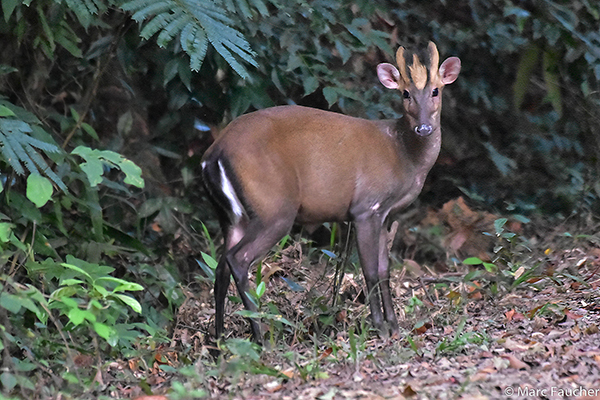
Scientific Name
Muntiacus feae
Status
Endangered Protected Species (Thai Wildlife Protection Act)
Size
Body length: 88 - 100 cm
Shoulder height: 57 - 63 cm
Weight: 18 - 21 Kg
Diet
Omnivorous.
Primarily fruits, herbs, leaves, bark and mushrooms. They will also consume bird eggs, young birds, and small mammals.
Appearance
A small deer with a brown coat, light stripes on their legs, and a relatively long tail fringed with white. Males have antlers, and distinctive canine teeth, while females have bony knobs instead of antlers.
Habitat
Evergreen, mixed, or shrub forests.
Distribution
Tenasserim mountain range, specifically within the forests along the border with Myanmar, from Umphang Wildlife Sanctuary in the north to Phang Nga province in the south.
Although sightings of these cats have been reported, they are rarely seen due to their habitat and behaviour. Nearly all sightings today are with camera traps.
Fea's Muntjac are solitary diurnal deer.
Sometimes seen on the track between Ban Krang and Phanoen Thung Campsite.
Keep your distance, do not in any way attempt to block or restrict access to a Muntjac that is in your immediate vicinity. Always give the Muntjac plenty of space to escape.
Please have respect, DO NOT FEED!
Ignoring advice can result in the Fea's Muntjac becoming unnecessarily distressed.
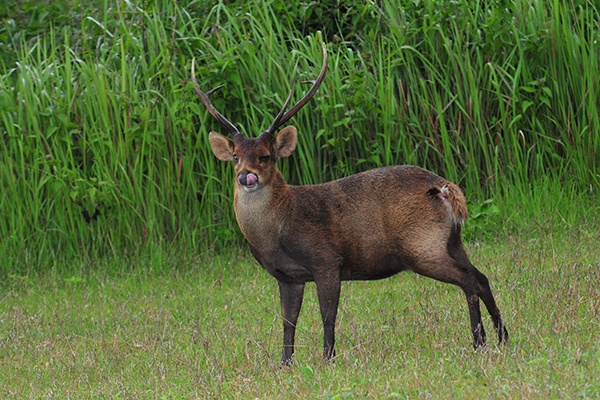
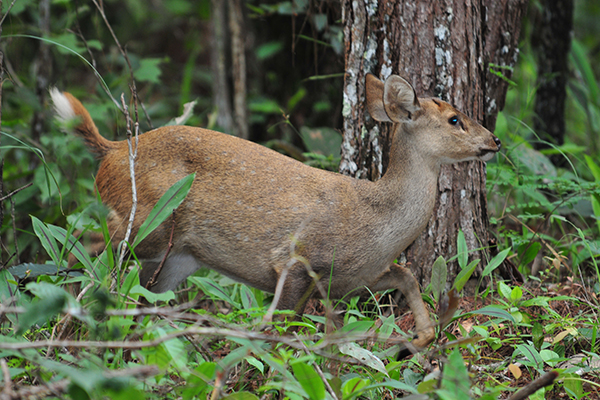
Scientific Name
Axis porcinus
Status
Endangered
Size.
Body length: 105 - 115 cm
Shoulder Height: 60 - 70 cm
Weight: 30 - 45 Kg
Diet
Herbivorous.
Grass, shoots, herbs, flowers, and fruits.
Appearance
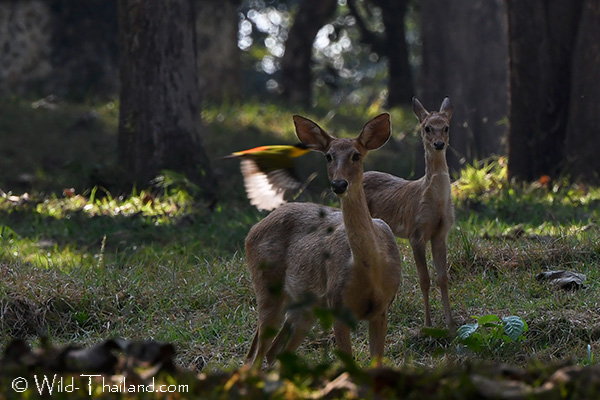
Small stocky deer with a short, wedge shaped head and reddish brown coat.
Habitat
Open grassy areas.
Distribution
Northern and northeastern regions, with populations also present in the west.
Although sightings of these cats have been reported, they are rarely seen due to their habitat and behaviour. Nearly all sightings today are with camera traps.
Hog Deer form small herds, although it is not unusual to encounter solitary animals.
Hog Deer can be seen in open areas around the headquarters,
Keep your distance, do not in any way attempt to block or restrict access to a Hog Deer that is in your immediate vicinity. Always give the Hog Deer plenty of space to escape.
Please have respect, DO NOT FEED!
Ignoring advice can result in the Hog Deer becoming unnecessarily distressed.
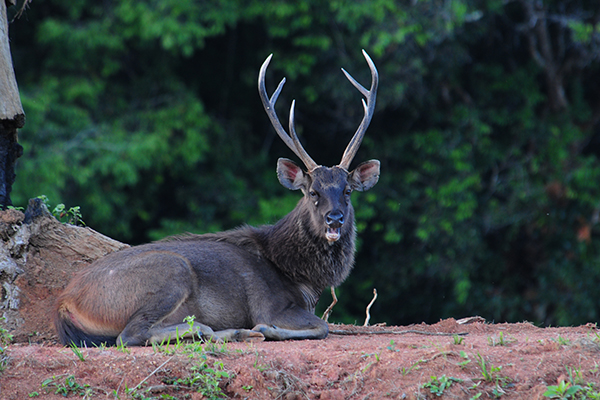
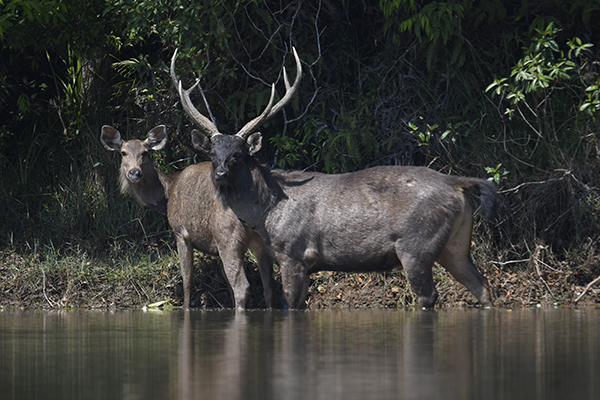
Scientific Name
Rusa unicolor
Status
Vulnerable
Size.
Body length: 162 - 270 cm
Shoulder Height: 102 - 160 cm
Weight: 100 - 350 Kg
Diet
Herbivorous.
Grasses, foliage, fruit, and water plants.
Appearance
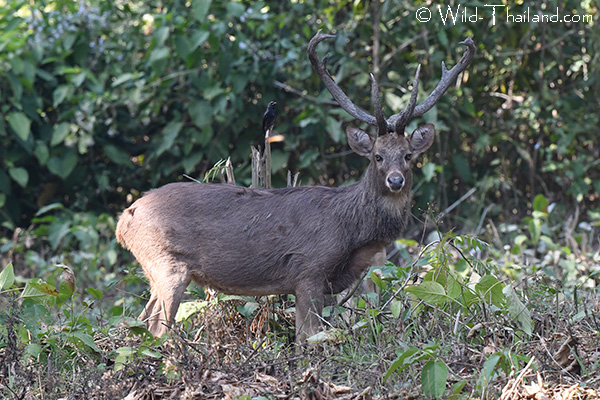
A large sized deer with a yellowish brown to dark grey shaggy coat.
Habitat
Dry deciduous, rainforest, and mixed forests.
Distribution
Central Thailand and the western forest complex.
Although sightings of these cats have been reported, they are rarely seen due to their habitat and behaviour. Nearly all sightings today are with camera traps.
Sambar Deer will form small herds but are also often solitary. They are often seen in the day resting under a tree, becoming active in the early evening, when they start foraging for food.
The most commonly seen mammal in Khao Yai.
Sambar Deer can typically be seen in open grassy areas, sometimes on the side of the road and around park accommodation.
Although primarily nocturnal, they can be seen during the day, particularly at Lam Ta Khong Campsite.
Sightings are virtually gauranteed during the night safari tour.
Sightings are not so common, as they prefer the open grassland areas that are off limits to guests.
Often seen in the grasslands and on the sides of the lakes near to the headquarters.
Keep your distance, do not in any way attempt to block or restrict access to a Sambar Deer that is in your immediate vicinity. Always give the Sambar Deer plenty of space to escape.
In Khao Yai, Sambar Deer have become accustomed to people and being fed. Indifferent people have been seen feeding Sambar Deer from their hands. Deer can and do carry TB, this can be passed on to humans through hand feeding, along with the multitude of parasites that live on and in the Deer.
Because many people ignore the "Do Not Feed The Animals" signs, Sambar Deer are causing problems in Lam Ta Khong Campsite, where they have been damaging tents to get to food within the tent.
Please have respect, DO NOT FEED!
Ignoring advice can result in the Sambar Deer becoming a destructive pest.
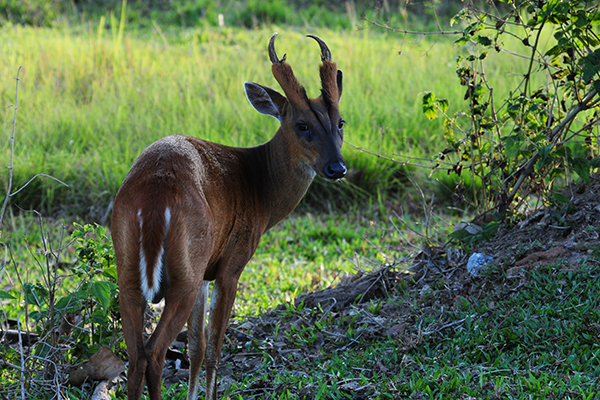
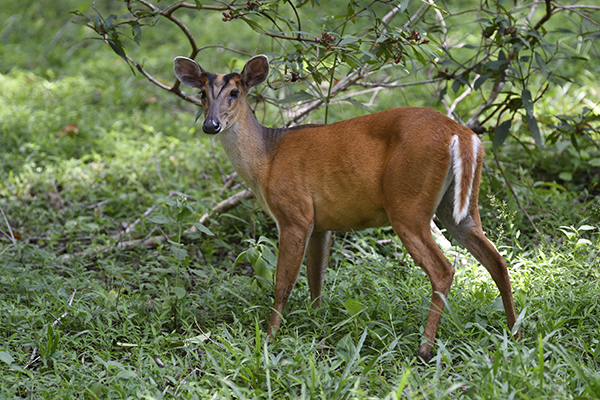
Scientific Name
Muntiacus muntjak
Status
Least Concern
Size
Body length: 80 - 135 cm
Shoulder Height: 40 - 65 cm
Weight: 13 - 35 Kg
Diet
Omnivorous.
Grass, fruit, shoots, seeds, bird eggs, small animals, and occasionally carrion.
Appearance
A small sized Deer, with soft, short, brownish or reddish brown hair.
Habitat
Forests and dense vegetation in hilly areas.
Distribution.
Found throughout Thailand in protected areas.
Although sightings of these cats have been reported, they are rarely seen due to their habitat and behaviour. Nearly all sightings today are with camera traps.
Southern Red Muntjac are solitary diurnal deer. They emit a loud bark like sound when they sense danger.
Another common resident of Khao Yai.
Muntjac can bee seen all over the park, particularly around the grasslands. They will often be seen feeding along the edge of the road and will sometimes cross the road unexpectedly.
They will also visit the camp sites and park accommodation foraging for food.
Sometimes seen near the ponds before Ban Krang Campsite.
Muntjac are nervous animals and will bolt when it senses any danger, sometimes across the road. Please be vigilant and careful when in the vicinity of these small Deer.
Keep your distance, do not in any way attempt to block or restrict access to a Muntjac that is in your immediate vicinity. Always give the Muntjac plenty of space to escape.
They will sometimes approach people for food.
Please have respect, DO NOT FEED!
Ignoring advice can result in the Muntjac becoming unnecessarily distressed, injured or worse.