Scientific Name
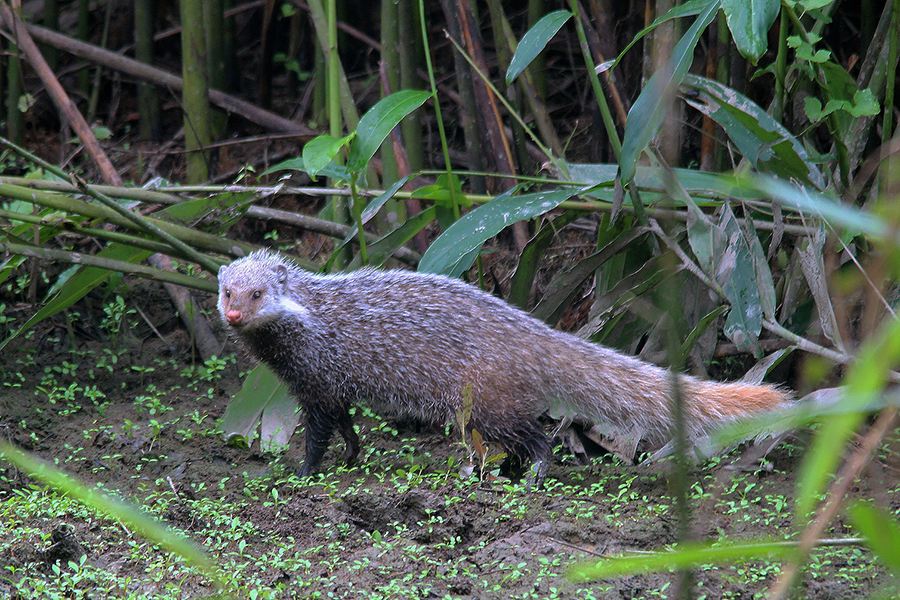
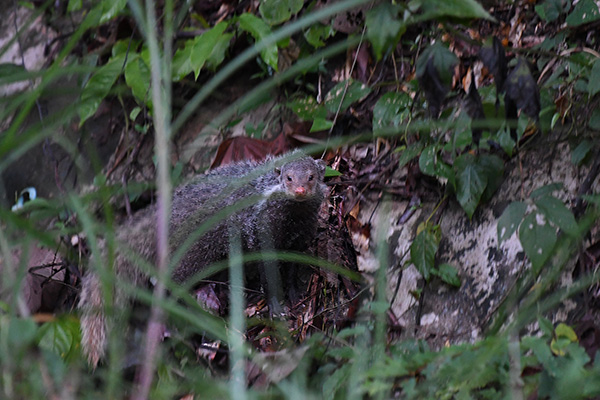
Herpestes urva
Status
Least Concern
Size
Body length: 47 - 56 cm
Tail Length: 28 - 34 cm
Weight: 1.1 - 2.2 Kg
Diet
Carnivorous.
Crabs, fish, snails, frogs, rodents, birds, reptiles, and insects.
Appearance
Medium sized mongoose, with greyish brown fur on the sides and dusky brown on neck, chest, belly and limbs.
Habitat
Primary evergreen forests and tall secondary forests.
Distribution.
From Malaysian border, north to Nam Nao National Park.
Although sightings of these cats have been reported, they are rarely seen due to their habitat and behaviour. Nearly all sightings today are with camera traps.
Crab-eating Mongoose are diurnal, they can be seen throughout the day. They live in small groups of up to four individuals. Solitary individuals are not uncommon.
Mostly seen when crossing a road. They are, due their diet, mostly seen near water.
Khao Khieow Road, where it exits the forest into the grasslands, Pachinburi road, near to the ponds and the small pond in the Grasslands.
Sometimes seen on or near the road from the park entrance to Ban Kran Campsite.
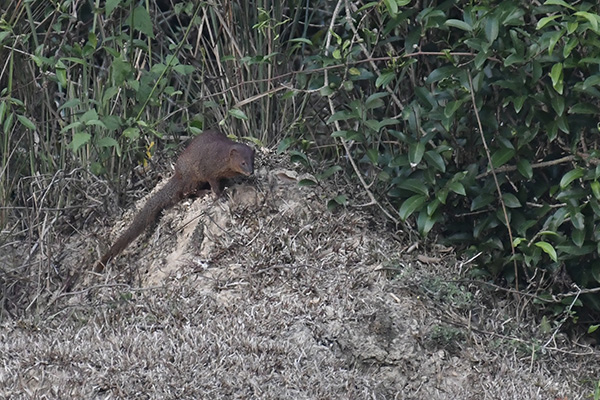
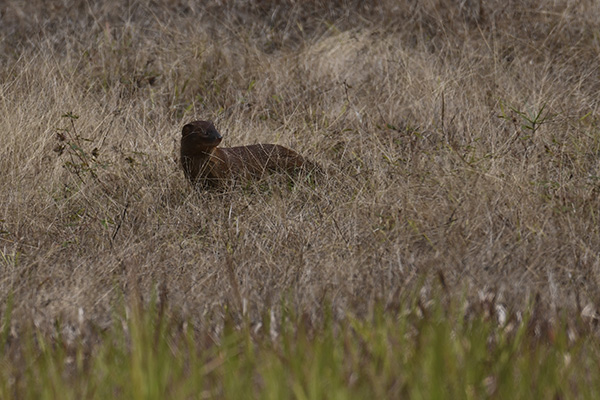
Scientific Name
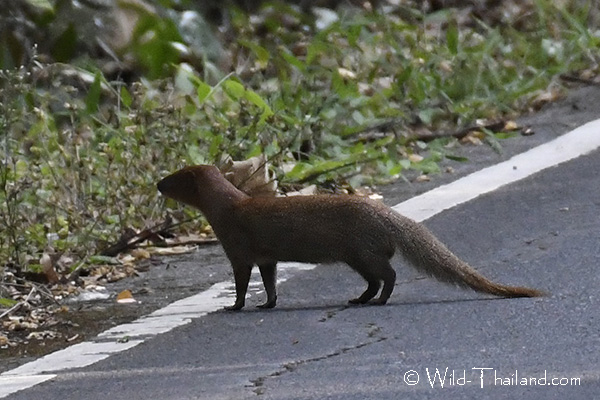
Urva javanica
Status
Least Concern
Size
Body length: 35 - 41 cm
Tail Length: 22 - 28 cm
Weight: 450 - 750 g
Diet
Carnivorous.
Small mammals, crabs, frogs, spiders, scorpions, snakes, lizards, birds, eggs and carrion.
Appearance
Dense, soft dark brown to reddish brown with bushy tapering tail.
Habitat
Forests, grasslands and agricultural areas.
Distribution.
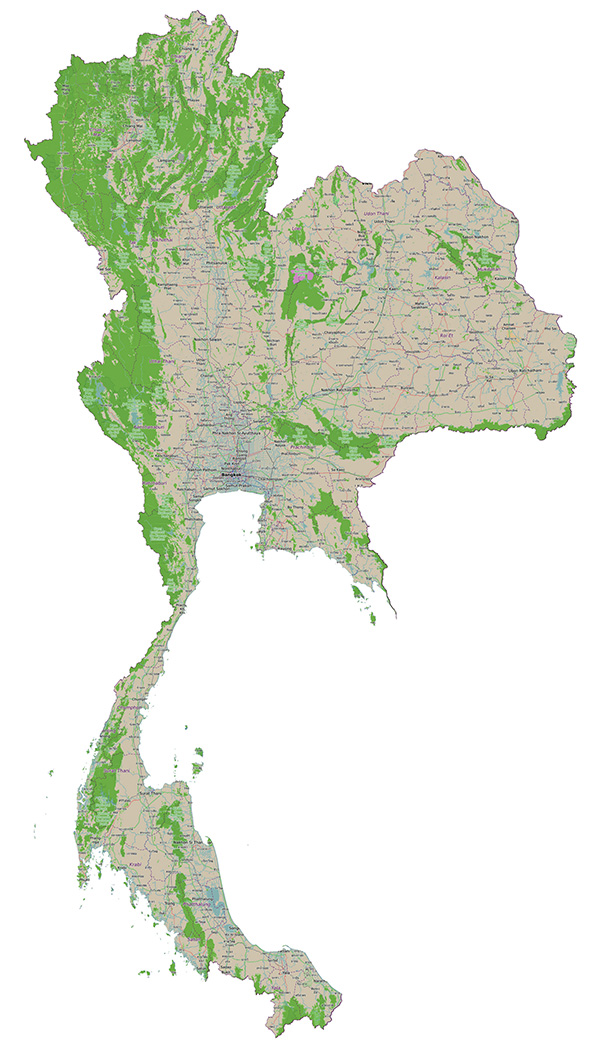
Found throughout Thailand.
Although sightings of these cats have been reported, they are rarely seen due to their habitat and behaviour. Nearly all sightings today are with camera traps.
Javan Mongoose are diurnal, they can be seen throughout the day. They are mostly solitary, but will share burrows.
Javan Mongooses can be seen foraging for food in grassy areas and along road verges. They will also eat road kill.
Any grassy areas and along the Khao Khieo Road from Tannarat to the open grass lands at Khao Khieo.
When foraging along the road, they will run into the forest if they sense danger, they will come back out a little distance down the road.