Scientific Name
Cinnyris jugularis
Status
Least Concern
Size
Length: 10 - 12 cm
Weight: 7 - 12 g
Diet
Omnivore.
Nectar and insects, occasionally fruit and spiders.
Appearance
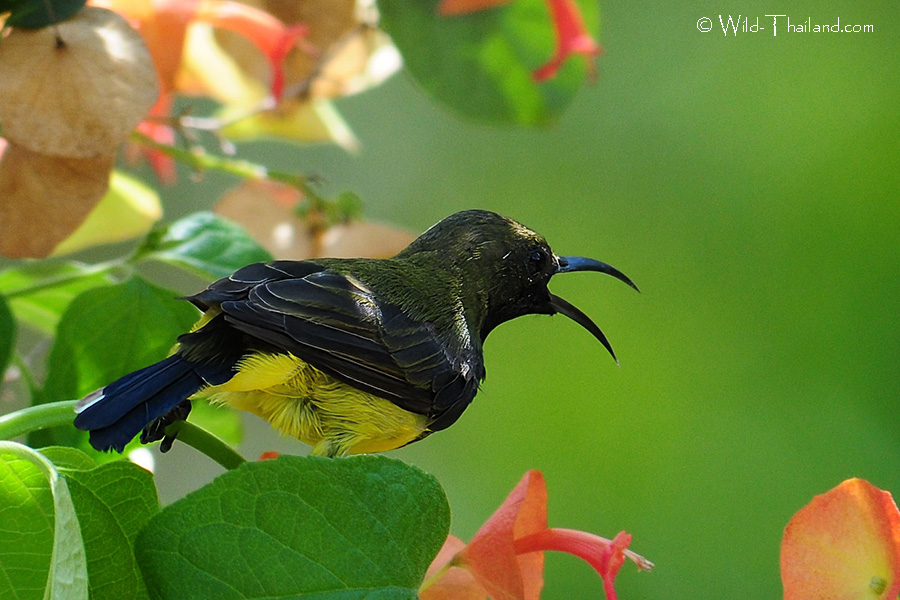
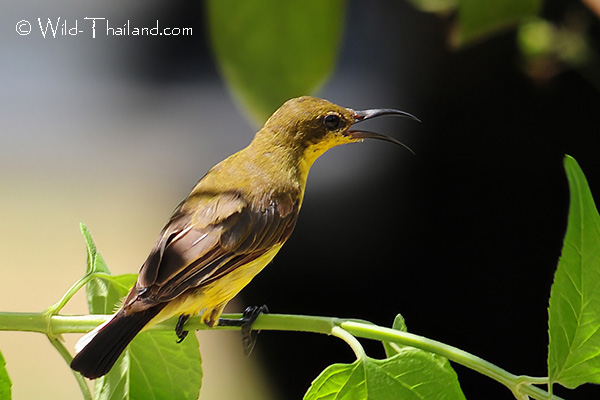
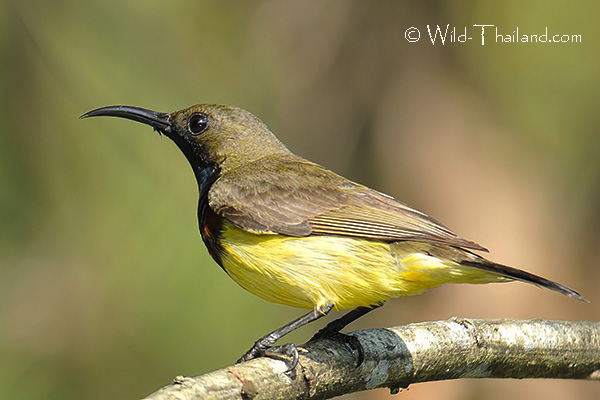
The Olive-backed Sunbird is a small bird with a plain olive-brown back. Males have a striking iridescent blue-black forehead, throat, and upper breast, which contrasts with bright yellow underparts. Females are duller, with an olive-brown back and yellow belly.
Distribution
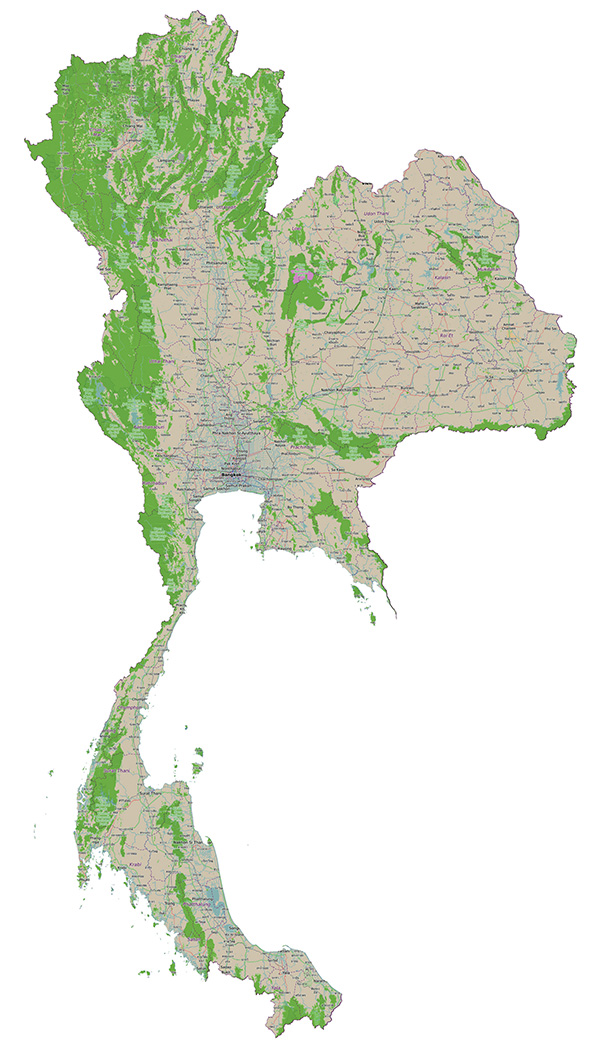
Olive-backed Sunbirds are found throughout Thailand, from urban areas and parks to forests and mangroves.
Olive-backed Sunbirds are active birds, often seen feeding on nectar on flowering trees.
Breeding is from January to May. Both the male and female build the nest, which is flask-shaped with a porch-like entrance and a hanging tail. The nest is made of materials like grass, moss, bark, and spider webs.
Scientific Name
Chalcoparia singalensis
Status
Least Concern
Size
Length: 10 - 11 cm
Weight: 8 - 9 g
Diet
Omnivore.
Insects, spiders, nectar, and fruit.
Appearance
The Ruby-cheeked Sunbird is a small, colourful bird, especially males, which have metallic green upper parts, ruby-red cheeks, and a bright orange throat and chest. Females are less vibrant, featuring a more olive-green head and greenish-yellow underparts.
Distribution
Ruby-cheeked Sunbirds are found throughout Thailand, in lowland and montane forests, including mangrove forests, as well as plantations and gardens.
Ruby-cheeked Sunbirds are active birds, that forage in the upper levels of trees, for a diet of insects, nectar, pollen, and fruit.
Breeding is from March to August. The nest is a shaggy, pear-shaped structure made from cobwebs, plant fibres, grass, and moss. It usually includes a small porch over the side entrance and is suspended from the drooping twigs of a bush or small tree, typically 2-8 meters above the ground.