Scientific Name
Ampeliceps coronatus
Status
Least Concern
Size
Length: 19 - 21 cm
Weight: 78 - 99 g
Diet
Primarily fruits and insects. They also consume small fish, lizards, and eggs, and may scavenge for food.
Appearance
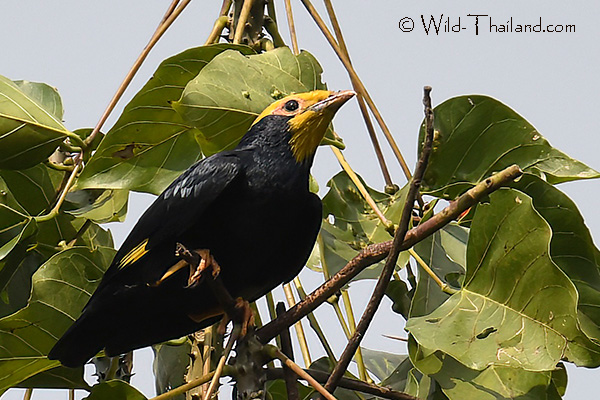
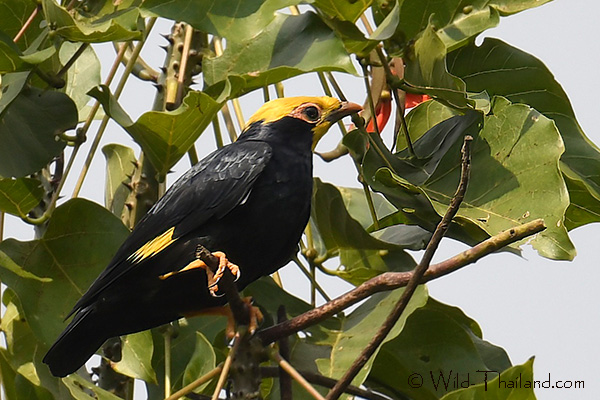
The Golden-crested Myna is a glossy black bird with a vibrant yellow crest on its head, a bright yellow bill, and yellow skin around its eyes. Males have a more extensive golden-yellow forehead and throat than females, who have a narrower golden strip on their chin and throat.
Distribution
The Golden-crested Myna is found throughout Thailand, but considered rare in the peninsular.
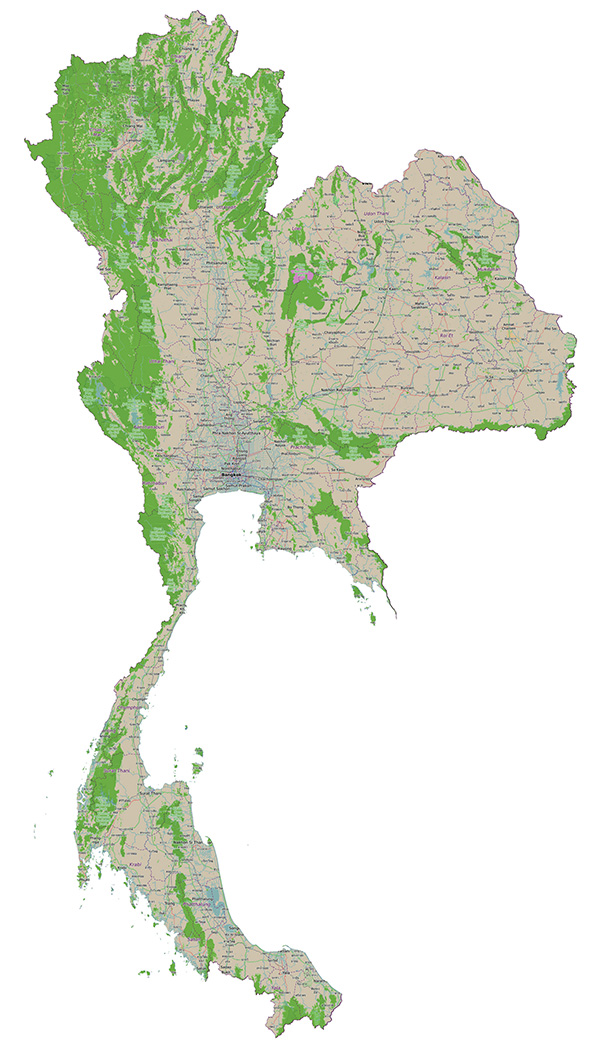
The Golden-crested Myna's habitat is primarily subtropical or tropical moist lowland forests, though they can also be found in heavily degraded former forests, open forests, and mixed woodlands. They prefer lowland and foothill areas up to about 800 meters and are often found in pairs or small groups, foraging in the canopy.
Golden-crested Myna's breed from April to August. Their nests are built in tree cavities.
Scientific Name
Gracula religiosa
Status
Least Concern
Size
Length: 28 - 38 cm
Weight: 142 - 269 g
Diet
Fruit, nectar, insects, and small animals like lizards.
Appearance
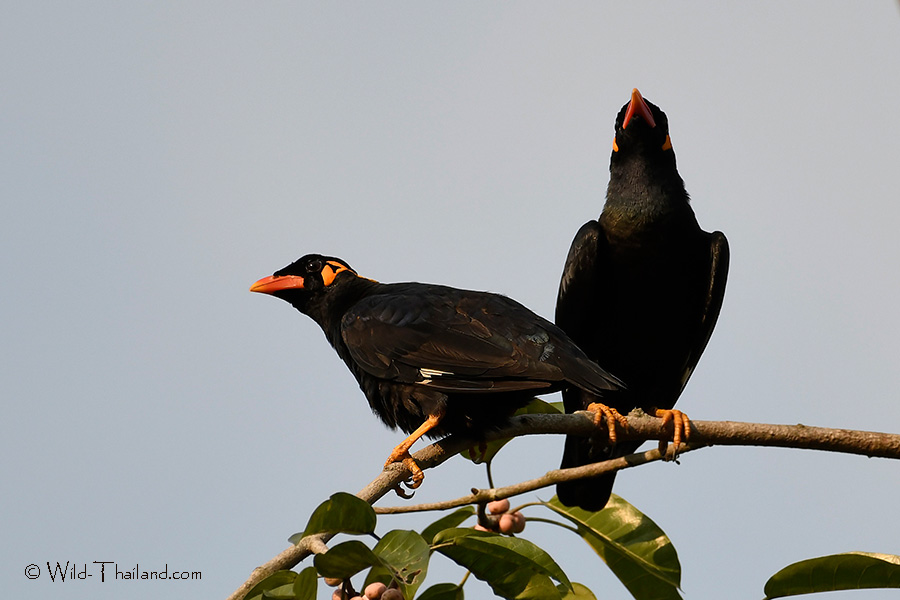
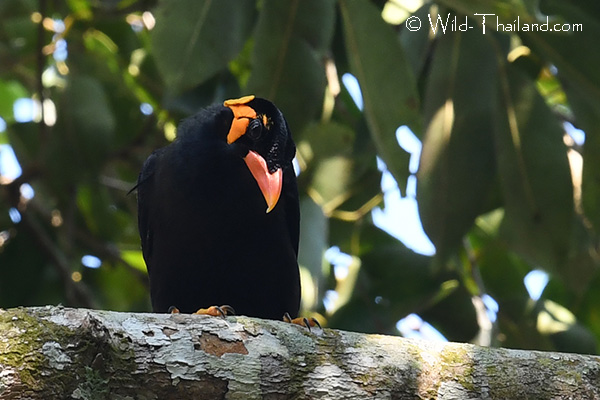
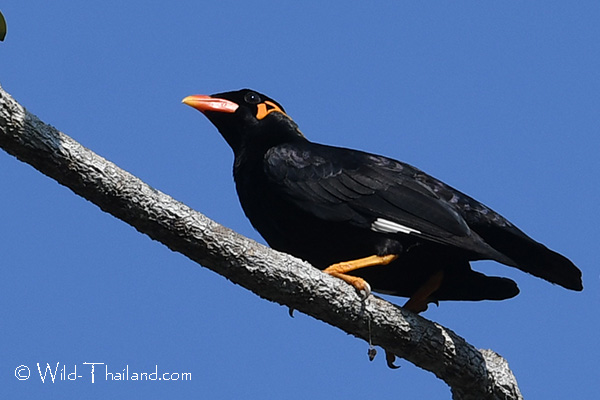
The Hill Myna is a stocky, jet-black bird with glossy, purple-tinged plumage and distinctive fleshy yellow wattles on its head and neck. It has a bright orange or reddish bill that often fades to a yellow tip, yellow legs, and large white patches on its wings that are prominent during flight.
Distribution
Hill Mynas are found in most regions of Thailand except the central plains.
Hill mynas are social and live in large, noisy flocks, particularly in the evenings. They prefer moist or semi-evergreen forests in the lowlands, hills, and mountains. They are also known for being noisy and are highly intelligent, possessing an exceptional ability to mimic human speech and other sounds.
Hill Mynahs in Thailand breed from February to July, building nests in tree cavities.