Number of species: 3
Scientific Name
Ducula badia
Status
Least Concern
Size
Length: 43 - 51 cm
Weight: 580 - 665 g
Diet
frugivorous herbivore.
Fruits and berries, with a strong preference for figs and nutmeg.
Appearance
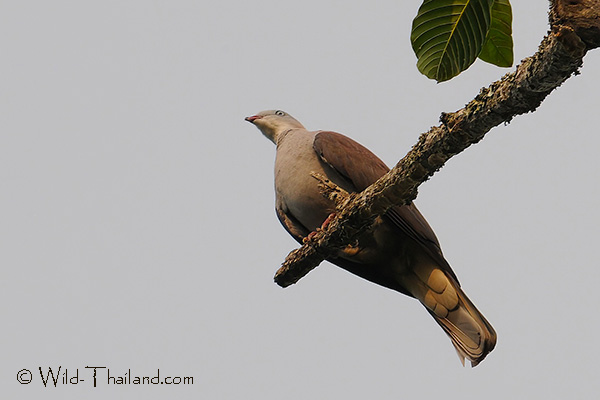
The Mountain Imperial Pigeon is a large pigeon with a reddish-grey head, neck, and underparts, contrasting with a white throat and brownish-maroon upper parts and wings. Its underparts are slate-grey, and its tail is black with a grey horizontal band.
Distribution
Scientific Name
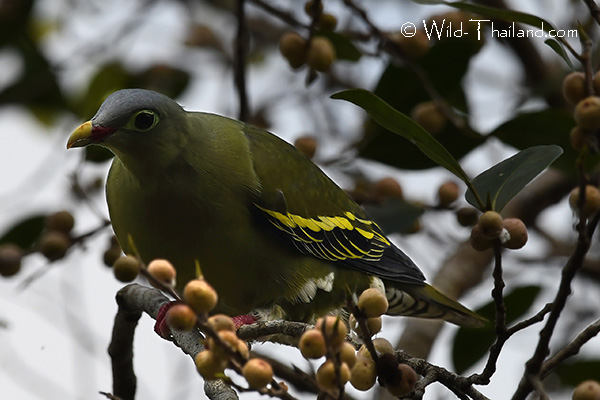
Treron curvirostra
Status
Least Concern
Size
Length: 24 - 31 cm
Weight: 112 - 186 g
Diet
Frugivore.
Fruit, rice, and millet.
Appearance
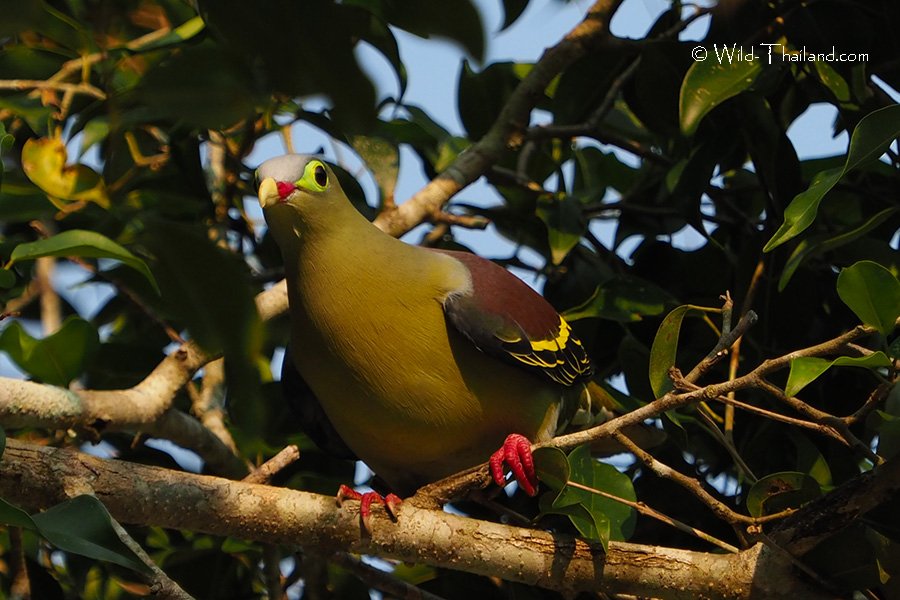
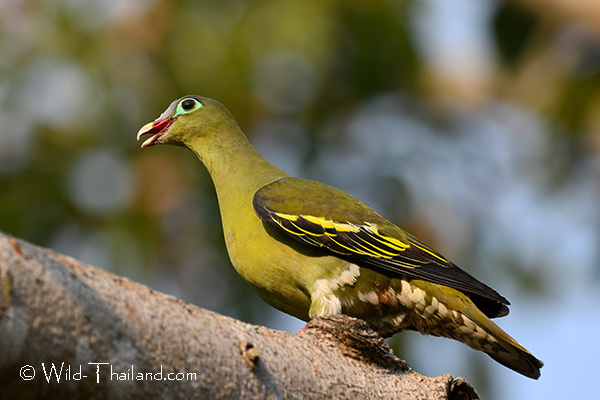
The Thick-billed Pigeon is predominantly green with a thick, pale greenish bill that has a red base. Males have a maroon back, while females are green all over. Both sexes have a broad bluish-green eye-ring and yellow edging on the wings.
Distribution
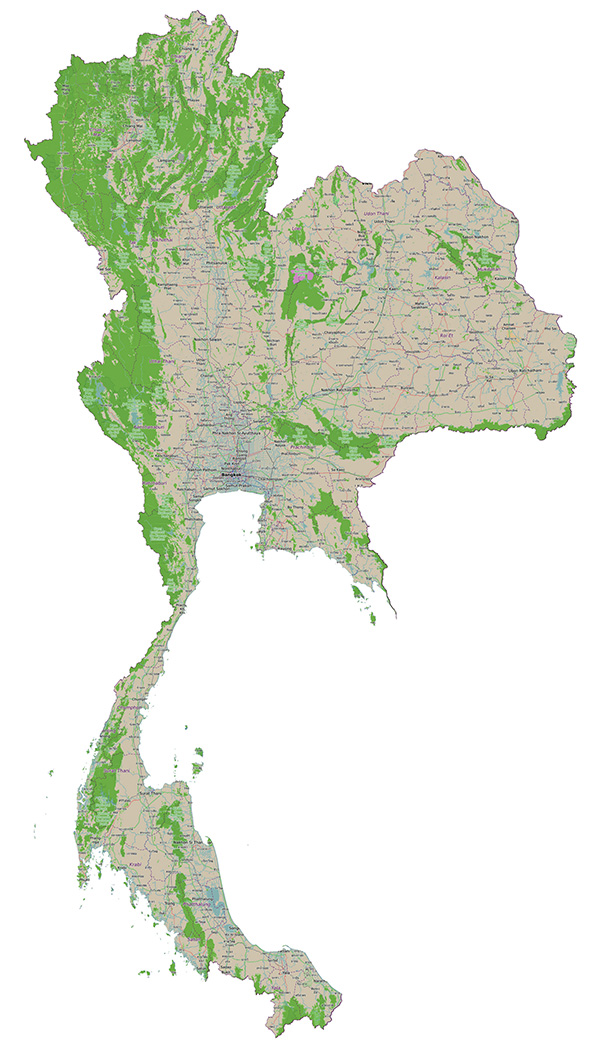
Thick-billed Pigeon are found throughout Thailand, in various wooded habitats, including tropical rain forests.
Scientific Name
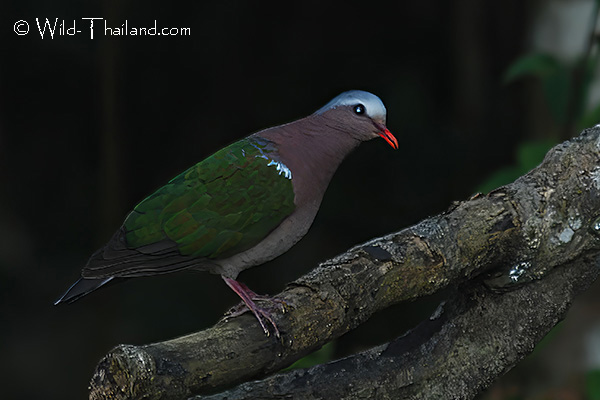
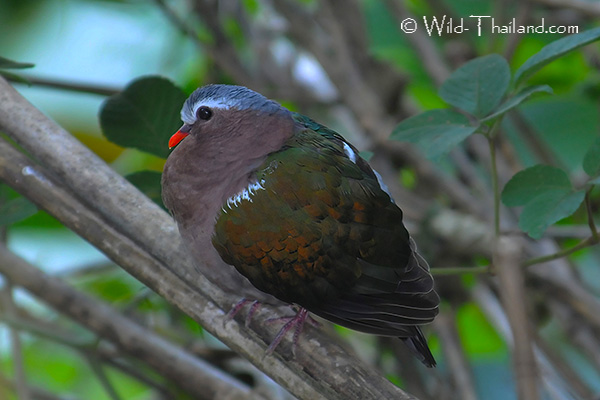
Chalcophaps indica
Status
Least Concern
Size
Length: 23 - 27 cm
Weight: 86 - 135 g
Diet
Herbivore.
Fruits and seeds from a variety of plants, but also consume insects, grass seeds.
Appearance
The Emerald Dove is a medium-sized, bird with a distinctive, stocky body, small head, and plump, rounded body. It is characterised by its vibrant, iridescent green wings and back, a dark reddish-pink head and underparts, and a bright red bill. Males typically have a grey crown and a white shoulder patch, which is less pronounced or absent in females.
Distribution
Emerald Doves are primarily terrestrial and often found on the ground, foraging for seeds and fallen fruit, though they are also capable of fast, direct flight. They typically live singly or in pairs. They are often seen along the sides of tracks and roads with dense foliage.
Breeding occurs throughout the year. They build a simple, stick nest, which is a flimsy platform made of twigs and leaves, typically placed in a tree, bush, or tangle of creepers up to five meters off the ground. They prefer to nest within forests or closed-canopy woodlands.