Common Names
Asian Brush-tailed Porcupine
Bush-tailed Porcupine.
Scientific Name
Atherurus macrourus
Status
Least Concern.
Despite the IUCN status, it is the rarest Porcupine in Asia and protected in some countries.
Size
Body length: 38 - 57 cm
Tail Length: 16 - 24 cm
Weight: 1.5 - 4.3 Kg
Diet
Primarily Herbivorous also Omnivorous.
Their main diet consists of roots, tubers, fruits, and bamboo shoots, they also consume insects, grubs, and occasionally carrion, animal bones and horns.
Appearance
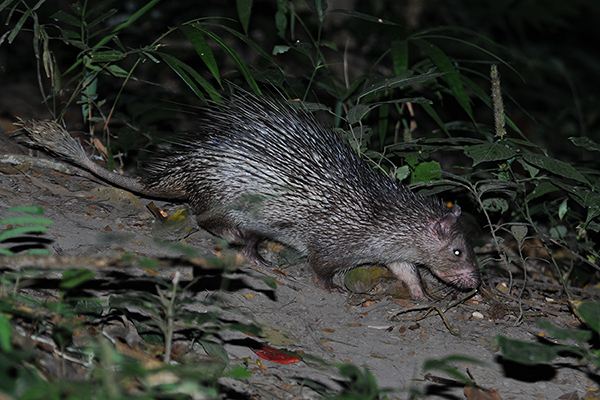
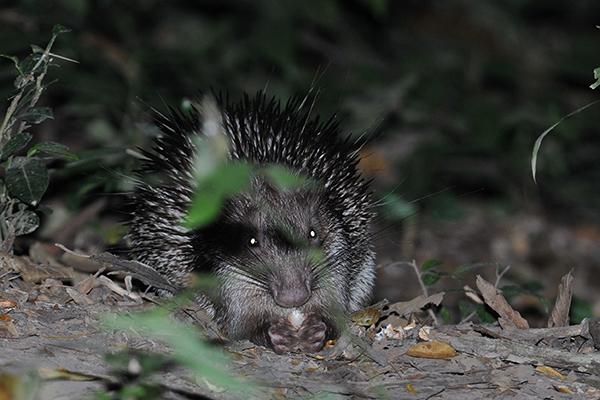
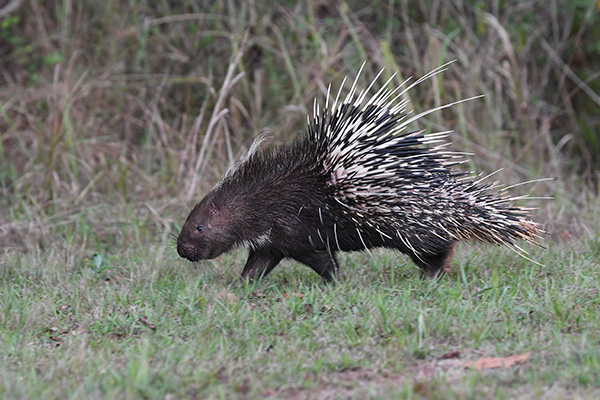
A small to medium-sized rodent with a long, scaly tail ending in a distinctive tuft of white bristles. Its body is covered in short, rigid spines and flattened spines on the neck and belly, with longer, grooved spines on its back interspersed with bristles that may have flattened disks at the tip. Its overall appearance is dark brown on top, often with light and dark stripes, and a whitish chin and chest.
Habitat
Subtropical and tropical montane forests. It is found on the forest floor, often in areas with profuse undergrowth interspersed with bamboo and palms.
Distribution
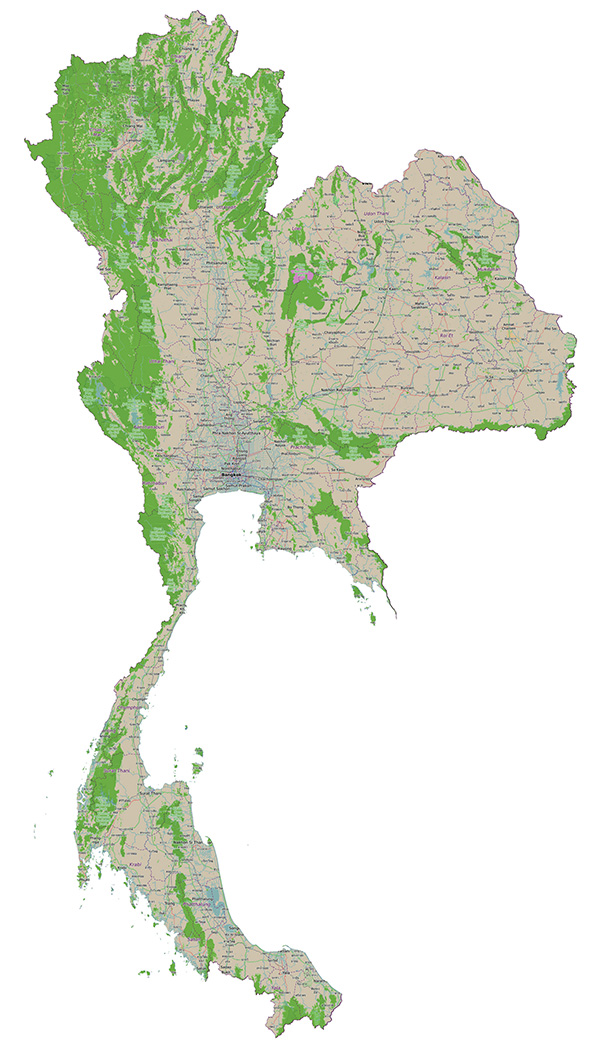
Found throughout Thailand in suitable forests.
Although sightings of these cats have been reported, they are rarely seen due to their habitat and behaviour. Nearly all sightings today are with camera traps.
Asiatic Brush-tailed Porcupines are nocturnal and seen in the early and late evening in suitable habitat.
They live in family clans of four to eight members, sharing common burrows and feeding grounds.
In the dense undergrowth amongst the trees between Bang Kran campsite and the river.
Please have respect, DO NOT FEED!
Common Names
Maylayan porcupine
Himalayan porcupine
Scientific Name
Hystrix brachyura
Status
Least Concern
Size
Body length: 56 - 74 cm
Tail Length: 6 - 11 cm
Weight: 10 - 18 Kg
Diet
Herbivorous.
Roots, tubers, bark, fallen fruits and seeds. They will also eat carrion and chew on the bones of carcases.
Appearance
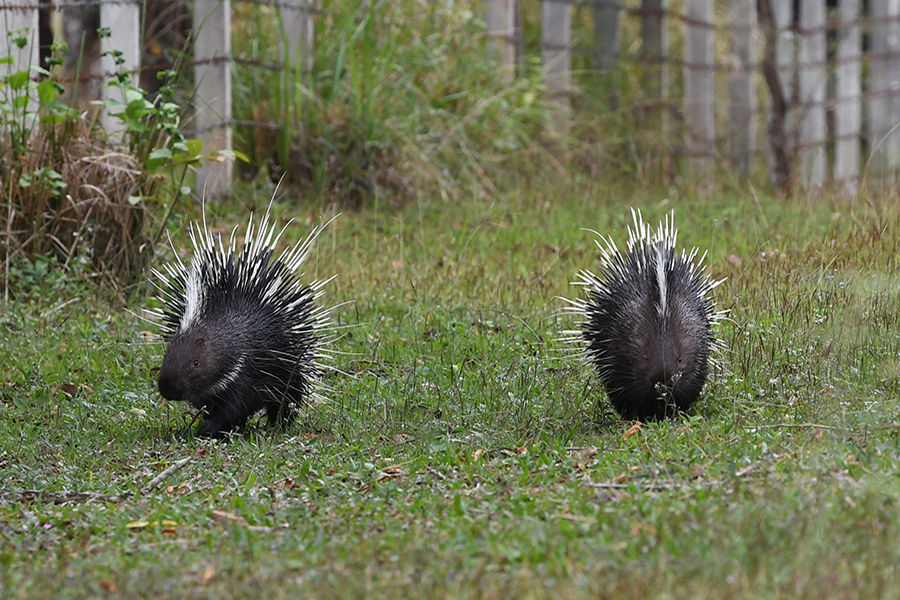
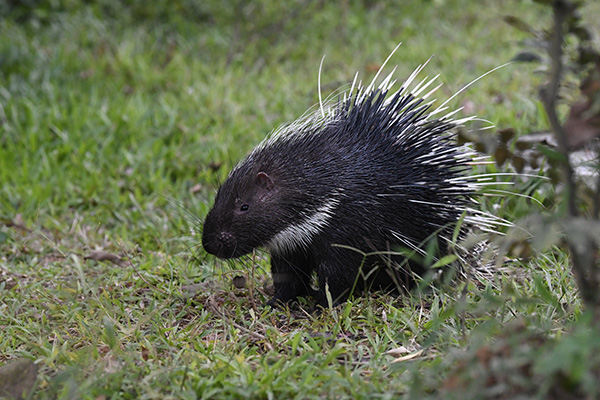
The front of body is covered in short, dark brown hair, while its rear half is adorned with long, hollow, black and white striped quills that serve as a defence mechanism.
Habitat
East Asian Porcupines inhabit a range of habitats, including forests, scrubby, open areas, and agricultural lands.
Distribution
Throughout forested areas of Thailand and protected open areas.
Khao Yai National Park.
East Asian Porcupines are nocturnal and, commonly seen around camp sites and park accommodation in the early and late evening. It is not uncommon for them to venture out in the late afternoon.
They live in pairs or small family groups in burrows in the ground.
Seen around the park accommodation and campsite in the early and late evening. They are regularly seen on the official night safari's.
Seen around the park accommodation in the early and late evening.
Seen around the park accommodation and campsite in the early and late evening.
Seen around the campsites in the early and late evening.
Seen around the park accommodation in the early and late evening.
Seen around the park accommodation and headquarters in the early and late evening.
Please have respect, DO NOT FEED!