Scientific Name
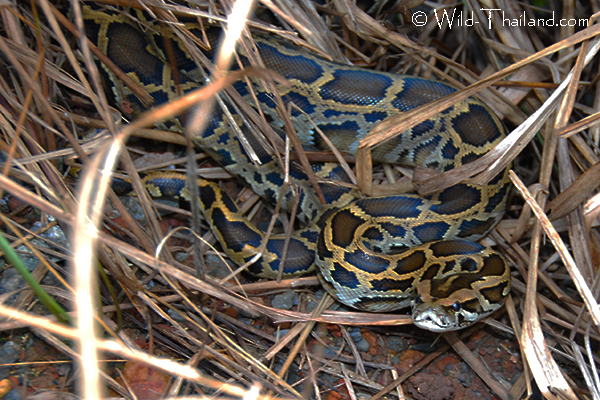
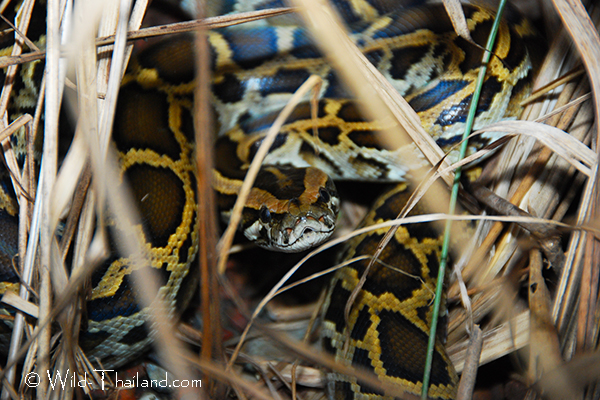
Python bivittatus
Status
Vulnerable
Size
Length: 3 - 5 m
Diet
Carnivorous.
Primarily birds and mammals.
Appearance
A very large, heavy-bodied snake, with a striking pattern of large, dark brown, "giraffe-like" or puzzle-piece blotches outlined in black, cream, or gold on a tan, yellow, or cream background.
Toxicology
Non-venomous.
Habitat
Rainforests, woodlands, swamps, marshes, and agricultural lands, typically near permanent water sources.
Distribution.
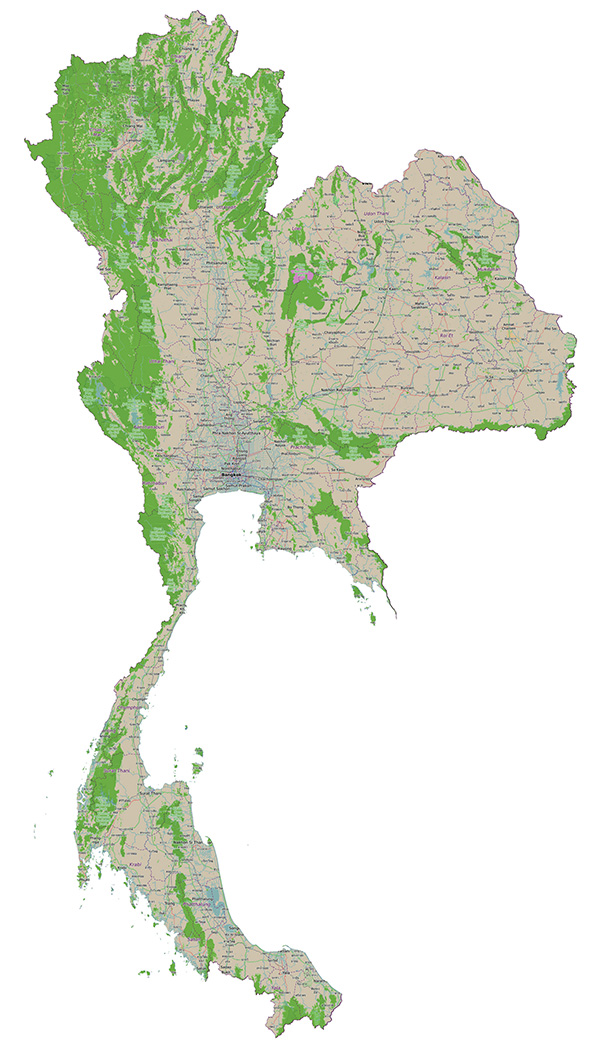
Widely distributed throughout Thailand, particularly in the northern, northeastern, and central regions
Although sightings of these cats have been reported, they are rarely seen due to their habitat and behaviour. Nearly all sightings today are with camera traps.
Burmese pythons are large, primarily nocturnal, and solitary constrictors. As they grow, they become more terrestrial, hiding in the underbrush, waiting for prey.
Burmese Pythons are powerful ambush predators, capable of overpowering small deer
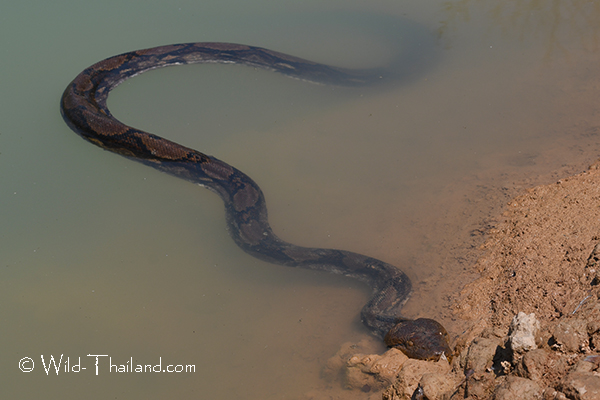
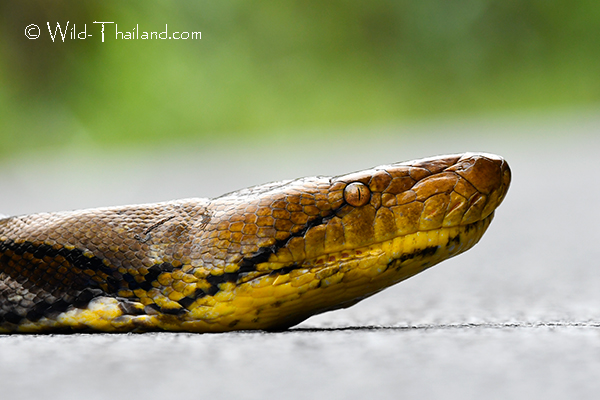
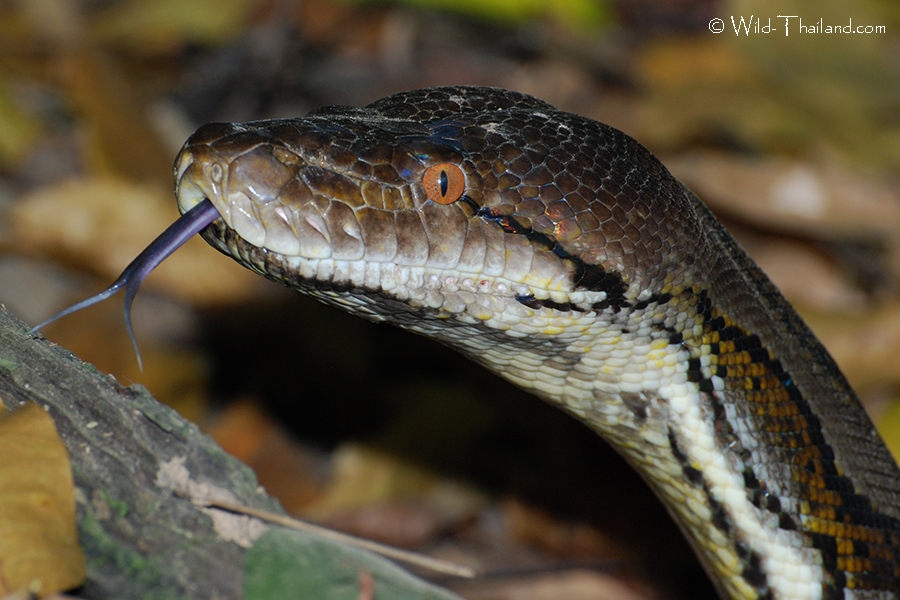
Scientific Name
Malayopython reticulatus
Status
Least Concern
Size
Length: 3 - 6.5 m
Diet
Carnivorous.
Birds and mammals, with prey size increasing from rodents to pigs, monkeys, and deer.
Appearance
featuring a slender, muscular body and a distinct head. They have a striking, geometric, and "net-like" (reticulated) pattern. The dorsal side is tan, brown, or gold, with dark gray or black lines forming X-shaped or diamond-shaped markings that often contain white or yellow spots.
Toxicology
Non-venomous.
Habitat
Tropical rainforests, woodlands, and grasslands, often living near water sources like rivers, streams, and swamps.
Distribution.
Found throughout Thailand.
Although sightings of these cats have been reported, they are rarely seen due to their habitat and behaviour. Nearly all sightings today are with camera traps.