Agama Lizards

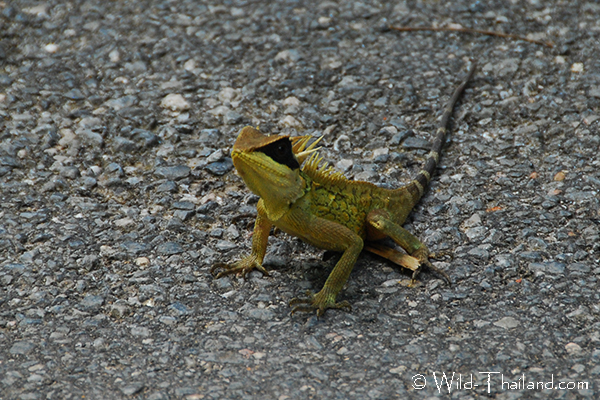
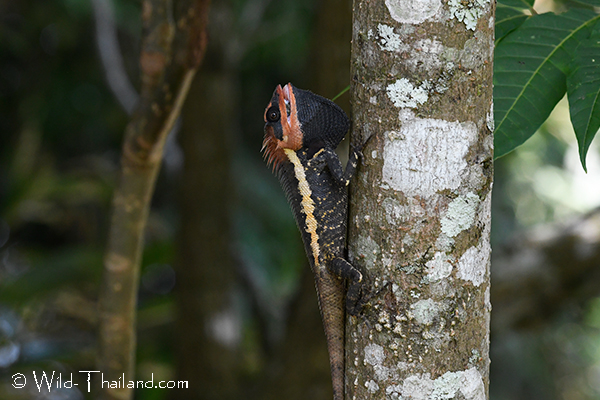
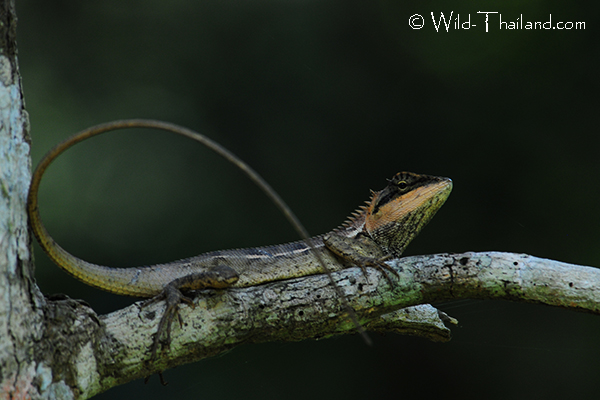
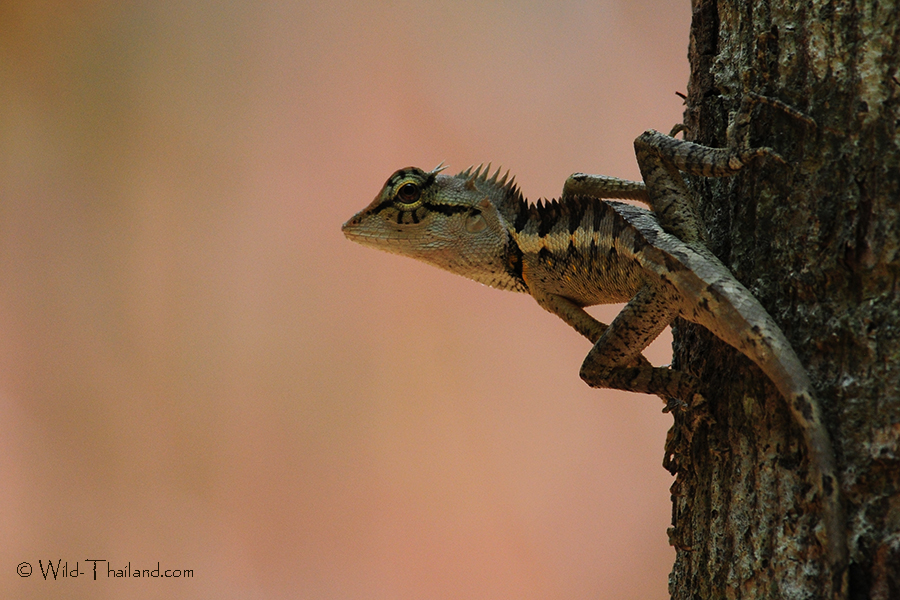
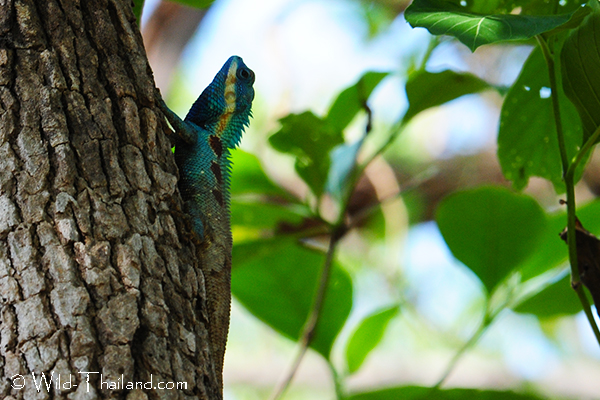
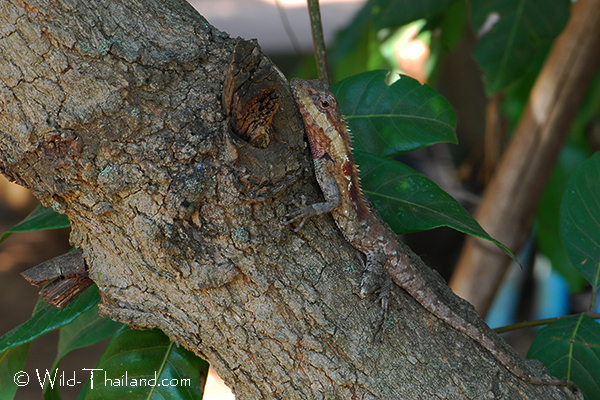
Blue Crested Lizard
Scientific Name
 
Calotes mystaceus
 
Status
 
Vulnerable.  Protected in Thailand.
 
Size
 
Length:  28 - 42  cm
 
Diet
 
Insectivorous.
 
Insects.
 
Appearance
 
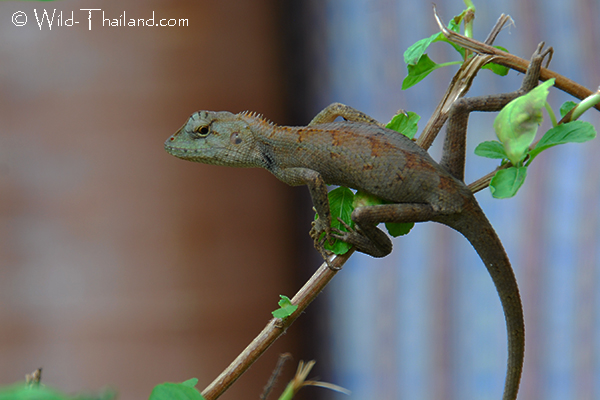
The body is generally olive green, grey, or brown in colour. Males have a well-developed crest and are able to change colour when stressed. During the mating season, the head, throat, and front shoulders turn a striking, vibrant blue.
 
Habitat
 
Lowland forests, forest edges, and disturbed areas up to 1,500 meters. They are commonly found in gardens, orchards, plantations, and parks, often near water sources.
 
Distribution.
 
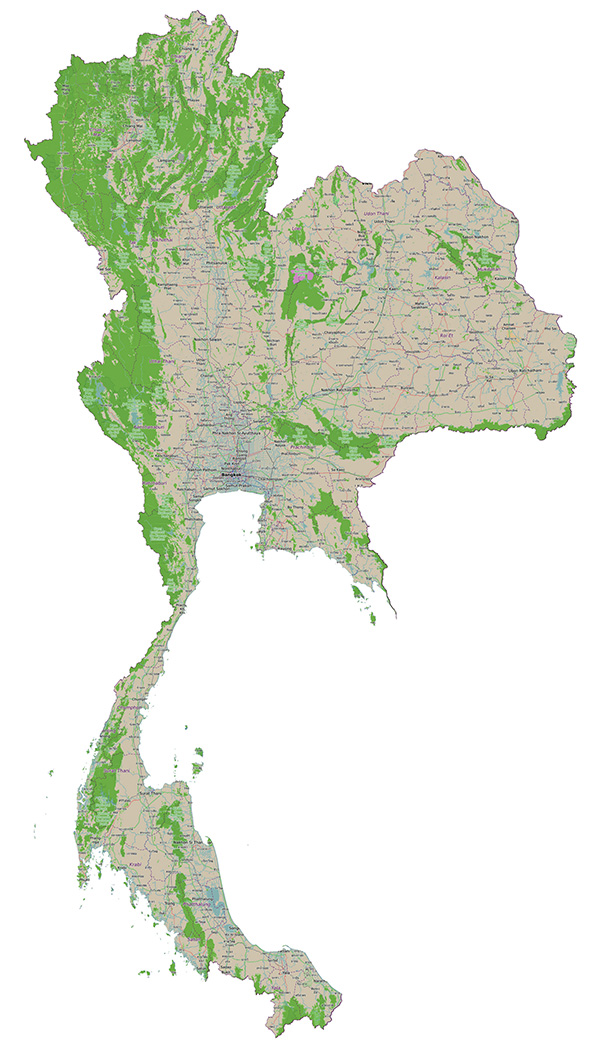
Widely distributed across Thailand, particularly in the northern, western, central, eastern, and northeastern regions.


Tat Ton National Park

Although sightings of these cats have been reported, they are rarely seen due to their habitat and behaviour. Nearly all sightings today are with camera traps.

Tab Content

This is a basic text element.

Tab Content

This is a basic text element.

Tab Content

This is a basic text element.

Tab Content

This is a basic text element.

Useful Information

Diurnal and arboreal. Often seen on tree trunks or on branches close to the trunk.
 

Where To See

Tat Ton National Park

A fairly common lizard in this park.
Unfortunately, despite being protected, they are still hunted in this park.


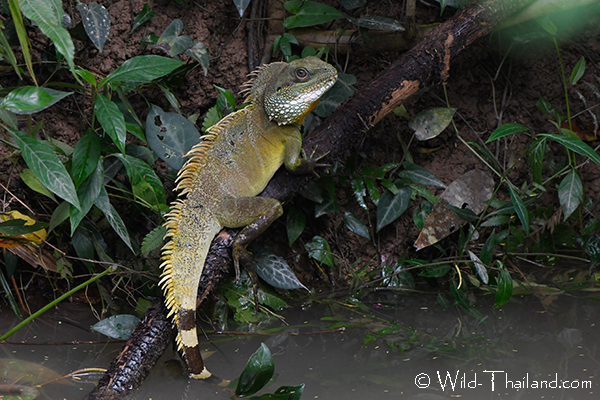
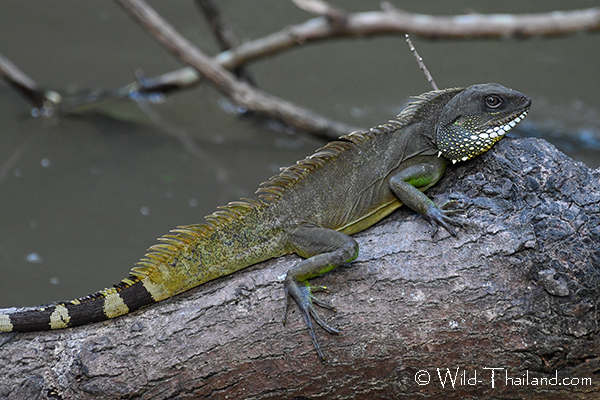
Chinese Water Dragon

Scientific Name

Physignathus cocincinus
 
Status
 
Vulnerable and threatened.
 
Size
 
Length:  60 - 95 cm
Tail:  42 - 66 cm
 
Diet
 
Insectivorous and carnivorous.
 
insects, small vertebrates, and occasional vegetation.
 
Appearance
 
A large agama lizard, with a vibrant green, brown, or grey-green colouration. The long tail has light/dark bands, a pronounced crest of spines running down their neck and back, and a distinctive bright orange, blue, or pinkish throat.
 
Habitat
 
Humid, tropical lowland and highland forests, specifically in areas with permanent water sources like rivers, streams, and lakes.
 
Distribution
 
Eastern, northeastern, and central Thailand.


Kaeng Krachan National Park

Khao Yai National Park

Huai Kha Khaeng Wildlife Sanctuary

Although sightings of these cats have been reported, they are rarely seen due to their habitat and behaviour. Nearly all sightings today are with camera traps.

Tab Content

This is a basic text element.

Tab Content

This is a basic text element.

Tab Content

This is a basic text element.

Tab Content

This is a basic text element.

Useful Information

Diurnal and semi-arboreal. They are excellent swimmers, often perched on branches above water.
Despite their size, the colouration makes them difficult to spot when they are in foliage. Look at tree trunks and branches directly over water.
 

Where To See

Khao Yai National Park

Often seen along the river, from the food courts to the back of the visitor centre, at the headquarters. At the old youth camp and at the two bridges at either end of the old golf course.


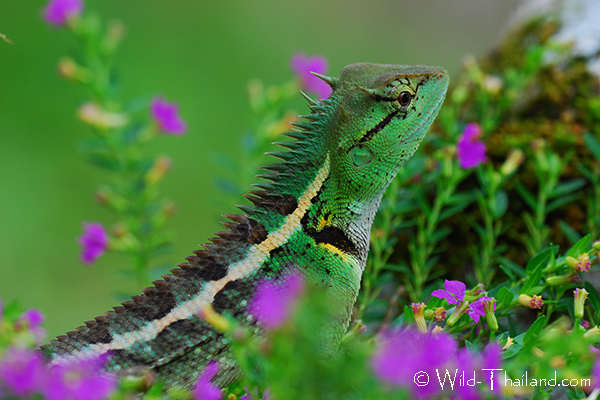
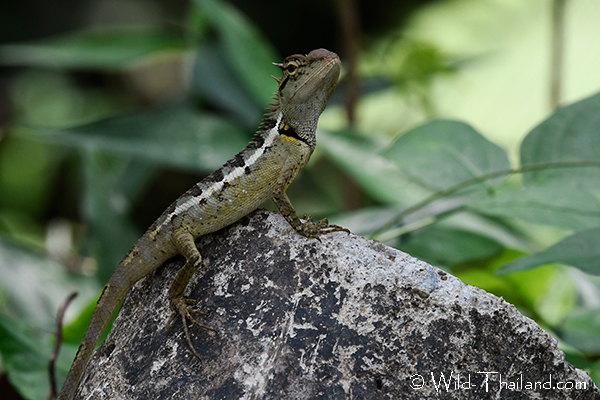
Forest Crested Lizard

Scientific Name

Calotes emma
 
Status
 
Least Concern.
 
Size
 
Length:  28 - 40 cm
Tail length:  21 - 30 cm
 
Diet
 
Insectivorous and Carnivorous.
 
Forest Crested lizards consume a wide variety of prey, including termites, grasshoppers, ants, cockroaches, beetles, moths, and caterpillars.
 
Appearance
 
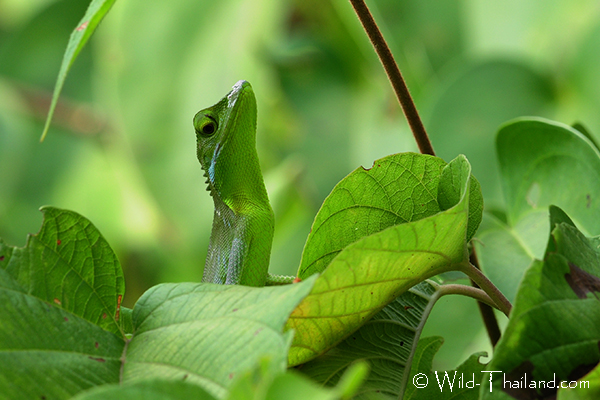
A medium-sized agama lizard, typically bright green, allowing them to blend into foliage, though they can change color to dark brown or blackish-grey when threatened or stressed.  They have a prominent, spiny crest from the back of the head down the neck and along the spine.
 
Habitat
 
Ranging from moist evergreen and dry deciduous forests to coastal areas.
 
Distribution
 
Widely distributed throughout Thailand.


Kaeng Krachan National Park

Khao Yai National Park

Although sightings of these cats have been reported, they are rarely seen due to their habitat and behaviour. Nearly all sightings today are with camera traps.

Tab Content

This is a basic text element.

Tab Content

This is a basic text element.

Tab Content

This is a basic text element.

Tab Content

This is a basic text element.

Useful Information

These diurnal, arboreal, and terrestrial lizards prefer sunny, wooded locations, often found on tree trunks, branches.
 

Where To See

Khao Yai National Park

Most sightings have been around the park accommodation behind the headquarters.

Kaeng Krachan National Park

Phanoen Thung Campsite.


Garden Fence Lizard

Scientific Name

Calotes versicolor
 
Status
 
Least Concern.
 
Size
 
Length:  10 - 19 cm
Tail Length:  5 - 9 cm
 
Diet
 
Insectivorous.
 
Ants, beetles, spiders, grasshoppers, caterpillars, and aphids.
 
Appearance
 
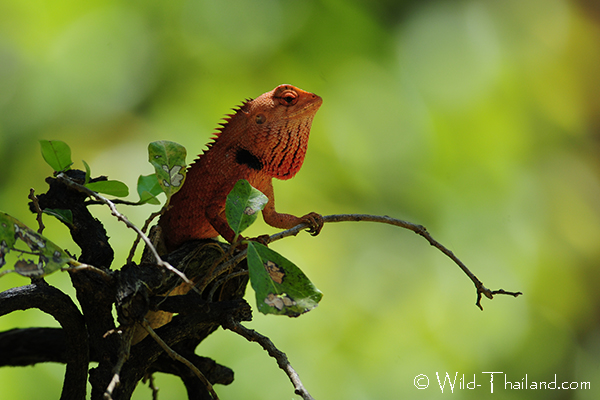
Small agama lizard. Light brown, brownish-olive, or beige. During the breeding season, males display bright orange, red, or crimson head and shoulders, with a black throat.
 
Habitat
 
Sunny, dry, and structured habitats that offer ample basking spots and protection.
 
Distribution
 
Common throughout Thailand.


Although sightings of these cats have been reported, they are rarely seen due to their habitat and behaviour. Nearly all sightings today are with camera traps.

Tab Content

This is a basic text element.

Tab Content

This is a basic text element.

Tab Content

This is a basic text element.

Tab Content

This is a basic text element.

Useful Information

Diurnal, territorial reptiles that bask on fences, trees, and rocks. They are highly active during the day,
 

Where To See

Garden fence lizards are a common sight throughout Thailand.


Green Crested Lizard

Scientific Name

Bronchocela cristatella
 
Status
 
Least Concern.
 
Size
 
Length:  55 - 57 cm
Tail Length:  41 - 43 cm
 
Diet
 
Insectivorous and Carnivorous.
 
Typically, beetles, flies, ants, and termites. They are known to consume larger prey such as stick insects and, occasionally, small skinks.
 
Appearance
 
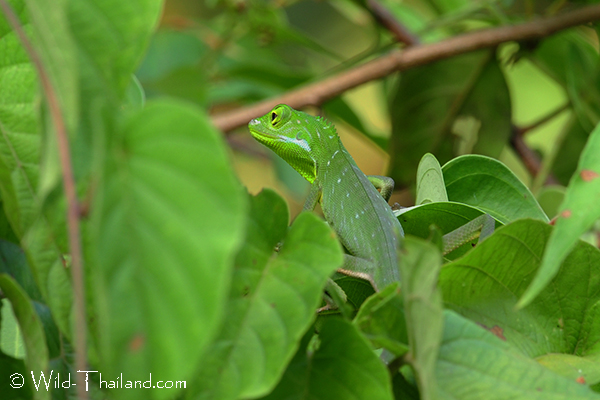
A slender agamid, bright green, often with a blue or yellow tint on the head. It features a dark ring around the eyes, small keeled scales, and a spiny crest on the neck.
 
Habitat
 
Tropical, humid environments, evergreen forests, forest edges, and disturbed cultivated areas.
 
Distribution
 
Distributed across Southern Thailand. They are primarily found in the southern peninsula.


Kaeng Krachan National Park

Although sightings of these cats have been reported, they are rarely seen due to their habitat and behaviour. Nearly all sightings today are with camera traps.

Tab Content

This is a basic text element.

Tab Content

This is a basic text element.

Tab Content

This is a basic text element.

Tab Content

This is a basic text element.

Useful Information

Green Crested Lizards are diurnal and highly arboreal. Frequently found in trees and shrubs, including urban gardens in Southeast Asia. They are known for rapid, stress-induced color changes from bright green to dark brown, and they use head-bobbing and crest erection for courtship.

Where To See

Kaeng Krachan National Park
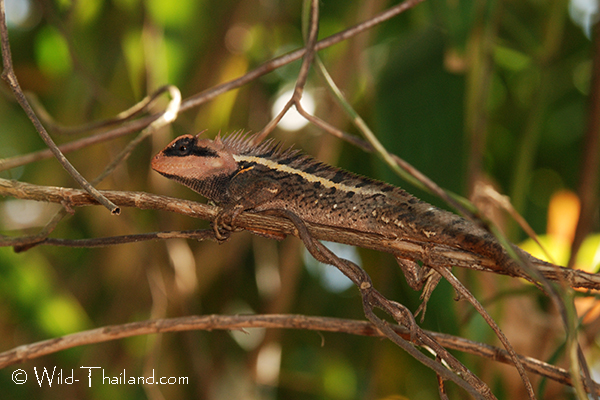
Often seen amongst the foliage beside the track, after Phanoen Thung campsite.


Masked horned tree lizard

Scientific Name

Acanthosaura crucigera
 
Status
 
least concern.
 
Size
 
Length:  25 - 36 cm
 
Diet
 
Insectivorous.
 
Primarily crickets, cockroaches, and locusts. They will also consume mealworms, superworms/kingworms, waxworms, silkworms, and hornworms.
 
Appearance
 
A small lizard with a robust body, a dark "mask" around its eyes, and a prominent, often dark, cross-shaped mark on the nape. They feature short, thorny spines on their back and head, with colors ranging from brownish to green, often displaying darker, banded tails.
 
Habitat
 
Humid, montane evergreen rainforests. Often found near streams, waterfalls, or on trees 1–2 meters above the ground. They require high humidity (60–80%) and prefer shaded areas.
 
Distribution
 
Western and southern Thailand.


Kaeng Krachan National Park

Khao Yai National Park

Huai Kha Khaeng Wildlife Sanctuary

Although sightings of these cats have been reported, they are rarely seen due to their habitat and behaviour. Nearly all sightings today are with camera traps.

Tab Content

This is a basic text element.

Tab Content

This is a basic text element.

Tab Content

This is a basic text element.

Tab Content

This is a basic text element.

Useful Information

The Masked Horned Tree Lizard is an arboreal agamid lizard. They are known for their "sit-and-wait" hunting strategy, spending much of their time perched on branches in high-humidity environments.

Where To See

Khao Yai National Park


Northern Forest Crested Lizard

Scientific Name

Calotes emma alticristatus
 
Status
 
Least Concern.
 
Size
 
Length:  38 - 40 cm
 
Diet
Insectivorous.
 
Termites, ants, grasshoppers, cockroaches, beetles, moths, low-flying butterflies, soil-living insects, and their larvae.
 
Appearance
 
A slender lizard with a distinct spiny crest. They have a single spine above each eye and twin spines above the ear, often changing between brown, grey, and green for camouflage, with males displaying vibrant, darker colors during breeding.
 
Habitat
 
They prefer diverse habitats, including moist evergreen, dry deciduous, and coastal forests.
 
Distribution
 
Found in most regions of the country, spanning from the northern highlands to the southern peninsula.


Khao Yai National Park

Although sightings of these cats have been reported, they are rarely seen due to their habitat and behaviour. Nearly all sightings today are with camera traps.

Tab Content

This is a basic text element.

Tab Content

This is a basic text element.

Tab Content

This is a basic text element.

Tab Content

This is a basic text element.

Useful Information

The Northern Forest Crested Lizard is an arboreal, diurnal species.


Where To See

Khao Yai National Park



© 2026 Wild Thailand. All photographs, video and content protected under international copyright law. Unauthorised use is strictly prohibited.