Scientific Name
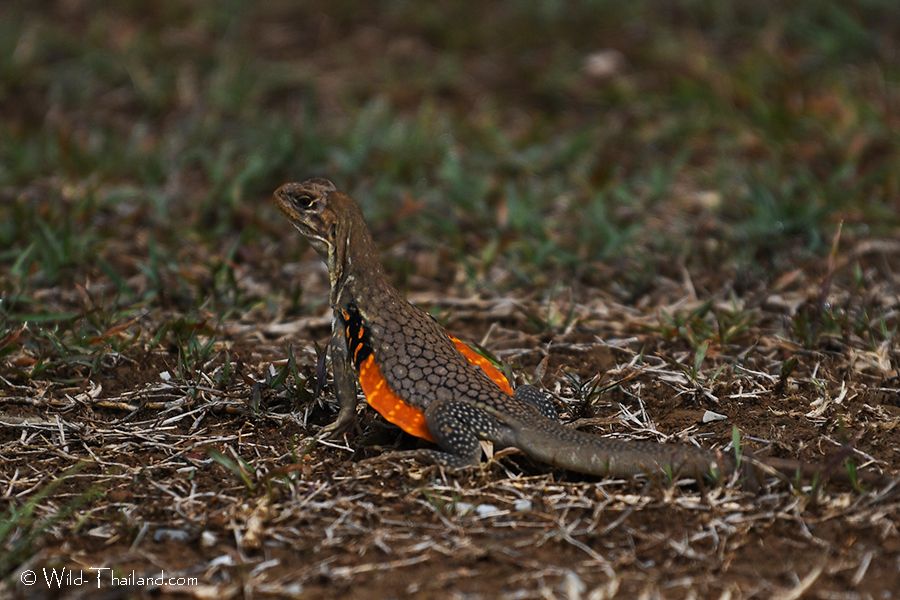
Leiolepis belliana
Status
least concern
Size
Length: 30 - 38 cm
Diet
Omnivorous.
primarily insects, including grasshoppers, beetles, and caterpillars. They also consume vegetation such as leaves, flowers, and fruits, alongside small crabs.
Appearance
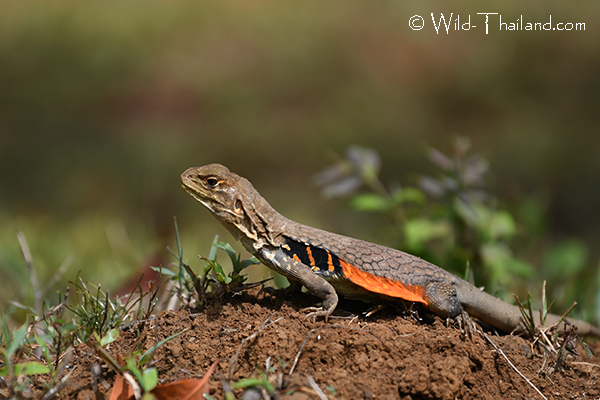
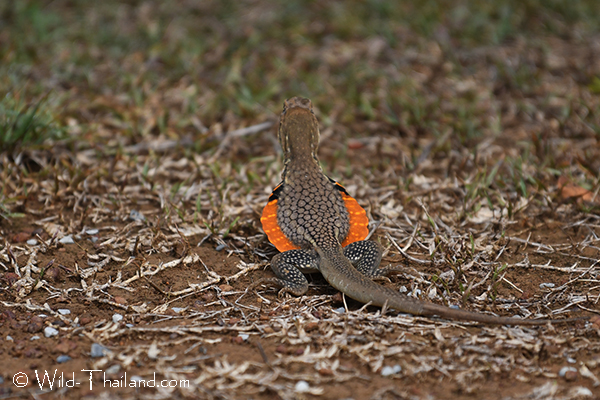
Smooth scales, a grey-to-olive-green back with yellow, black, or orange spots, and vibrant, bright orange and black striped sides.
Habitat
Open, sunny, and dry areas, including coastal sand dunes, sandy forest trails, and disturbed agricultural areas.
Distribution.
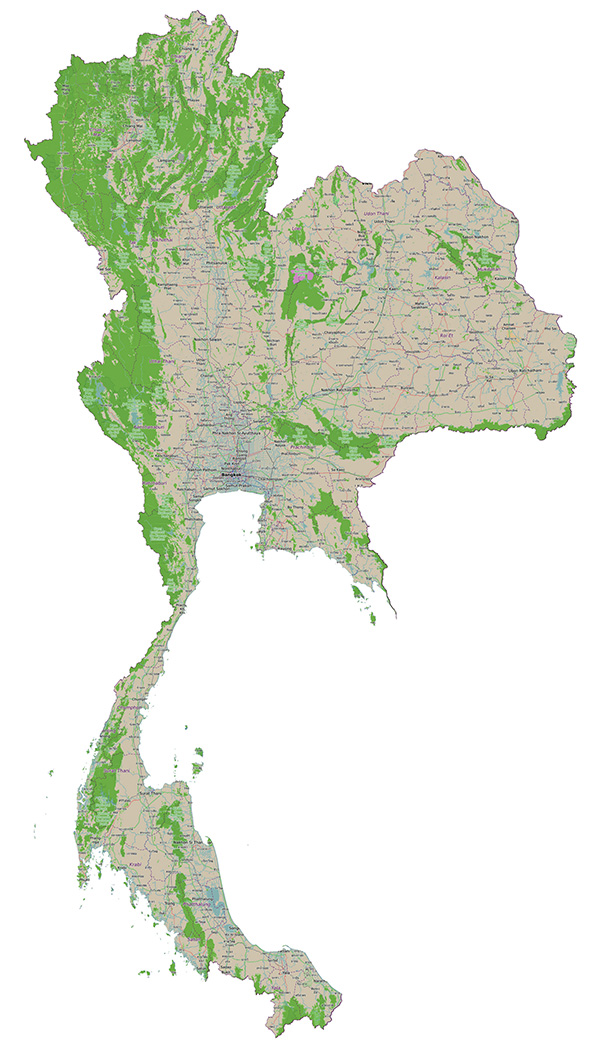
Found throughout Thailand, except for the northern and northeastern regions.
Although sightings of these cats have been reported, they are rarely seen due to their habitat and behaviour. Nearly all sightings today are with camera traps.
The Common Butterfly Lizard, is a diurnal, terrestrial lizard. They have butterfly-like flank colors used in communication and mating. They are shy, fast-running, and monogamous creatures that live in pairs within self-dug, interconnected burrows in hot, sandy habitats.
Until the unfortunate incident where a french tourist was bitten, Khao Yai was the only place where you could easily see a crocodile. Following the incident, the crocodile was relocated.
Scientific Name
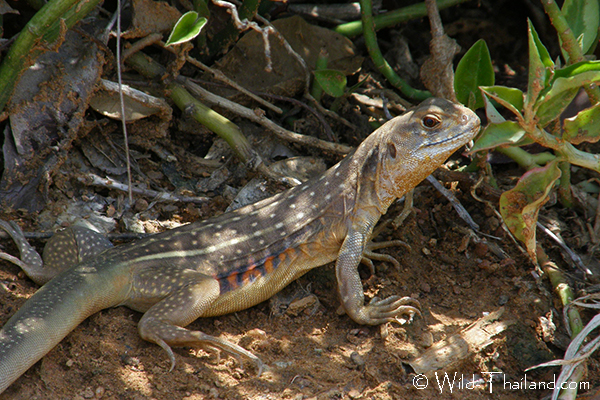
Leiolepis belliana
Status
Least Concern
Size
Length: 30 - 38 cm
Diet
Omnivorous.
Grasshoppers, beetles, larvae, termites, flowers, and fruits.
Appearance
They have a striking, colorful appearance, featuring a grey to olive-green body covered in yellow spots. Males in breeding season display vibrant red and black stripes, and they possess extendable side flaps that reveal bright, orange-yellow patterns, resembling butterfly wings.
Habitat
Hot, open, and dry areas, particularly coastal dunes, sandy scrublands, and open, sandy-soiled woodlands.
Distribution.
Found throughout Thailand, particularly in the coastal areas of the eastern gulf and southern regions.
Although sightings of these cats have been reported, they are rarely seen due to their habitat and behaviour. Nearly all sightings today are with camera traps.
Eastern Butterfly Lizards are often found in colonies. They are strictly monogamous, with a single adult pair sharing a burrow. When threatened they will run at speed to their burrow.
Most open areas with sandy soil and short grass.
Scientific Name
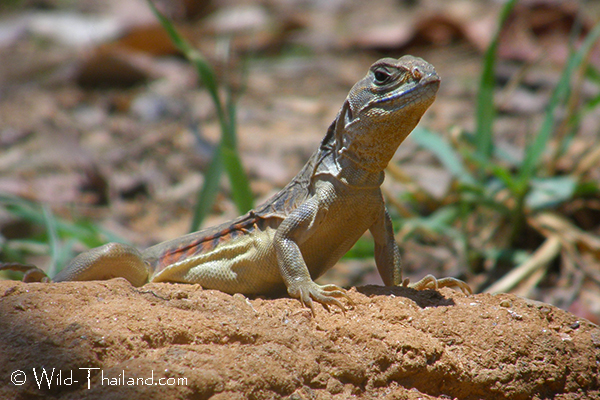
Leiolepis ocellata
Status
Least Concern
Size
Length: 30 - 50 cm
Diet
Omnivorous.
Grasshoppers, beetle larvae, and various insects. Also, flowers, fruits, and seeds.
Appearance
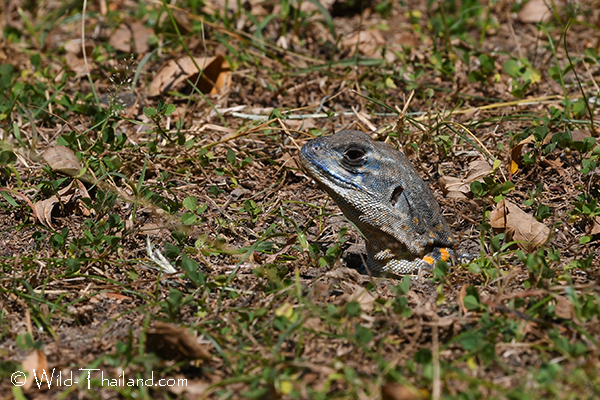
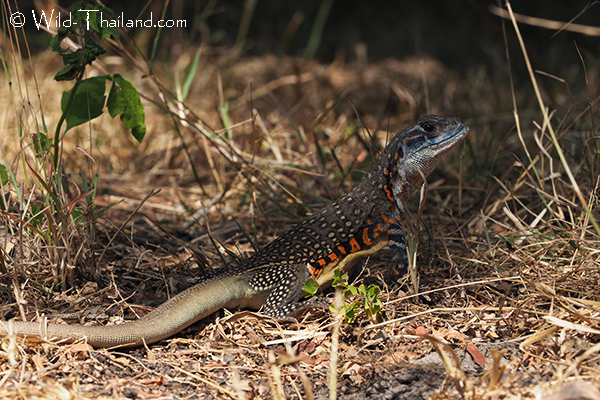
A grey-to-olive body with yellow spots, while mature males display vibrant red, black, and orange stripes along their sides.
Habitat
Open, sunny, and sandy areas.
Distribution.
Found in the northern region of Thailand,
Although sightings of these cats have been reported, they are rarely seen due to their habitat and behaviour. Nearly all sightings today are with camera traps.
Any open sandy areas.