Scientific Name
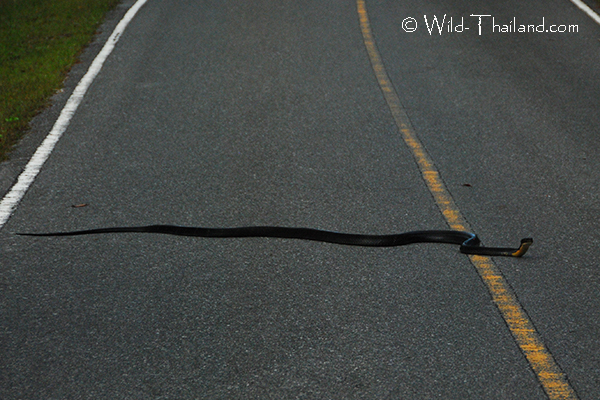
Ophiophagus hannah
Status
Vulnerable
Size
Length: 3.2 - 5.8 m
Diet
Carnivorous.
Primarily other snakes, including venomous species like cobras and kraits, as well as large, non-venomous snakes like pythons and rat snakes. They will also, occasionally consume other small vertebrates, such as lizards, birds, and small mammals.
Appearance
Adult King Cobra's are yellow, green, brown or black. They usually also have yellowish or white crossbars or chevrons. The belly may be uniform in color or ornamented with bars. The throat is light yellow or cream-colored. When threatened they will will lift a third of their body in an upright posture and spread it's hood.
Toxicology
Venomous and highly lethal. The King Cobra can deliver upto 600 mg of potent, mainly neurotoxic venom, that can kill a human in under 30 minutes.
Habitat
predominantly inhabit dense upland forests, rain forests, bamboo thickets, and mangrove swamps near lakes and rivers.
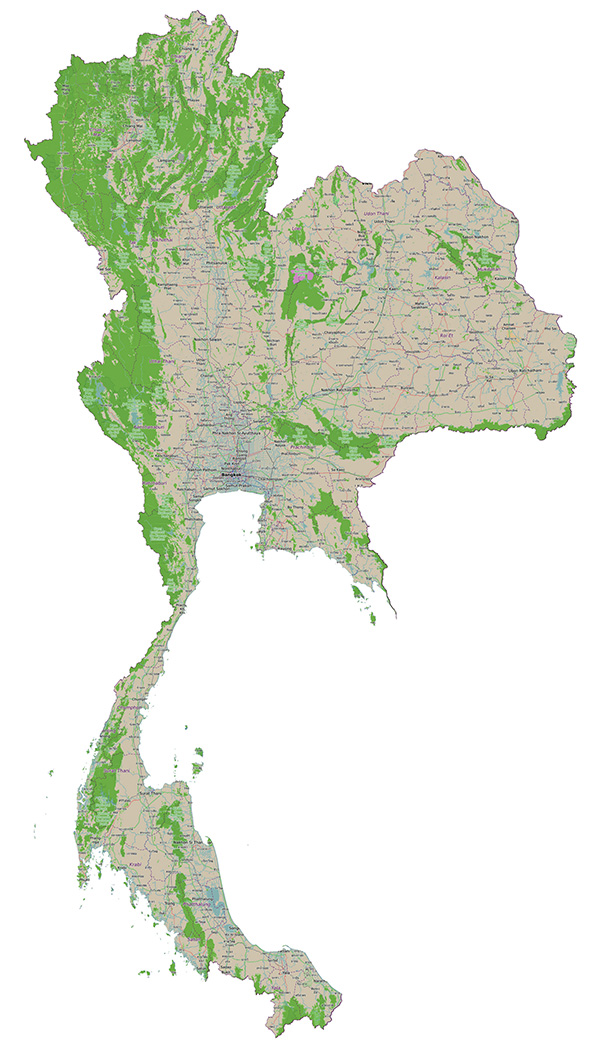
Distribution.
Found throughout Thailand.
Although sightings of these cats have been reported, they are rarely seen due to their habitat and behaviour. Nearly all sightings today are with camera traps.
Along the banks of rivers, streams and lakes, occassionaly seen crossing these bodies of water. King Cobras are shy snakes that actively avoid humans, but if threatened, will raise their head upto 1.8m above ground and spread there hood. This is the warning to go away, if the threat continues, it may advance rapidly.
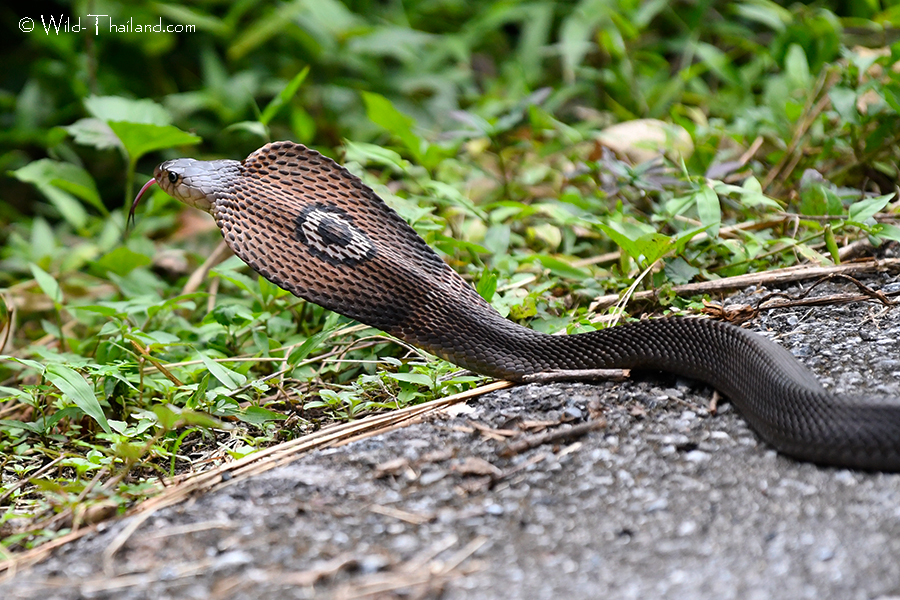
Scientific Name
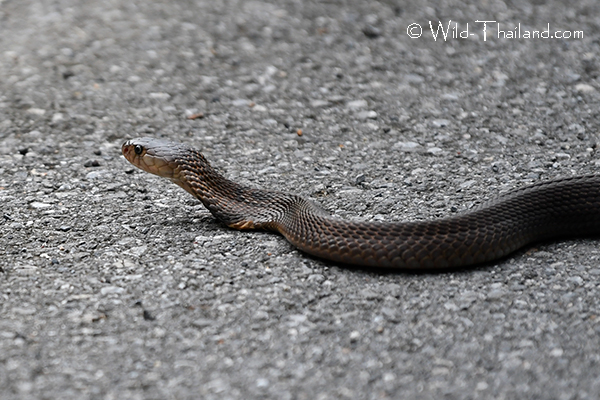
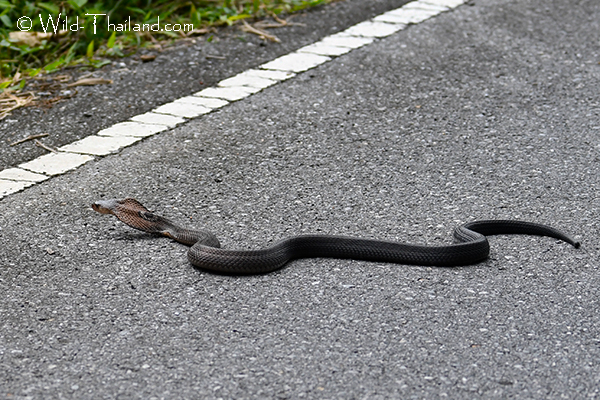
Naja kaouthia
Status
Least Concern
Size
Length: 1.2 - 2.3 m
Diet
Carnivorous.
Small rodents, frogs, toads, snakes, lizards, and fish.
Appearance
A medium-to-large venomous snake, identifiable by a distinct O-shaped ("monocellate") mark on the back of its hood. It has a slender body that varies in color from olive, brown, or gray to nearly black, often with lighter crossbands, and possesses a pale, sometimes blotched, underside.
Toxicology
Venomous and lethal. The venomis a potent, rapid-acting cocktail of neurotoxins and cytotoxins, causing severe, often fatal, flaccid paralysis and significant local tissue necrosis. It is a major cause of snakebite mortality in SE Asia. In Thailand, these snakes can also spray venom, very accurately at percieved threats.
Habitat
Prefering moist, water-associated habitats such as paddy fields, swamps, mangroves, and marshes, but also thrive in forests, grasslands, and agricultural areas.
Distribution.
Found throughout Thailand.
Although sightings of these cats have been reported, they are rarely seen due to their habitat and behaviour. Nearly all sightings today are with camera traps.
The monocled cobra is a terrestrial,, largely nocturnal, and highly defensive snake. When threatened, it lifts its body, spreads a narrow hood with a characteristic O-shaped mark, and hisses loudly. They are fast-moving, capable of biting quickly. In Thailand, these Cobras have the ability to accurately spray venom, targeting the eyes.