Scientific Name
Trimeresurus macrops
Status
Least Concern
Size
Length: 65 - 71 cm
Diet
Carnivorous.
Mainly of frogs and lizards, occasionally small rodents and birds.
Appearance
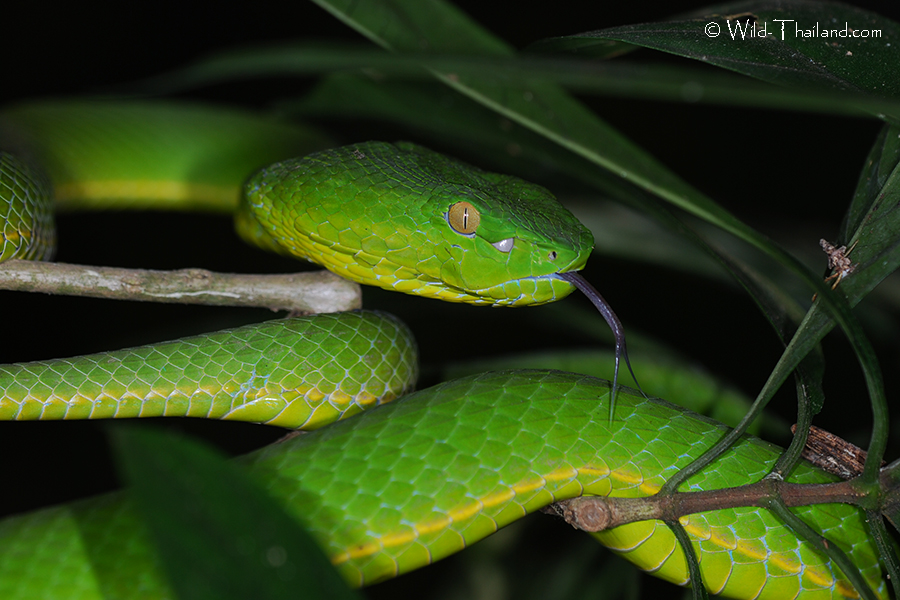
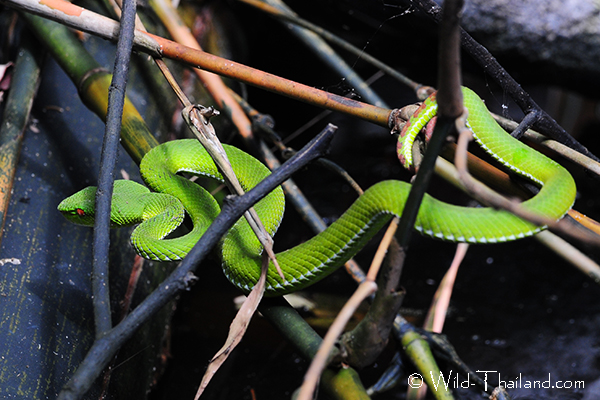
A slender snake, distinguished by its exceptionally large eyes with vertical pupils. It typically features a vibrant green body, often with a paler, yellowish or white belly.
Toxicology
Venomous and dangerous. Primarily hemotoxic and proteolytic venom that causes severe tissue damage, significant swelling, and serious blood clotting issues.
Habitat
Well-vegetated areas, including evergreen forests, bamboo forests, and plantations.
Distribution.
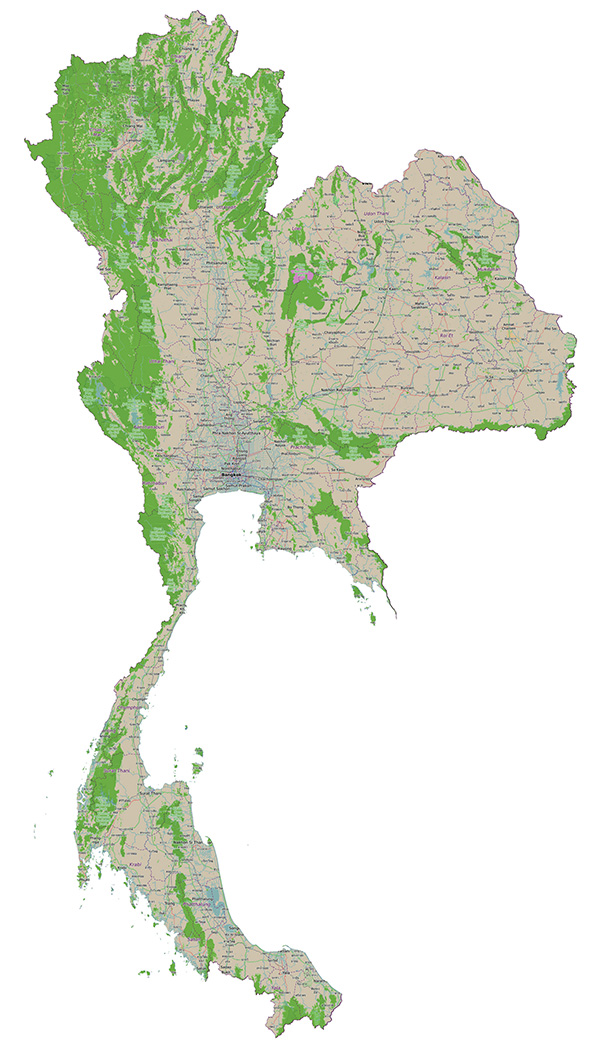
Found throughout Thailand.
Although sightings of these cats have been reported, they are rarely seen due to their habitat and behaviour. Nearly all sightings today are with camera traps.
The Large-eyed Pit Viper is a slender, arboreal, nocturnal and venomous snake. known for its,,sit-and-wait ambush hunting strategy, relying on heat-sensing pits to detect prey. They are typically found in trees, using their prehensile tail for stability. They are generally slow-moving but capable of rapid strikes and, when threatened, can become aggressive.
Scientific Name
Trimeresurus popeiorum
Status
Least Concern
Size
Length: 50 - 90 cm
Diet
Carnivorous.
Frogs, lizards, birds, and small mammals, with a specific preference for rodents such as rats and squirrels.
Appearance
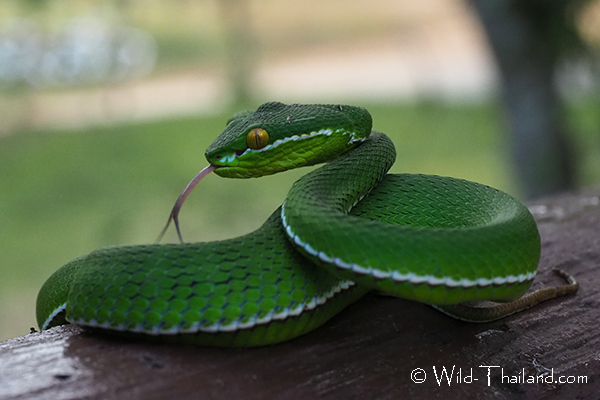
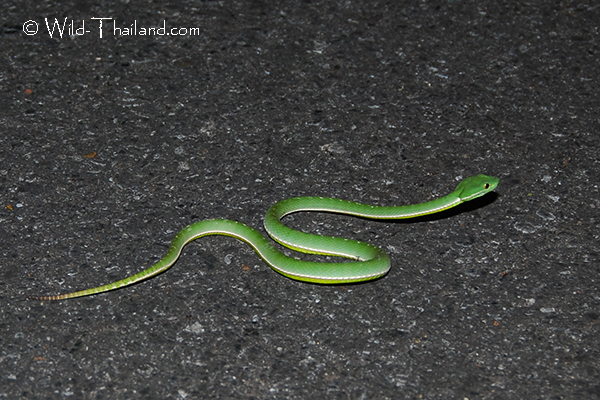
A slender, bright green, arboreal snake, with a distinct triangular head, deep red eyes, and a prehensile tail. They feature a pale, bicolored ventrolateral stripe (white and sometimes brown/orange) separating their vivid green top from a paler belly, often featuring red tips on their tails.
Toxicology
Highly Venomous and dangerous. The venom, is a potent, complex cocktail of roughly 106 proteins, primarily composed of enzymes (60%) that cause severe local tissue damage, significant bleeding, and consumption coagulopathy.
Habitat
Dense evergreen, montane, and bamboo forests, typically favoring high-altitude areas above 800m.
Distribution.
Predominantly found in the northern and northwestern mountainous regions.
Although sightings of these cats have been reported, they are rarely seen due to their habitat and behaviour. Nearly all sightings today are with camera traps.
Pope’s Pit Viper is a nocturnal, arboreal snake. It employs an ambush hunting style, often waiting near streams, using heat-sensing pits to detect prey like frogs, lizards, and rodents. When threatened, it vibrates its tail.
Scientific Name
Trimeresurus vogeli
Status
Least Concern
Size
Length: 0.8 - 1.1 m
Diet
Carnivorous.
Rodents, birds, lizards, and amphibians.
Appearance
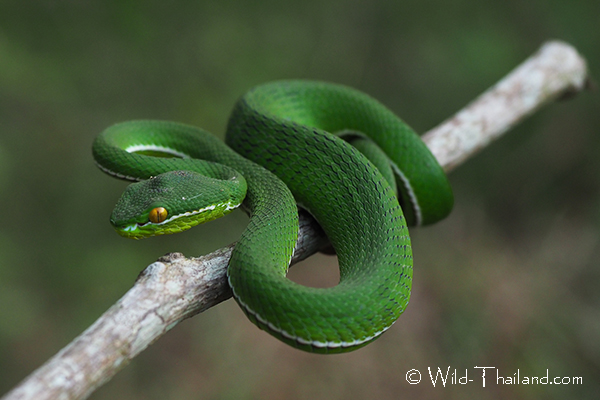
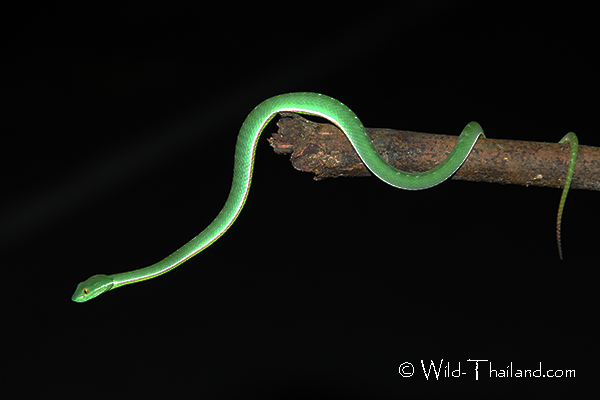
A slender, arboreal, green snake characterized by a distinct white or yellowish-white ventrolateral stripe on each side of the body.
Toxicology
Highly Venomous and dangerous. This snake possesses hemotoxic venom that causes severe pain, rapid swelling, and tissue damage. While not typically fatal to healthy adults with prompt medical treatment, its bite requires immediate professional care.
Habitat
Moist evergreen forests and savanna, commonly found at altitudes of 200–1,200 meters, often near mountain streams.
Distribution.
Primarily in the eastern and northeastern regions.
Although sightings of these cats have been reported, they are rarely seen due to their habitat and behaviour. Nearly all sightings today are with camera traps.
Vogel's Pit-viper is a nocturnal, arboreal, and sedentary ambush predator. Often found on low shrubs and trees, waiting to ambush prey, where they will stay for a week or more.
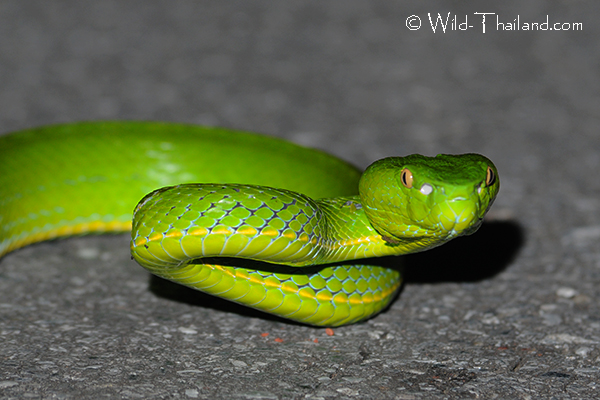
Scientific Name
Trimeresurus albolabris
Status
Least Concern
Size
Length: 60 - 90 cm
Diet
Carnivorous.
Small mammals, birds, lizards, and frogs.
Appearance
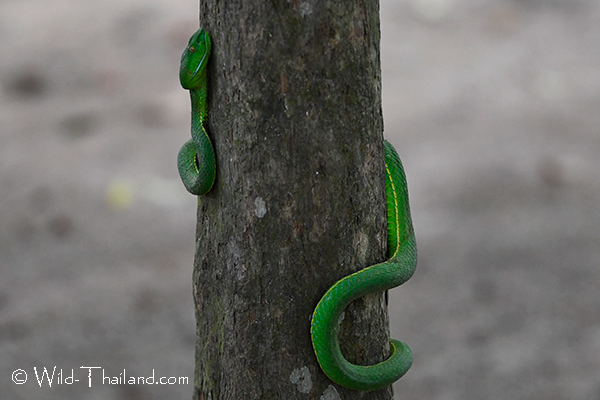
Bright green body, a distinct, pale, white or yellowish lip line, and a brownish-red tail. It has a broad, triangular head with vertical pupils, and males often feature a white stripe along their flanks, which is absent in females.
Toxicology
Highly Venomous and dangerous. The venom is primarily hemotoxic and proteolytic, causing severe local tissue damage, swelling, necrosis, and coagulation disruptions. It contains enzymes which cause rapid, painful swelling and bleeding. While bites can cause significant, long-lasting swelling, fatalities are rare, though severe envenomation can lead to life-threatening hemorrhage.
Habitat
Low-elevation forests, shrublands, agricultural areas, and urban gardens.
Distribution.
Found throughout Thailand.
Although sightings of these cats have been reported, they are rarely seen due to their habitat and behaviour. Nearly all sightings today are with camera traps.
The white-lipped pit viper is a nocturnal, arboreal, and highly camouflaged snake that acts as an ambush predator, using heat-sensing pits to hunt. It is generally solitary, sedentary during the day, and typically non-aggressive, preferring to freeze or retreat rather than strike.
Often seen low down in trees and shrubs along river banks.