Robins

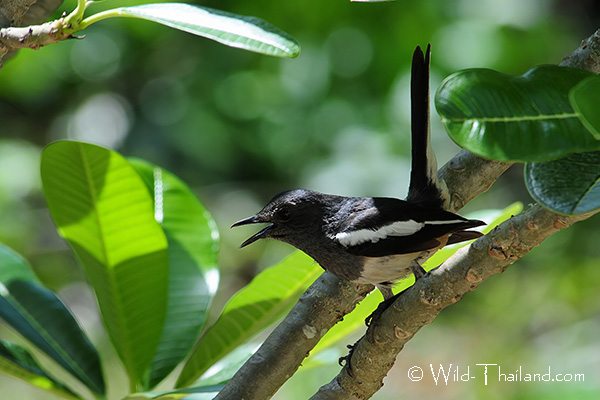
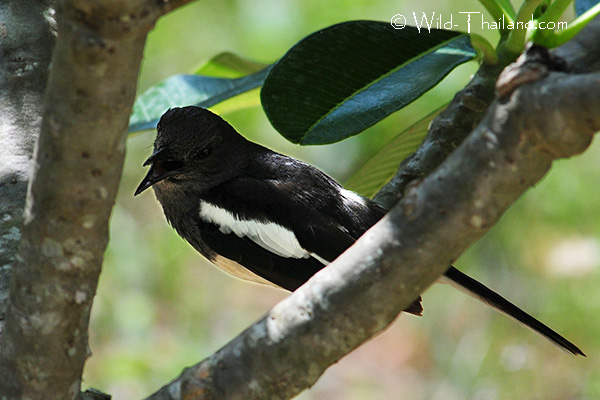
Oriental Magpie-Robin

Scientific Name   

Copsychus saularis

Status

Least Concern

Size 

Length:  12 - 23 cm

Weight:  31 - 42 g

Diet 

Carnivore.

Insects and other invertebrates, such as ants, termites, beetles, and worms.

Appearance

The Oriental Magpie-Robin is a small, black and white bird with a long tail that it often holds upright. The male is black with a white shoulder patch and white underparts, while the female is a more muted greyish-black and white.

Distribution 

Oriental Magpie-Robins are found throughout Thailand, inhabiting open woodlands, cultivated areas, and urban and suburban areas like parks and gardens.
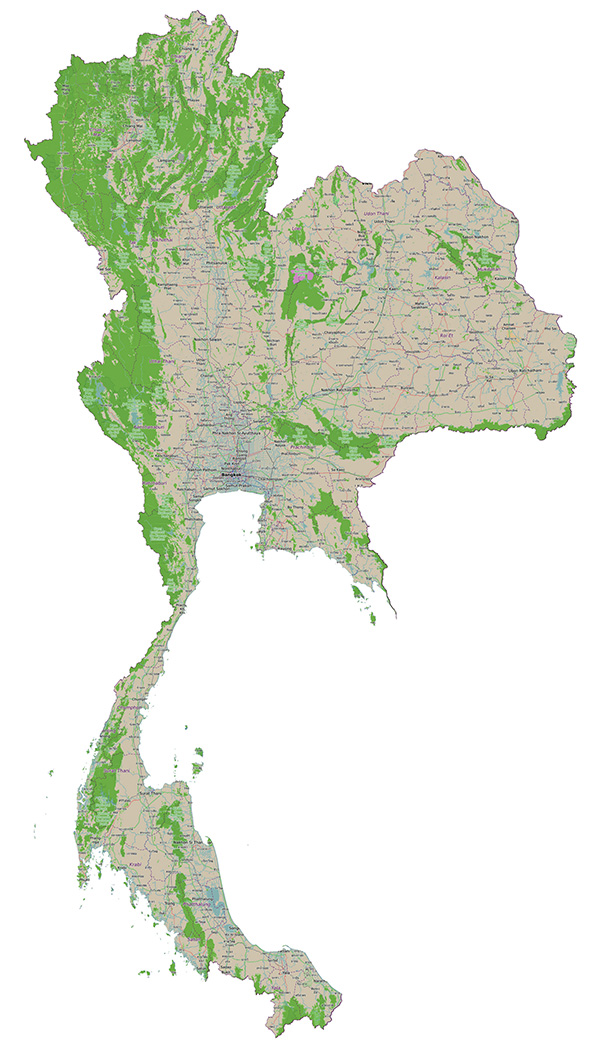
 

Khao Yai National Park

Phu Khiao Wildlife Sanctuary

Scientific Name: Ursus tibetanus

Tab Content

This is a basic text element.
Useful Information
Oriental Magpie-Robins are active and territorial birds known for their singing and complex calls.  They often forage on the ground and are active in the late dusk.
 
Breeding is from March to July. They build cup-shaped nests in tree hollows, wall crevices, or artificial structures.
Where To See
  • Khao Yai National Park
  • Phu Khiao Wildlife Sanctuary


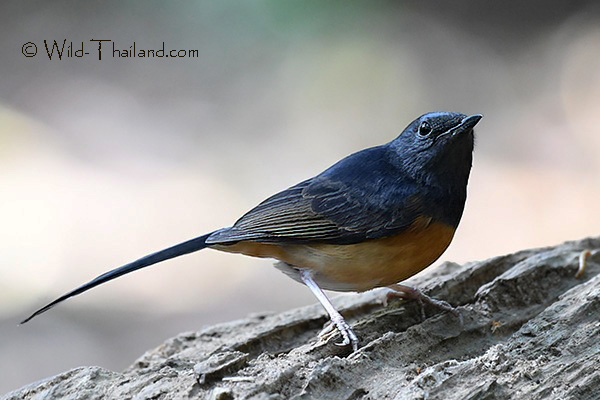
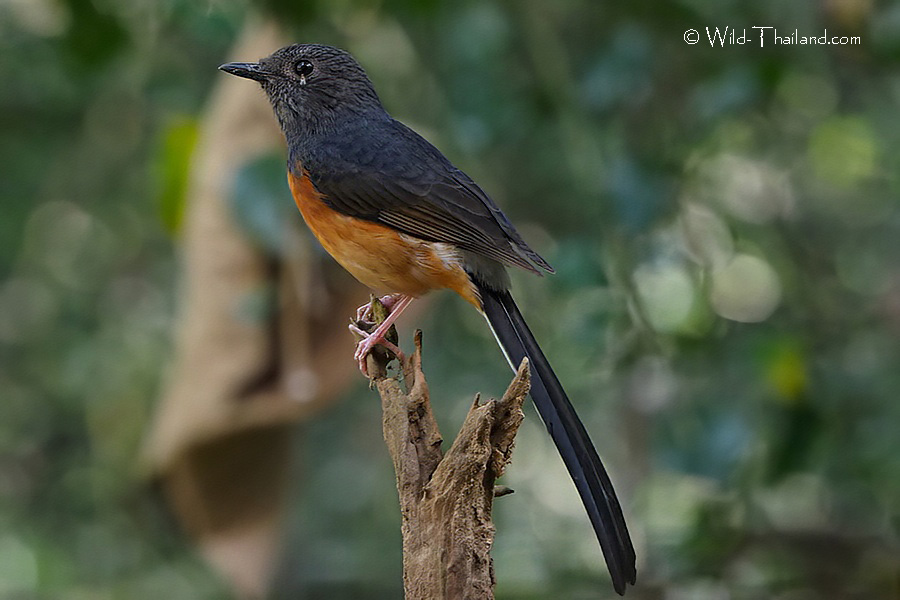
White-rumped Shama

Scientific Name   

Copsychus malabaricus

Status

Least Concern

Size 

Length:  23 - 28 cm

Weight:  28 - 34 g

Diet 

Omnivore.

Insects, such as ants, caterpillars, beetles, and grasshoppers, along with worms and occasionally berries.

Appearance

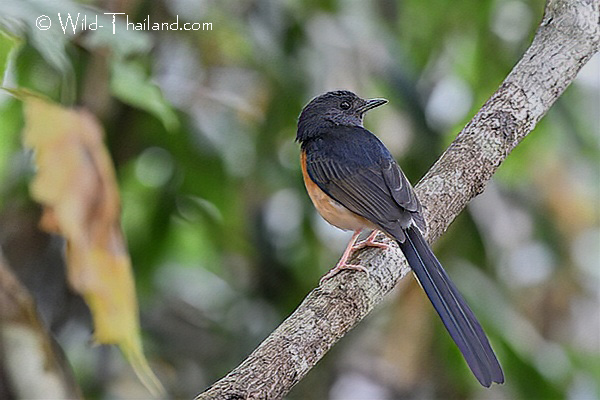
The White-rumped Shama has a glossy black (males) or greyish-brown (females) plumage, chestnut underside, and a distinctive white patch on its rump. Males have a longer, often blue-black tail, while females have a shorter, greyer tail.

Distribution 

The White-rumped Shama is found throughout Thailand, in lowland and foothill forests, secondary forests, and forest edges.

 

Khao Yai National Park

Scientific Name: Ursus tibetanus

Tab Content

This is a basic text element.
Useful Information
White-rumped shamas are very vocal and territorial birds known for their loud, melodious songs, which include mimicking other species. They are often found in pairs and are crepuscular, meaning they are most active at dawn and dusk.
 
Breeding is typically from April to June. The female builds the nest, which is constructed from materials like roots, leaves, ferns, and stems, in a tree hollow.
Where To See
  • Khao Yai National Park


© 2026 Wild Thailand. All photographs, video and content protected under international copyright law. Unauthorised use is strictly prohibited.