Common Names
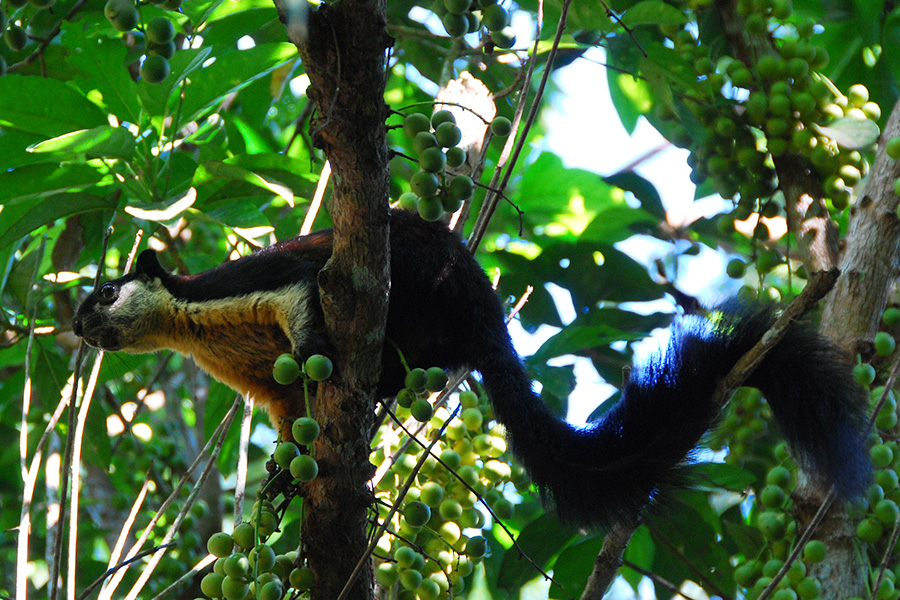
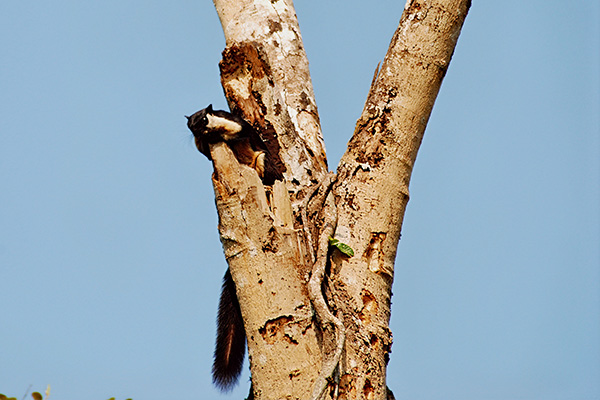
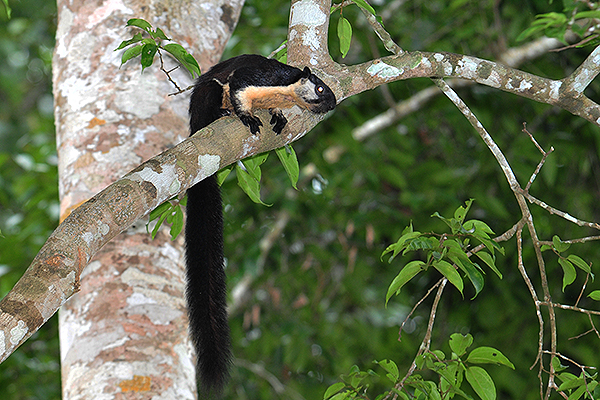
Malayan Giant Squirrel
Scientific Name
Ratufa bicolor
Status
Near Threatened
Size
Body length: 34 - 37 cm
Tail Length: 41 - 42 cm
Weight: 1 - 1.25 Kg
Diet
Herbivorous.
Fruits, seeds and leaves.
Appearance
Dark brown to black fur on its back, head, ears, and bushy tail, and a lighter, buff-coloured belly.
Habitat
Tropical broadleaf evergreen and semi-evergreen forests.
Distribution
Throughout forested areas of Thailand.
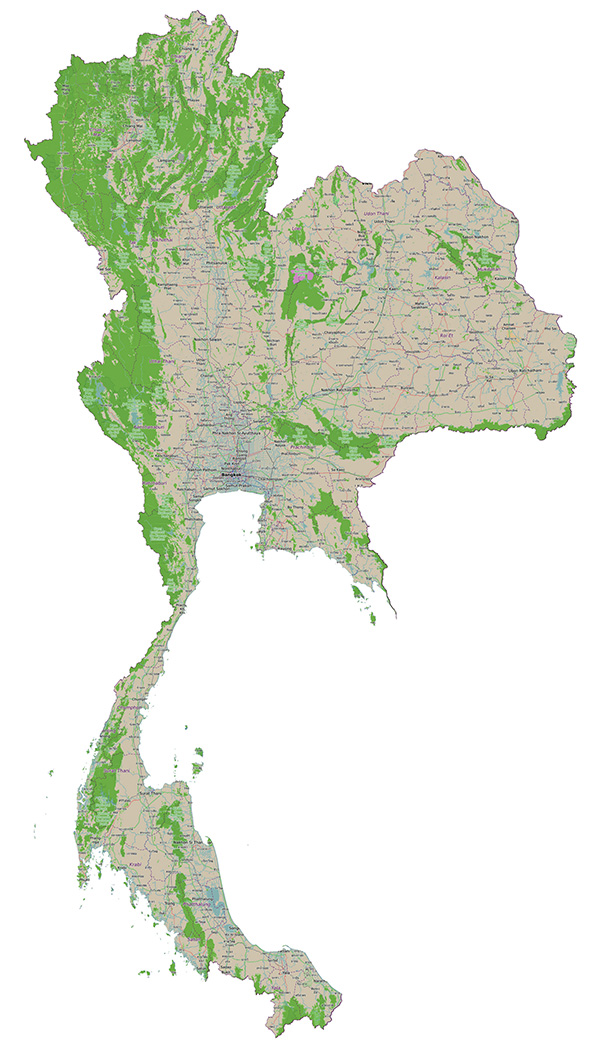
Khao Yai National Park.
Black Giant Squirrels are one of the largest squirrel species in the world. They are diurnal and arboreal. Typically solitary animals, but can often be seen feeding in trees with other Giant Black Squirrels.
Often seen feeding in fruiting trees.
Please have respect, DO NOT FEED!
Common Names
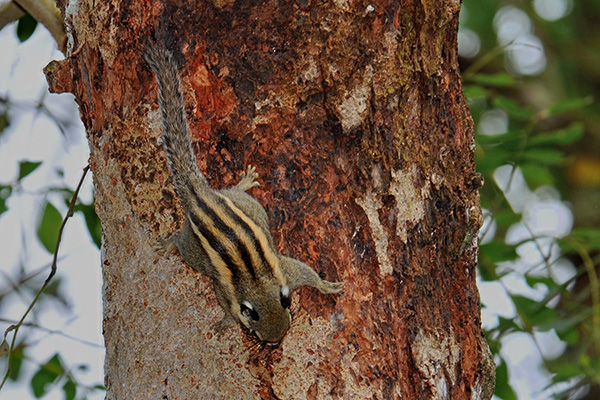
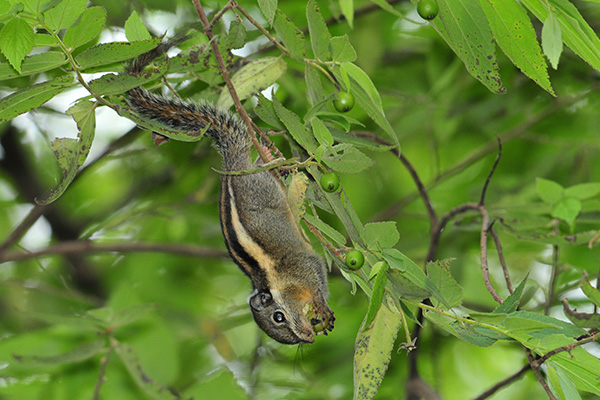
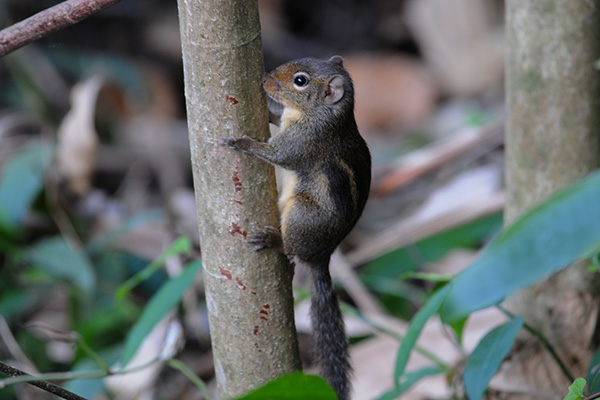
Himalayan Striped Squirrel
Western Striped Squirrel
Scientific Name
Tamiops mcclellandii
Status
Least Concern
Size
Body length: 10 - 12 cm
Tail Length: 10 - 14 cm
Weight: 27 - 51 g
Diet
Omnivorous.
Fruit, vegetable matter, and insects.
Appearance
Covered in grey brown fur, with five black stripes on its back, between the black stripes are stripes cream tan stripes.
Habitat
Montane, temperate and subtropical forests.
Distribution
Found throughout Thailand in suitable forests.
Although sightings of these cats have been reported, they are rarely seen due to their habitat and behaviour. Nearly all sightings today are with camera traps.
Burmese Striped Squirrels, are very similar to the Cambodian Striped Squirrel.The main difference being the width and lighter shade of the outside light colour stripes.
They are diurnal and arboreal and, often seen in small groups.
Please have respect, DO NOT FEED!
Common Names
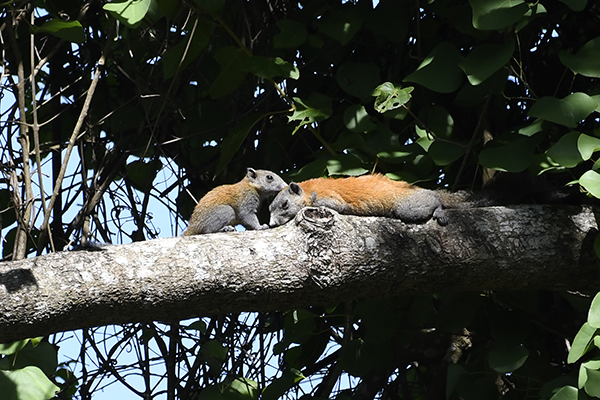
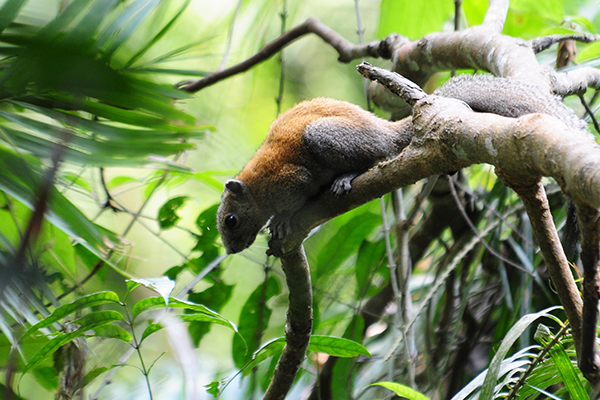
Northern grey-bellied squirrel
Golden-backed Squirrel
Scientific Name
Callosciurus caniceps
Status
Least Concern
Size
Body length: 21 - 22 cm
Tail Length: 23 - 24 cm
Weight: 266 - 313 g
Diet
Omnivorous.
Fruit, seeds, flowers and insects.
Appearance
Olive brown upper body, with light grey or silvery belly, a long, thick, bushy tail sometimes with a black tip.
Habitat
Forested areas.
Distribution
From Phuket, north to Nam Nao and east to Pang Sida.
Although sightings of these cats have been reported, they are rarely seen due to their habitat and behaviour. Nearly all sightings today are with camera traps.
Strictly diurnal and arboreal. Typically solitary, but will share dens during cold weather. They are territorial and will chase other squirrels away from their territory.
Often seen in the trees along Khao Khieo Road after the Chao Pho Khao Khieo Shrine.
Please have respect, DO NOT FEED!
Common Names
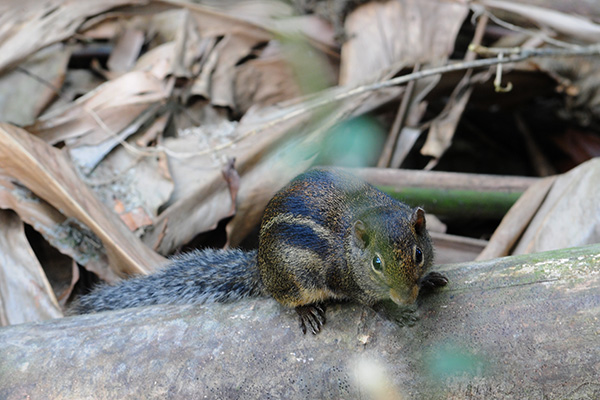
Berdmore's ground squirrel
Scientific Name
Menetes Berdmorei
Status
Least Concern
Size
Body length: 17 - 18 cm
Tail length: 13 - 14 cm
Weight: 170 - 176 g
Diet
Omnivorous.
Seeds, grains, nuts, roots, tubers and insects.
Appearance
This small squirrel has a brownish back, pale underside and prominent dark stripes bordered by lighter stripes along its sides. Its tail is moderately long and has a pointed head resembling a tree shrew.
Habitat
Dry, open forests and scrublands.
Distribution
Throughout Thailand.
Although sightings of these cats have been reported, they are rarely seen due to their habitat and behaviour. Nearly all sightings today are with camera traps.
These small squirrels are diurnal, rarely seen on trees and spends most of the time in the thick forest undergrowth. Often seen running across roads.
Please have respect, DO NOT FEED!
Common Names
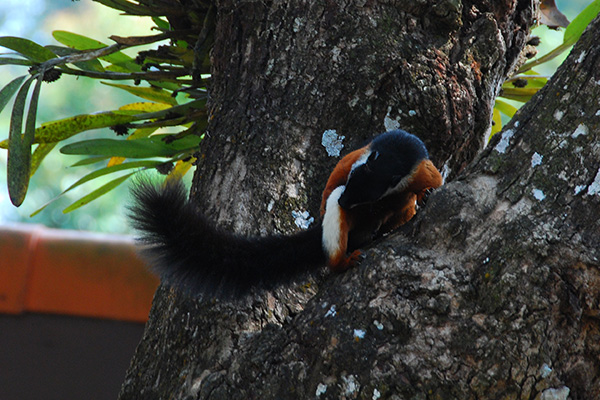
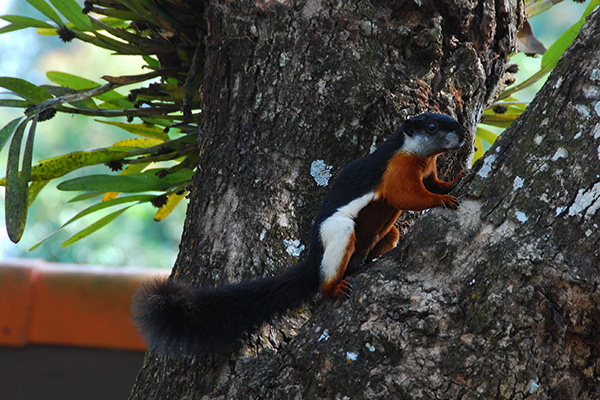
Asian Tri-coloured Squirrel
Scientific Name
Callosciurus prevostii
Status
Least Concern
Size
Body length: 20 - 27 cm
Tail Length: 20 - 27 cm
Weight: 250 - 500 g
Diet
Omnivorous.
fruits, nuts, seeds, buds, flowers, insects and birds eggs.
Appearance
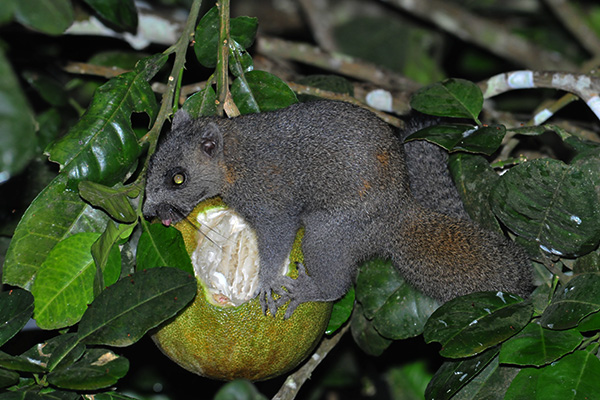
One of the most colourful mammals, the top of the head, back, and tail are jet-black or brownish, the underparts are reddish-brown/orange, with a white line separating the two colours.
Habitat
Dense and primary rainforests.
Distribution
Southern Thailand.
Although sightings of these cats have been reported, they are rarely seen due to their habitat and behaviour. Nearly all sightings today are with camera traps.
Diurnal, arboreal and typically solitary.
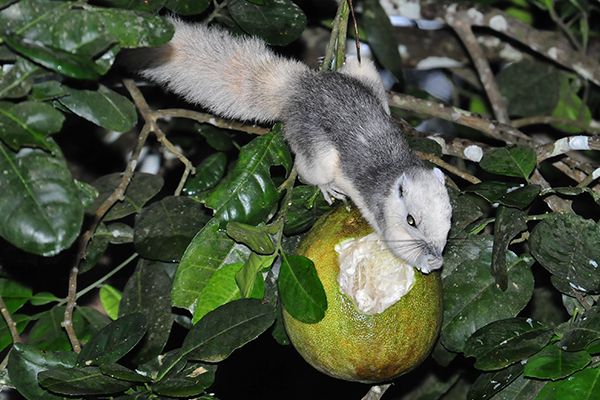
Although a long way from its traditional range, we saw a single individual, on just one occasion, behind the headquarters, feeding on pomelo fruit
Please have respect, DO NOT FEED!
Common Names
Finlayson's squirrel
Scientific Name
Callosciurus finlaysonii
Status
Least Concern
Size
Body length: 21 - 22 cm
Tail Length: 22 - 24 cm
Weight: 278 g
Diet
Omnivorous.
fruits, nuts, seeds, fungi, flowers, and even insects and eggs.
Appearance
As the name implies, these squirrels have a variety of colourations, varying from all white, brown or grey to white underside with grey or brown upper colour.
Habitat
Diverse habitat from dense forest to gardens.
Distribution
Throughout Thailand.
Although sightings of these cats have been reported, they are rarely seen due to their habitat and behaviour. Nearly all sightings today are with camera traps.
Diurnal, arboreal and typically solitary.
This squirrel is probably the most commonly seen squirrel, it can be seen in national parks, wild life sanctuaries, plantations, parks and gardens.
Please have respect, DO NOT FEED!