Scientific Name
Anastomus oscitans
Status
Least Concern
Size
Length: 68 - 81 cm
Weight: 1.3 - 8.9 kg
Diet
Carnivore.
Large freshwater molluscs, especially apple snails, which they extract from their shells using their uniquely shaped beaks. They also eat other aquatic invertebrates, such as frogs, snakes, crabs, and large insects, and occasionally small fish.
Appearance
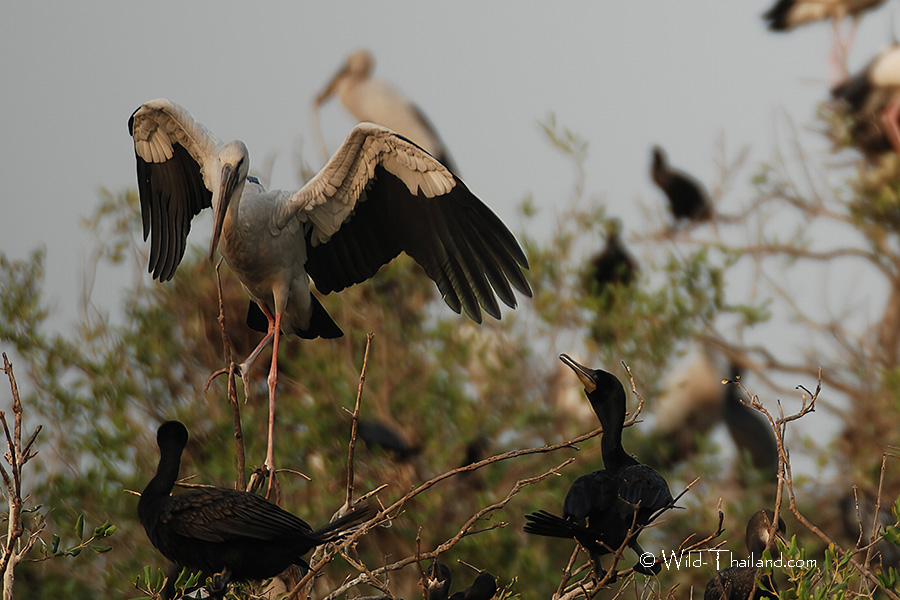
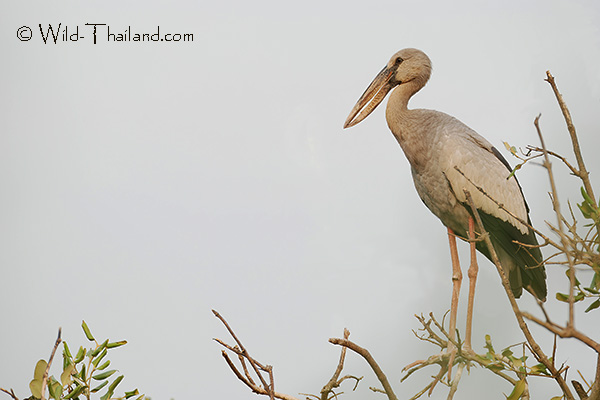
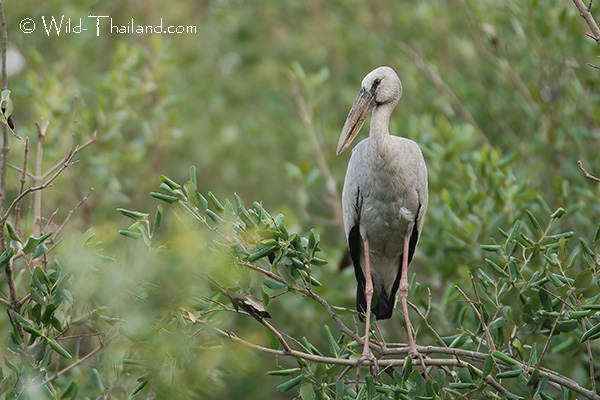
The Asian Openbill Stork has a greyish or white body, with glossy black wings and tail that have a greenish or purplish sheen. The bill has a prominent gap between the lower and upper mandibles, with the two tips only meeting at the end.
Distribution
Asian Openbill storks are found throughout Thailand, particularly in the central plains, in rice-farming areas and wetlands.
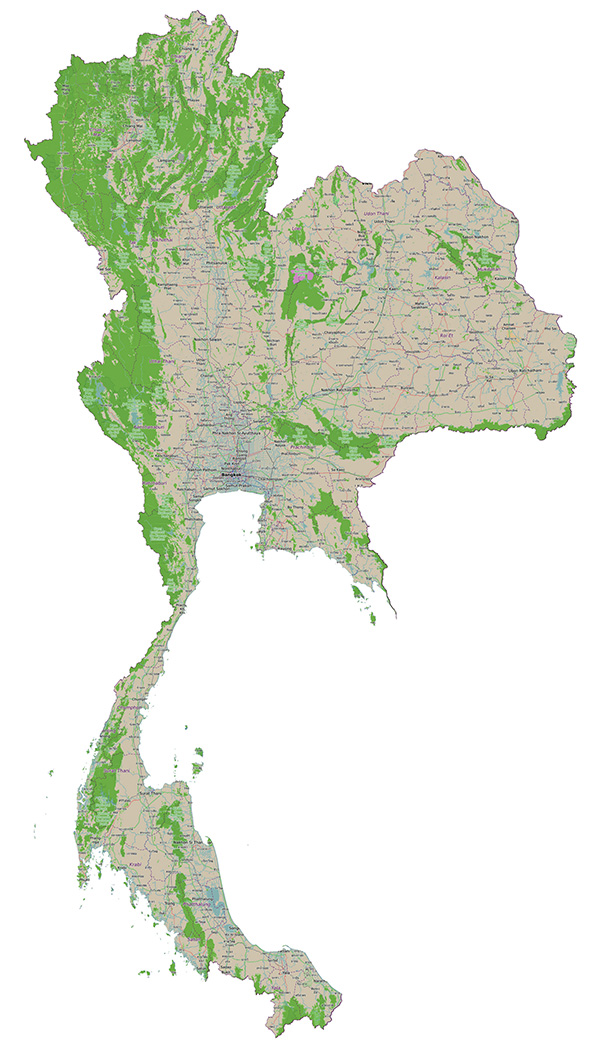
Asian Openbill Storks are social birds that are often seen circling high in the sky in large groups. They are also seen in large mixed groups feeding in paddy fields.
Breeding is between November and May. They nest in large mixed colonies, building large stick nests in tall trees, including acacias and banyans, often near water.
Scientific Name
Mycteria leucocephala
Status
Near Extinction.
Size
Length: 93 - 102 cm
Weight: 2 - 3.5 kg
Diet
Carnivore.
Primarily small fish, also crustaceans, amphibians, insects, and occasionally reptiles.
Appearance
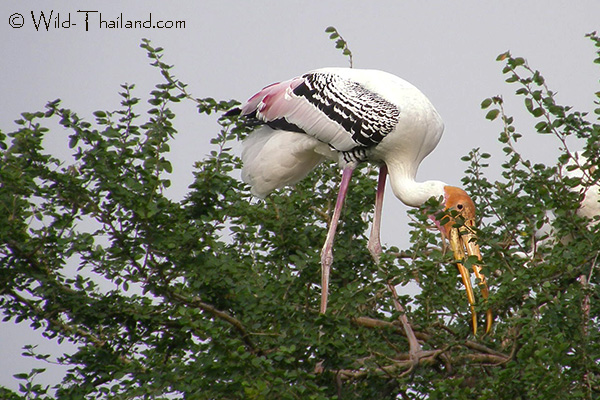
The Painted Stork is a large wading bird with a distinctive black breast band, bright pink wing feathers, and an orange/reddish head and neck. It has a large yellow, down-curved beak, and its white body is contrasted by black wing and tail feathers with a greenish gloss.
Distribution
Now very rare, restricted to the Gulf of Thailand and Bangkok.