Scientific Name
Dinopium javanense
Status
Least Concern
Size
Length: 20 - 30 cm
Weight: 67 - 90 g
Diet
Omnivore.
Insects, particularly ants, insect larvae, and other invertebrates like cockroaches, spiders, and beetles. It also supplements its diet with fruits and seeds.
Appearance
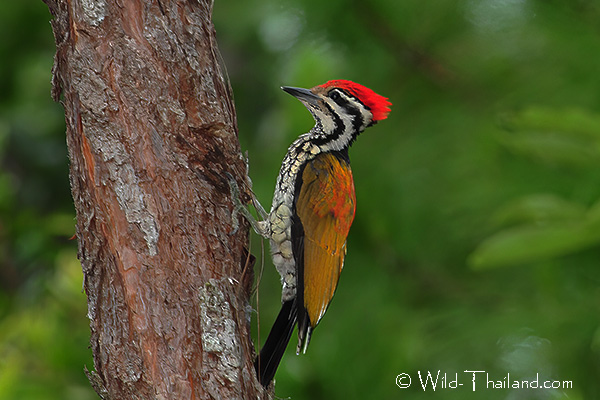
The Common Flameback Woodpecker is a medium-sized bird with a golden-yellow back and a black-and-white patterned face, featuring a bold black moustache stripe. Males can be distinguished by their bright red crown, while females have a black crown with white streaks.
Distribution
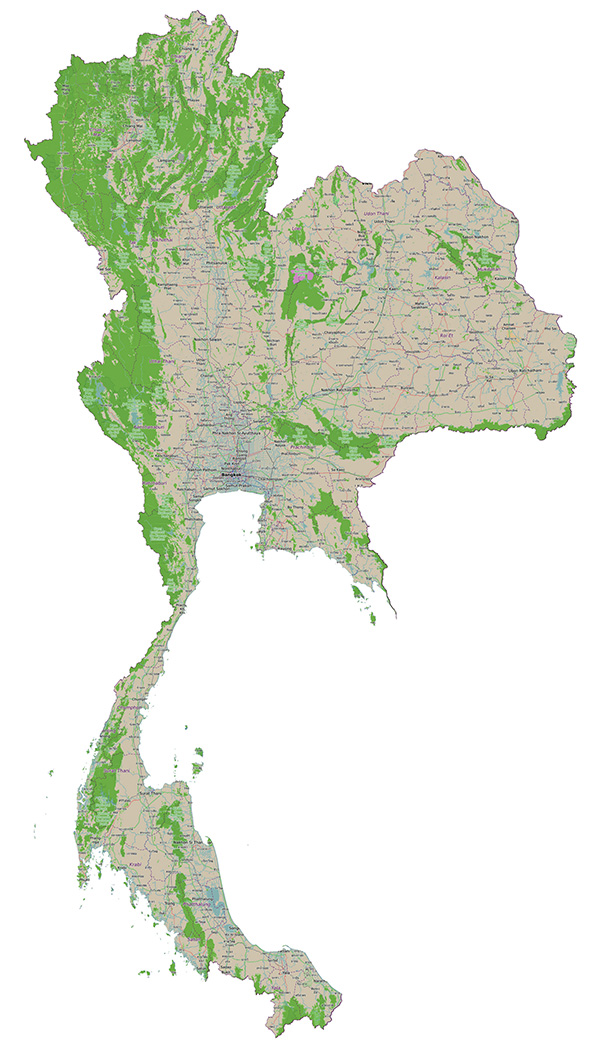
Common Flameback Woodpeckers are found throughout Thailand. Habitats include, subtropical or tropical dry forests, moist lowland forests, open deciduous woodlands, mangrove forests and scrubland.
The Common Flameback Woodpeckers forage for food by gleaning and probing tree bark. They are often seen in pairs or mixed-species flocks. They are nearly always noticed by the tapping noises made when foraging for food or the laughing like call when flying.
Breeding is typically in June. Nests are excavated in tree trunks, stumps, or large branches, often below 5 meters.
Scientific Name
Picus puniceus
Status
Least Concern
Size
Length: Up to 25 cm
Weight: 66 - 96 g
Diet
Omnivore.
Appearance
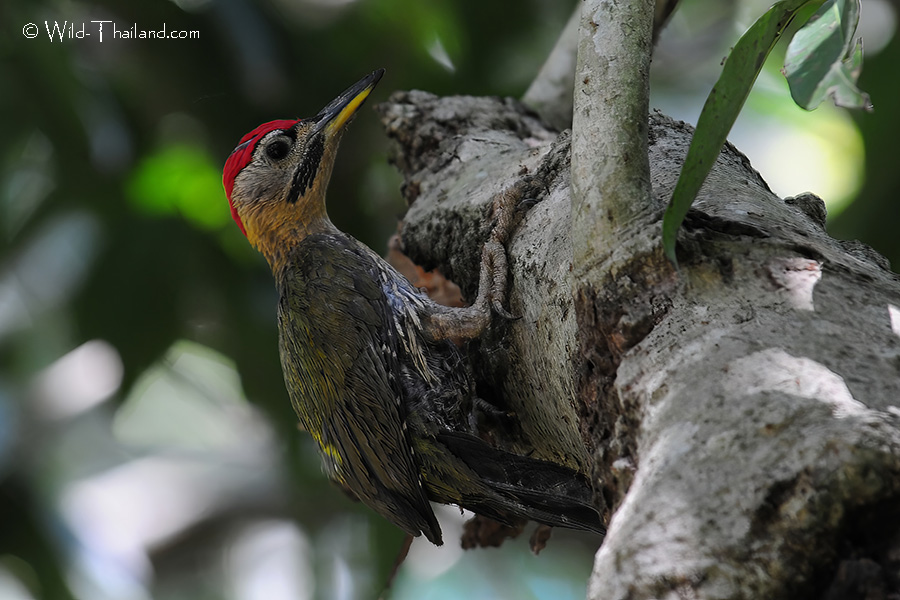
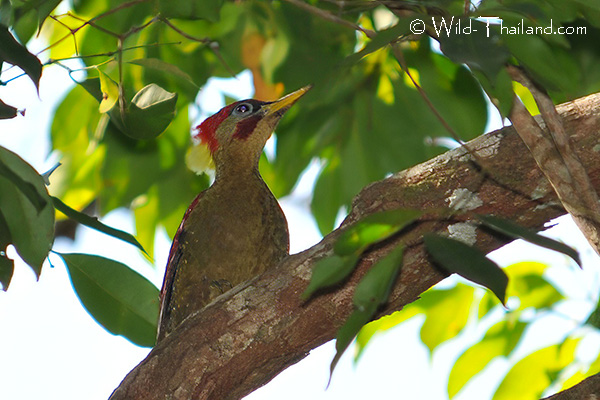
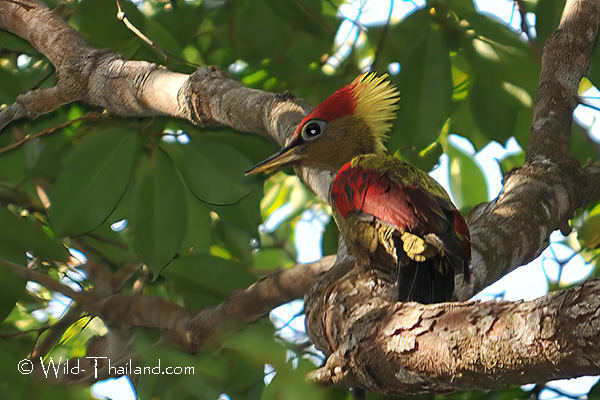
The Crimson-winged Woodpecker is a medium-sized, greenish woodpecker with bright crimson-red wings and crown. Key features include a striking yellow crest, cream-speckled sides, and pale blue-gray "spectacles" around the eyes. Males have a maroon "moustache" stripe on their face, while females lack this and have a greener face.
Distribution
Scientific Name
Chrysocolaptes guttacristatus
Status
Least Concern
Size
Length: 30 - 34 cm
Weight: 150 - 233 g
Diet
Omnivore.
Insects, larvae, spiders and occasionally nectar.
Appearance
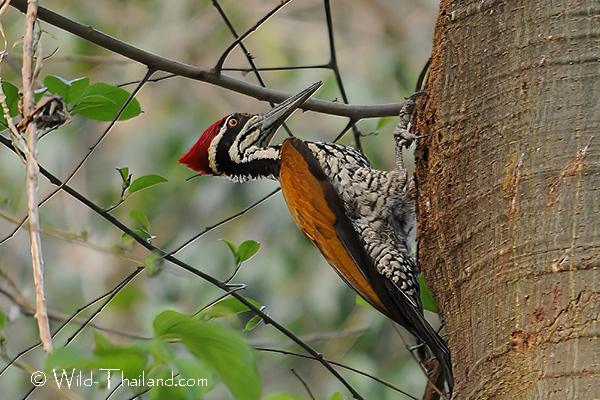
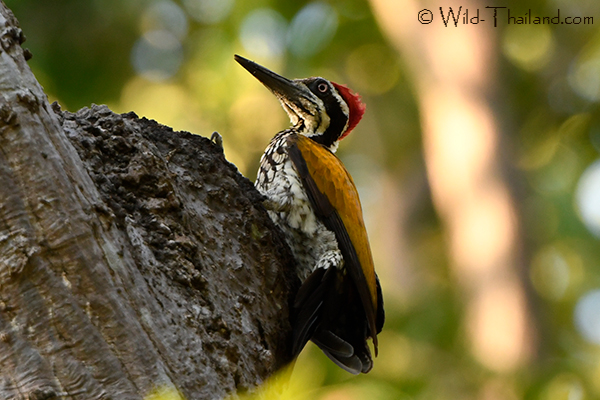
The Greater Flameback Woodpecker is a large woodpecker with golden-yellow wings and back, a bright red rump, and a black tail. Males have a vibrant red crest, while females have a black crest with white spots. The face is a mix of white and black markings, with a white stripe from the bill down the neck and a prominent dark malar stripe. The underparts are white with dark, scalloped markings.
Distribution
Greater Flameback Woodpeckers are found throughout Thailand, preferring forested habitat with large trees.
Greater Flameback Woodpeckers are often heard tapping for food or flying, when they often make laughing calls. When located, they can be seen foraging on tree trunks and branches for insects, often using a gleaning and probing method instead of heavy drumming.
Breeding is between January and May. Both the male and female work together to excavate a nest hole, typically in a tree trunk, fruit tree, or coconut palm. The excavation process can take around four weeks. They rarely use nests from previous years.
Scientific Name
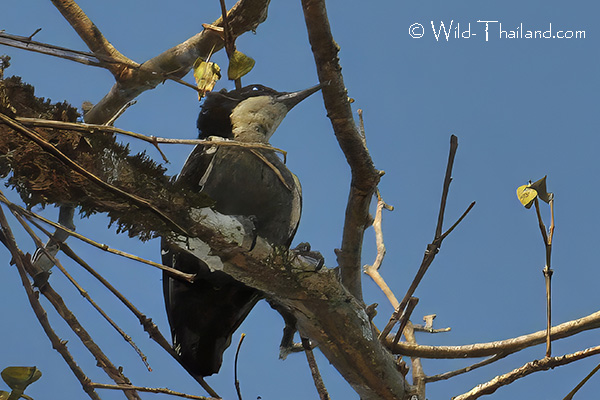
Hemicircus canente
Status
Least Concern
Size
Length: 15 - 17 cm
Weight: 37 - 50 g
Diet
Omnivore.
Insects and their larvae, also fruits, seeds, and nectar.
Appearance
Distribution
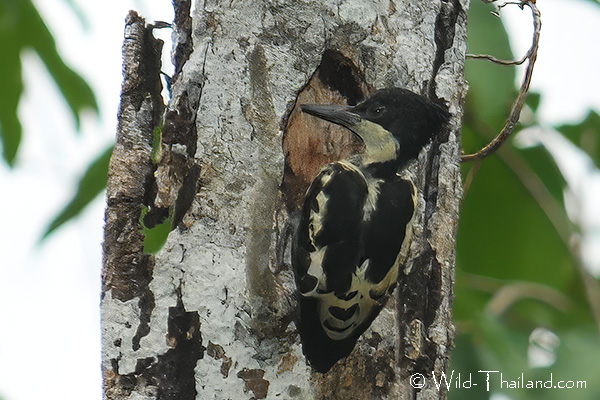
The Heart-spotted Woodpecker is found throughout Thailand, in various forest types, including lowland and evergreen forests.
Scientific Name
Picus vittatus
Status
Least Concern
Size
Length: 30 - 33 cm
Weight: 94 - 132 g
Diet
Omnivore.
Insects like ants, termites, and larvae. It is also known to eat fruits, such as oil palm fruit, and may consume other items like nuts, seeds, and even small lizards and egg.
Appearance
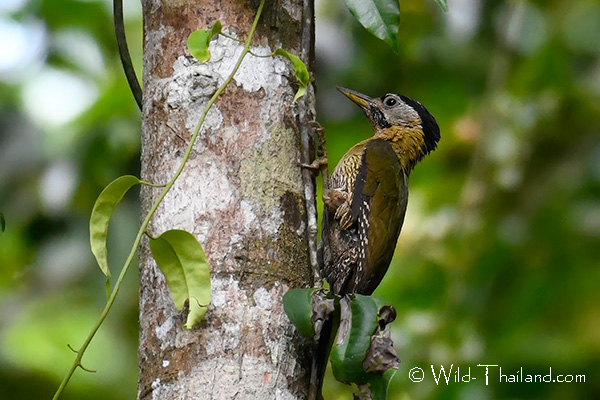
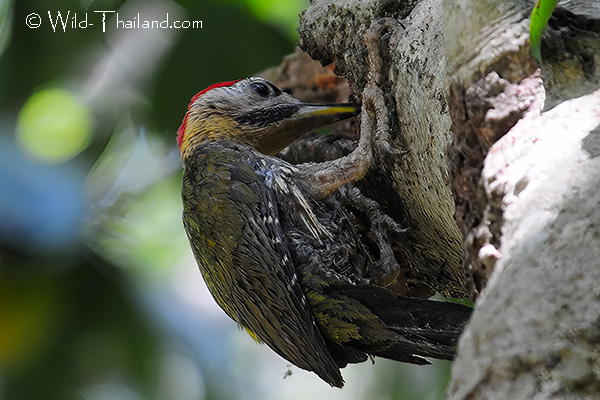
The Laced Woodpecker is green with a gray face, a solid black moustache stripe, and a tea-green back. Males have a bright red crown, while females have a black crown.
Distribution
Laced Woodpeckers are typically solitary or in pairs, they forage on the ground and in trees.
Breeding is from February to July. They excavate a nest hole, typically in a dead tree, at a height of 0.5 to 9 meters.
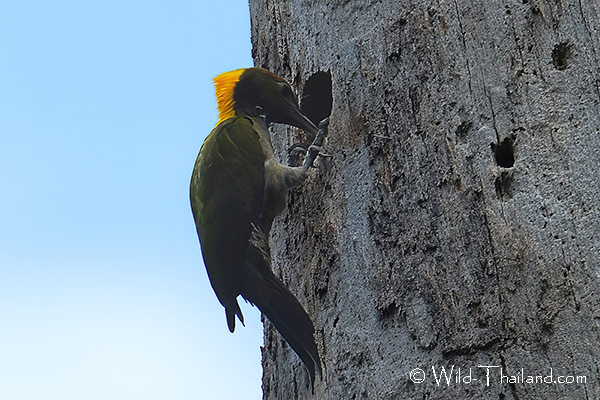
Scientific Name
Picus chlorolophus
Status
Least Concern
Size
Length: 25 - 28 cm
Weight: 57 - 83 g
Diet
Omnivore.
Appearance
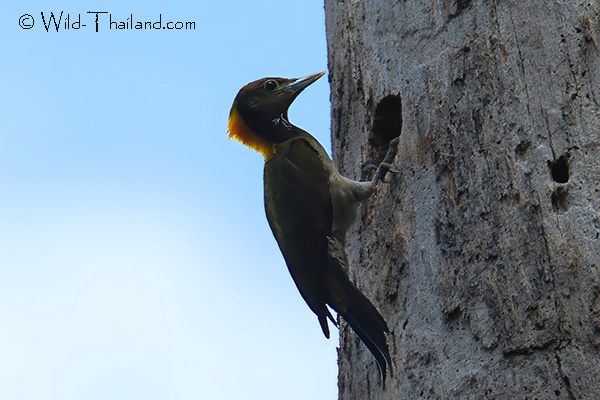
The Lesser Yellownape is a medium-sized woodpecker with a bright yellow crest on its nape, a green back, and a whitish belly with fine green bars. Males have a green head with a white throat, red markings above the eye and nape, and red moustache stripes, while females have less red markings, typically just a red patch on the ear coverts.
Distribution
Lesser Yellownape woodpeckers are active foragers, often solitary or in pairs and sometimes joining mixed-species flocks. They use a variety of techniques like gleaning, probing, and pecking to find food, both on the ground and in trees.
Breeding is from February to July, excavating a nest in a dead trunk or branch.
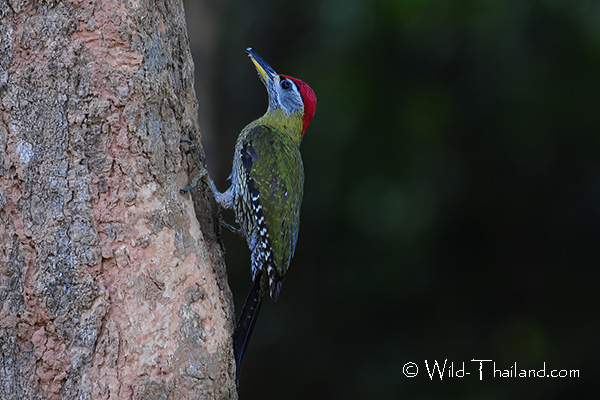
Scientific Name
Picus viridanus
Status
Least Concern
Size
Length: 30 - 33 cm
Weight: 90 - 120 g
Diet
Omnivore.
Ants and other insects like beetle larvae. It also supplements its diet with nectar and seeds.
Appearance
The Streak-breasted Woodpecker is medium-sized, olive-green with a streaked breast, a yellow throat, and a patchy moustache stripe. The male has a red crown, while the female's crown is black. Its back and wings are olive-green, and its underparts have a scale-like patterning of black streaks on a creamy background.
Distribution
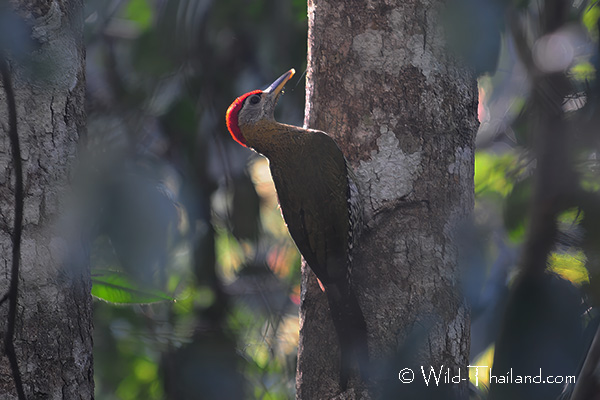
Scientific Name
Picus xanthopygaeus
Status
Critically endangered in Thailand.
Size
Length: 28 - 31 cm
Weight: Male: 83 - 111 g
Diet
Omnivore.
Ants, termites, and other insect larvae, also includes seeds, flower nectar, and occasionally fruits.
Appearance
The Streak-throated Woodpecker is medium-sized, green with a yellowish-green back and a streaked throat and scaly whitish underparts. Males have a red crown, while females have a black crown. Both sexes have white eyebrows, a prominent malar (moustache) stripe, and a dark, barred tail.
Distribution